I’m not here to play nice, I’m here to make change. I work with veterans, teens, career shifters, and anyone who’s ever been told they’re too late, too broken, or too much. I help people rewrite their story when the world hands them a script they never asked for.
I don’t save people. I remind them how to save themselves.
That’s my legacy, and I’m just getting started.
Follow along as I speak truth, challenge systems, and help folks build a life that actually fits.
Connect with Us
Follow us on Medium @YourTrueDirection.
Your journey is yours to shape, take the next step in Your True Direction.
I’m not here to play nice, I’m here to make change. I work with veterans, teens, career shifters, and anyone who’s ever been told they’re too late, too broken, or too much. I help people rewrite their story when the world hands them a script they never asked for.
I don’t save people. I remind them how to save themselves.
That’s my legacy, and I’m just getting started.
Follow along as I speak truth, challenge systems, and help folks build a life that actually fits.
Connect with Us
Follow us on Medium @YourTrueDirection.
Your journey is yours to shape, take the next step in Your True Direction.
I’m not here to play nice, I’m here to make change. I work with veterans, teens, career shifters, and anyone who’s ever been told they’re too late, too broken, or too much. I help people rewrite their story when the world hands them a script they never asked for.
I don’t save people. I remind them how to save themselves.
That’s my legacy, and I’m just getting started.
Follow along as I speak truth, challenge systems, and help folks build a life that actually fits.
Connect with Us
Follow us on Medium @YourTrueDirection.
Your journey is yours to shape, take the next step in Your True Direction.
I’m not here to play nice, I’m here to make change. I work with veterans, teens, career shifters, and anyone who’s ever been told they’re too late, too broken, or too much. I help people rewrite their story when the world hands them a script they never asked for.
I don’t save people. I remind them how to save themselves.
That’s my legacy, and I’m just getting started.
Follow along as I speak truth, challenge systems, and help folks build a life that actually fits.
Connect with Us
Follow us on Medium @YourTrueDirection.
Your journey is yours to shape, take the next step in Your True Direction.
“The boy I buried didn’t die – he waited. Behind every crack, every scar, every silence I called strength. He’s not haunting me. He’s reminding me who the hell I was before the world got loud.”
The boy I once was?
Oh, he was a goddamn legend.
He believed cereal could fix anything,
that Band-Aids healed betrayal,
and that adults actually knew what they were doing.
(Adorable, right?)
He thought love meant forever.
Thought saying sorry meant something.
Thought being “good” earned you safety.
Spoiler:
It didn’t.
It doesn’t.
He used to stare out windows and dream in color.
Now I scroll through screens and call that vision.
He built forts to keep the world out.
Now I build walls and call it “boundaries.”
He cried when people yelled.
Now I flinch when someone cares.
And somewhere between “be yourself” and “grow up,”
he got stuffed into a box labeled “too much.”
Too loud. Too sensitive. Too emotional. Too intense.
So I dulled him down into a version of myself
that fit other people’s expectations.
Congrats, world.
You win.
He’s quieter now.
Until 2AM – when he rips through my chest
asking why I let him disappear.
And I don’t have an answer.
Just more silence.
But hey –
at least I’m employed, right?
At least I pay my taxes, don’t cry in public,
and answer “I’m good” like it’s a sacred chant.
The boy I once was would call bullshit on all of it.
He’d stand on the table and yell,
“This is the life you chose?”
And I’d look him in the eye
and whisper –
No.
But it’s the life I settled for.
Not anymore.
He’s back.
With messy hair, scraped knees, and a thousand unspoken questions.
I’m not here to play nice, I’m here to make change. I work with veterans, teens, career shifters, and anyone who’s ever been told they’re too late, too broken, or too much. I help people rewrite their story when the world hands them a script they never asked for.
I don’t save people. I remind them how to save themselves.
That’s my legacy, and I’m just getting started.
Follow along as I speak truth, challenge systems, and help folks build a life that actually fits.
Connect with Us
Follow us on Medium @YourTrueDirection.
Your journey is yours to shape, take the next step in Your True Direction.
“The boy I buried didn’t die – he waited. Behind every crack, every scar, every silence I called strength. He’s not haunting me. He’s reminding me who the hell I was before the world got loud.”
The boy I once was?
Oh, he was a goddamn legend.
He believed cereal could fix anything,
that Band-Aids healed betrayal,
and that adults actually knew what they were doing.
(Adorable, right?)
He thought love meant forever.
Thought saying sorry meant something.
Thought being “good” earned you safety.
Spoiler:
It didn’t.
It doesn’t.
He used to stare out windows and dream in color.
Now I scroll through screens and call that vision.
He built forts to keep the world out.
Now I build walls and call it “boundaries.”
He cried when people yelled.
Now I flinch when someone cares.
And somewhere between “be yourself” and “grow up,”
he got stuffed into a box labeled “too much.”
Too loud. Too sensitive. Too emotional. Too intense.
So I dulled him down into a version of myself
that fit other people’s expectations.
Congrats, world.
You win.
He’s quieter now.
Until 2AM – when he rips through my chest
asking why I let him disappear.
And I don’t have an answer.
Just more silence.
But hey –
at least I’m employed, right?
At least I pay my taxes, don’t cry in public,
and answer “I’m good” like it’s a sacred chant.
The boy I once was would call bullshit on all of it.
He’d stand on the table and yell,
“This is the life you chose?”
And I’d look him in the eye
and whisper –
No.
But it’s the life I settled for.
Not anymore.
He’s back.
With messy hair, scraped knees, and a thousand unspoken questions.
I’m not here to play nice, I’m here to make change. I work with veterans, teens, career shifters, and anyone who’s ever been told they’re too late, too broken, or too much. I help people rewrite their story when the world hands them a script they never asked for.
I don’t save people. I remind them how to save themselves.
That’s my legacy, and I’m just getting started.
Follow along as I speak truth, challenge systems, and help folks build a life that actually fits.
Connect with Us
Follow us on Medium @YourTrueDirection.
Your journey is yours to shape, take the next step in Your True Direction.
Day 1 of a 7-part series exploring the emotional cost of conditional love, family estrangement, and the quiet strength it takes to heal when those meant to love you choose silence instead.
Sometimes, the loudest absences are the ones that never needed words. This empty chair holds the weight of what was missing.
The Day Love Was Conditional
On what should’ve been one of the happiest days of my life, my wedding, I was met not with celebration, but silence. Not because I didn’t invite my father, but because he chose not to come. He couldn’t support me marrying the man I love. That silence has lasted for 3,116 days.
And it still echoes.
What Is Parental Rejection and Why It Hurts So Deeply
Parental rejection is the denial of emotional, physical, or moral support from a parent to a child. It cuts especially deep when rooted in identity, whether it’s about sexuality, gender, religion, or personal choices. For LGBTQ+ individuals, this kind of rejection can be life-altering.
When a parent turns their back not on your actions, but your essence, it sends one clear message: You are not enough.
The Hidden Weight of Conditional Love
Love that comes with strings attached is not love; it’s control in disguise. It’s the unspoken rule that says, “Be who we want you to be, or else.”
When my father said, “I love you, but…,” I learned that love had conditions. That I had to earn my worth. That my joy came second to his discomfort.
“I Love You, But…” — The Words That Haunt
Those five words are silent daggers. They divide families. They teach shame. They echo for years.
For LGBTQ+ individuals, these statements validate a lie we’ve heard too often: You are not worthy of love unless you conform.
This leads to internal conflict, wanting to be accepted, while also needing to be authentic.
The Long-Term Effects of Being Rejected by a Parent
Here’s what many don’t realize: this pain doesn’t fade. It morphs into:
Anxiety and self-doubt
Fear of abandonment in adult relationships
Difficulty trusting others
Depression and complex trauma
Perfectionism or people-pleasing
Estrangement from family
Loss of cultural or religious identity
We carry it silently until we don’t anymore.
Rewriting the Narrative: Healing Through Self-Acceptance
Healing begins when you stop seeking approval from those who can’t give it, when you stop blaming yourself. When you realize you are worthy of love, just as you are.
I stopped chasing their acceptance and began creating my own definition of family. I chose to love myself the way they couldn’t.
And it changed everything.
7 Ways Parental Rejection Damages LGBTQ+ Children
Shame-Based Identity — Children internalize guilt over something they cannot change.
Mental Health Struggles — Higher rates of depression, self-harm, and suicide.
Loss of Safety Net — Lack of emotional or financial support during critical years.
Estrangement Trauma — Fear of being “cut off” for who they are.
Delayed Self-Acceptance — Many suppress their identity far into adulthood.
Attachment Wounds — Struggles with romantic and platonic relationships.
Life-Limiting Beliefs — “I’m not enough,” “I’m unlovable,” “I’ll be alone forever.”
Resources: Support Systems for Healing and Growth
If you or someone you love has experienced parental rejection, you’re not alone. Here are some powerful resources:
PFLAG — The nation’s largest organization for LGBTQ+ people, their parents, and families.
The Trevor Project — Crisis intervention and suicide prevention for LGBTQ+ youth.
GLAAD — Media advocacy and resources to support LGBTQ+ representation and support.
FAQs About Parental Rejection and LGBTQ+ Identity
Q1: Is it common for LGBTQ+ people to be rejected by their parents? Yes, unfortunately. Studies show nearly 40% of LGBTQ+ youth report parental rejection at some point in their lives.
Q2: How can I begin to heal after being rejected by a parent? Start by affirming your own identity, seeking LGBTQ+ communities, and working with a trauma-informed therapist.
Q3: Should I try to reconcile with my parents? Only if it supports your healing. Reconciliation should never come at the cost of your mental health or authenticity.
Q4: What if my parents say they love me but still don’t support my relationship? That’s conditional love. You deserve to be supported fully, without exceptions.
Q5: Is it okay to set boundaries or go no contact with parents? Yes. Boundaries are essential for healing and safety — especially in toxic dynamics.
Q6: How do I find chosen family or supportive communities? Start with LGBTQ+ support groups, online forums, or local centers. Community is healing.
The Light Beyond the Silence
If your story mirrors mine, know this: You are not broken. You are not unworthy. And the absence of someone at your wedding — or in your life — does not define your value.
The day love became conditional was painful, yes. But it also became the day I chose myself.
Your True Direction is dedicated to empowering individuals navigating life’s transitions. Through inspiring stories and actionable strategies, we aim to help you reclaim ambition, overcome challenges, and thrive in every stage of your journey.
Connect with Us
Follow us on Medium @YourTrueDirection
Your journey is yours to shape — take the next step in Your True Direction.
The Power, Pain, and Politics of Queer Expression in a Spectacle-Obsessed Society
Your True Direction
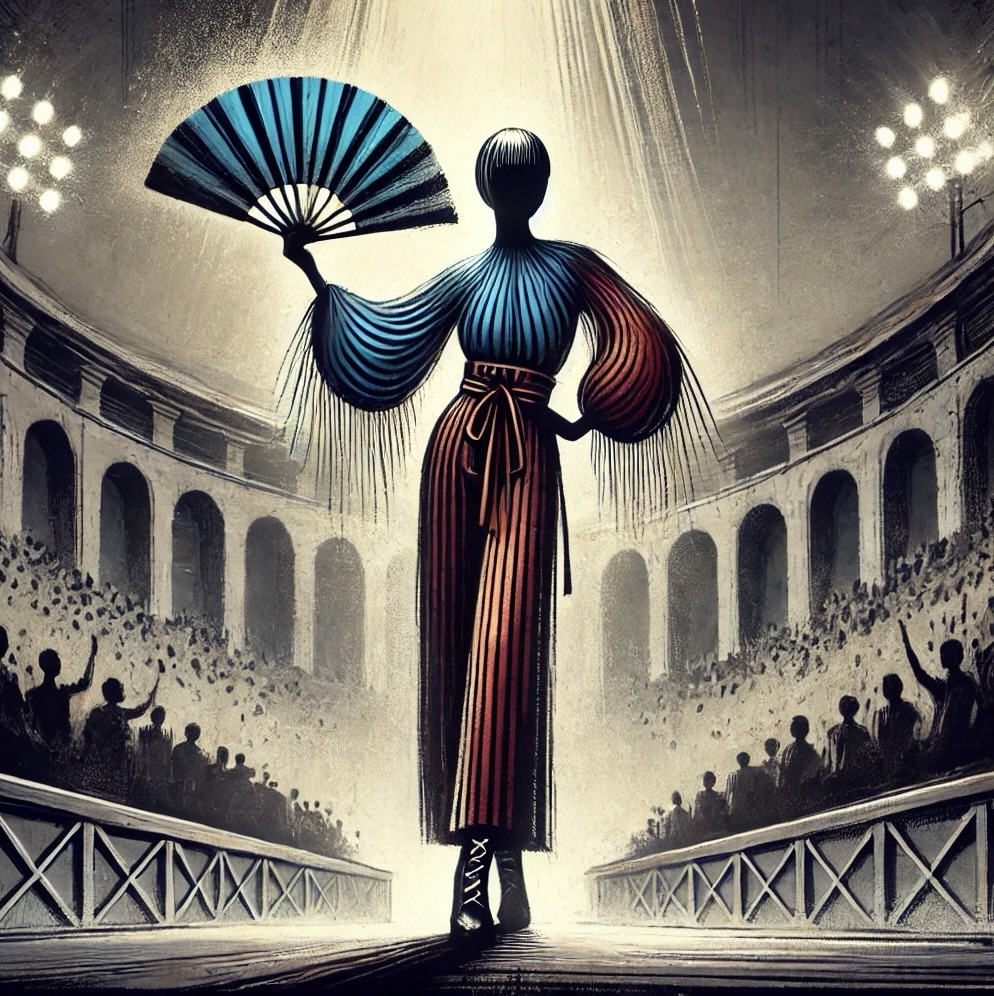
“Are you not entertained?”
This iconic line, shouted by a bloodied Maximus in Gladiator, wasn’t a celebration of victory — it was a challenge. A callout. A haunting indictment of a society addicted to violence, numbed by spectacle, and detached from the humanity of those forced to perform. He wasn’t seeking applause. He was holding up a mirror.
More than two decades later, that same mirror reflects something eerily similar in the experience of queer people today — especially those whose identities are flamboyant, loud, expressive, and unapologetically visible.
The Spectacle of Queer Visibility
From Pride parades to drag performances, queer expression is often seen — and dismissed — as mere show. Colorful. Chaotic. Entertaining. Aesthetic. It’s packaged and consumed like a streaming show, a TikTok trend, a night out on the town. But beneath the glitter lies a deeper truth: visibility for queer people isn’t a costume — it’s courage.
Society too often views expressive queerness — especially drag, gender nonconformity, or flamboyant behavior — as performance. But these aren’t acts for applause. They’re acts of defiance in a world that polices difference. Every strut, every sequin, every “yes queen!” is stitched together by centuries of resistance, pain, and the radical right to exist.
So when society asks, “Why are they doing all this? Why do they need attention?”
The answer, echoing from Maximus, is simple: Are you not entertained?
The Double Bind of Visibility
Queer people walk a tightrope of contradiction. Be visible enough to advocate for rights, but not so visible that it makes others uncomfortable. Be proud, but not too proud. Be out, but not too loud.
This paradox plays out every day:
• A trans woman is called brave on a magazine cover, then harassed on the street.
• A drag performer wins an Emmy, then is banned from reading to children.
• A gay teen posts a dance video, then is doxxed and bullied offline.
Visibility becomes both lifeline and lightning rod. And the irony? The same society that celebrates queer culture in curated doses often vilifies it when it challenges their comfort.
Drag Is Not a Distraction — It’s a Declaration
Drag, in particular, sits at the center of this cultural conflict. Once underground, now mainstream (thanks in part to RuPaul’s Drag Race), it has been simultaneously commodified and condemned.
Drag is dismissed by critics as obscene, as grooming, as “just for fun.” But that framing erases its political roots. Drag was — and still is — a rebellion. A theatrical protest against gender norms, patriarchy, and erasure. It says: We’re here. We’re fierce. We won’t shrink to fit your expectations.
When a drag queen steps onto a stage or reads a book to children, that is not a performance for approval. It’s a statement of presence in a world that would rather they disappear.
Flamboyance Is Survival, Not Showboating
The flamboyant gay man. The femme nonbinary teen. The trans woman with bright eyeshadow and higher heels. These expressions aren’t for applause — they’re armor.
In a culture where queerness has historically been criminalized, pathologized, and punished, to exist out loud is an act of survival. These individuals aren’t performing for your amusement. They’re breathing in their full truth — something so many are denied.
And when people react with discomfort or accusation — “They’re just doing it for attention” — it reveals more about the observer than the observed.
When the World Demands Conformity, Expression Is Resistance
Every culture has norms. But when those norms are rigid, any deviation becomes disruption. Queer visibility disrupts the narrative of binary gender, heteronormative romance, and quiet assimilation. That disruption often triggers backlash.
But conformity is not peace — it’s compliance. And for queer people, especially those from marginalized intersections (Black, brown, disabled, poor), compliance has never guaranteed safety.
So instead, many choose to live vividly. Loudly. Colorfully. Not to entertain, but to exist on their own terms.
Society’s Uneasy Addiction to Queer Culture
Here lies the ultimate irony: society can’t stop watching queer people. From voguing in pop videos to queer slang in advertising, from Pride floats to rainbow capitalism, the world profits from queer aesthetics while rejecting queer lives.
It’s like watching Maximus fight — cheering the bloodshed but ignoring the cost.
So again we ask:
Are you not entertained?
Because if visibility rattles you, maybe it’s not the expression that’s the problem — it’s your expectations.
FAQs
1. Why is drag considered political?
Drag challenges gender norms and stereotypes. It has historically been a form of protest, particularly during events like the Stonewall Riots. Today, it still represents resistance, especially in the face of anti-LGBTQ+ legislation and cultural backlash.
2. Isn’t queer expression just for attention?
No. Queer expression is often a survival mechanism and a form of self-affirmation. It challenges conformity and gives voice to identities that have been historically erased or marginalized.
3. Why do some people feel uncomfortable with queer visibility?
Discomfort often stems from internalized biases or rigid expectations about gender and identity. Queer visibility challenges these norms, which can feel threatening to some.
4. How can allies support expressive queer culture?
By listening, learning, advocating, and showing up. Support local queer artists, attend drag shows, push back against harmful narratives, and vote for inclusive policies.
5. Isn’t visibility enough for LGBTQ+ rights?
Visibility is important but not sufficient. Legal protections, healthcare access, education, and cultural acceptance are all critical. Visibility without safety can still be dangerous.
6. What’s wrong with enjoying queer culture for entertainment?
Appreciating queer culture is fine, but problems arise when it’s consumed without respect for the people behind it. Enjoying the art while ignoring or undermining the artist’s humanity is exploitative.
The Cost of the Curtain Call
Queer people don’t exist to perform. And yet, every day, they are forced to audition for acceptance — in families, schools, jobs, and public life. The performance is relentless, and the stakes are life and death.
So when the world gawks at drag queens, critiques gay men for being “too much,” or questions why a trans person is “so visible,” remember this:
They’re not asking for your entertainment. They’re demanding your recognition.
Your True Direction is dedicated to empowering individuals navigating life’s transitions. Through inspiring stories and actionable strategies, we aim to help you reclaim ambition, overcome challenges, and thrive in every stage of your journey.
Connect with Us
Follow us on Medium @YourTrueDirection
Your journey is yours to shape — take the next step in Your True Direction.