I’m not here to play nice, I’m here to make change. I work with veterans, teens, career shifters, and anyone who’s ever been told they’re too late, too broken, or too much. I help people rewrite their story when the world hands them a script they never asked for.
I don’t save people. I remind them how to save themselves.
That’s my legacy, and I’m just getting started.
Follow along as I speak truth, challenge systems, and help folks build a life that actually fits.
Connect with Us
Follow us on Medium @YourTrueDirection.
Your journey is yours to shape, take the next step in Your True Direction.
I’m not here to play nice, I’m here to make change. I work with veterans, teens, career shifters, and anyone who’s ever been told they’re too late, too broken, or too much. I help people rewrite their story when the world hands them a script they never asked for.
I don’t save people. I remind them how to save themselves.
That’s my legacy, and I’m just getting started.
Follow along as I speak truth, challenge systems, and help folks build a life that actually fits.
Connect with Us
Follow us on Medium @YourTrueDirection.
Your journey is yours to shape, take the next step in Your True Direction.
Your True Direction is dedicated to empowering individuals navigating life’s transitions. Through inspiring stories and actionable strategies, we aim to help you reclaim ambition, overcome challenges, and thrive in every stage of your journey.
Connect with Us
Follow us on Medium @YourTrueDirection
Your journey is yours to shape — take the next step in Your True Direction.
Day 1 of a 7-part series exploring the emotional cost of conditional love, family estrangement, and the quiet strength it takes to heal when those meant to love you choose silence instead.
Sometimes, the loudest absences are the ones that never needed words. This empty chair holds the weight of what was missing.
The Day Love Was Conditional
On what should’ve been one of the happiest days of my life, my wedding, I was met not with celebration, but silence. Not because I didn’t invite my father, but because he chose not to come. He couldn’t support me marrying the man I love. That silence has lasted for 3,116 days.
And it still echoes.
What Is Parental Rejection and Why It Hurts So Deeply
Parental rejection is the denial of emotional, physical, or moral support from a parent to a child. It cuts especially deep when rooted in identity, whether it’s about sexuality, gender, religion, or personal choices. For LGBTQ+ individuals, this kind of rejection can be life-altering.
When a parent turns their back not on your actions, but your essence, it sends one clear message: You are not enough.
The Hidden Weight of Conditional Love
Love that comes with strings attached is not love; it’s control in disguise. It’s the unspoken rule that says, “Be who we want you to be, or else.”
When my father said, “I love you, but…,” I learned that love had conditions. That I had to earn my worth. That my joy came second to his discomfort.
“I Love You, But…” — The Words That Haunt
Those five words are silent daggers. They divide families. They teach shame. They echo for years.
For LGBTQ+ individuals, these statements validate a lie we’ve heard too often: You are not worthy of love unless you conform.
This leads to internal conflict, wanting to be accepted, while also needing to be authentic.
The Long-Term Effects of Being Rejected by a Parent
Here’s what many don’t realize: this pain doesn’t fade. It morphs into:
Anxiety and self-doubt
Fear of abandonment in adult relationships
Difficulty trusting others
Depression and complex trauma
Perfectionism or people-pleasing
Estrangement from family
Loss of cultural or religious identity
We carry it silently until we don’t anymore.
Rewriting the Narrative: Healing Through Self-Acceptance
Healing begins when you stop seeking approval from those who can’t give it, when you stop blaming yourself. When you realize you are worthy of love, just as you are.
I stopped chasing their acceptance and began creating my own definition of family. I chose to love myself the way they couldn’t.
And it changed everything.
7 Ways Parental Rejection Damages LGBTQ+ Children
Shame-Based Identity — Children internalize guilt over something they cannot change.
Mental Health Struggles — Higher rates of depression, self-harm, and suicide.
Loss of Safety Net — Lack of emotional or financial support during critical years.
Estrangement Trauma — Fear of being “cut off” for who they are.
Delayed Self-Acceptance — Many suppress their identity far into adulthood.
Attachment Wounds — Struggles with romantic and platonic relationships.
Life-Limiting Beliefs — “I’m not enough,” “I’m unlovable,” “I’ll be alone forever.”
Resources: Support Systems for Healing and Growth
If you or someone you love has experienced parental rejection, you’re not alone. Here are some powerful resources:
PFLAG — The nation’s largest organization for LGBTQ+ people, their parents, and families.
The Trevor Project — Crisis intervention and suicide prevention for LGBTQ+ youth.
GLAAD — Media advocacy and resources to support LGBTQ+ representation and support.
FAQs About Parental Rejection and LGBTQ+ Identity
Q1: Is it common for LGBTQ+ people to be rejected by their parents? Yes, unfortunately. Studies show nearly 40% of LGBTQ+ youth report parental rejection at some point in their lives.
Q2: How can I begin to heal after being rejected by a parent? Start by affirming your own identity, seeking LGBTQ+ communities, and working with a trauma-informed therapist.
Q3: Should I try to reconcile with my parents? Only if it supports your healing. Reconciliation should never come at the cost of your mental health or authenticity.
Q4: What if my parents say they love me but still don’t support my relationship? That’s conditional love. You deserve to be supported fully, without exceptions.
Q5: Is it okay to set boundaries or go no contact with parents? Yes. Boundaries are essential for healing and safety — especially in toxic dynamics.
Q6: How do I find chosen family or supportive communities? Start with LGBTQ+ support groups, online forums, or local centers. Community is healing.
The Light Beyond the Silence
If your story mirrors mine, know this: You are not broken. You are not unworthy. And the absence of someone at your wedding — or in your life — does not define your value.
The day love became conditional was painful, yes. But it also became the day I chose myself.
Your True Direction is dedicated to empowering individuals navigating life’s transitions. Through inspiring stories and actionable strategies, we aim to help you reclaim ambition, overcome challenges, and thrive in every stage of your journey.
Connect with Us
Follow us on Medium @YourTrueDirection
Your journey is yours to shape — take the next step in Your True Direction.
The Power, Pain, and Politics of Queer Expression in a Spectacle-Obsessed Society
Your True Direction
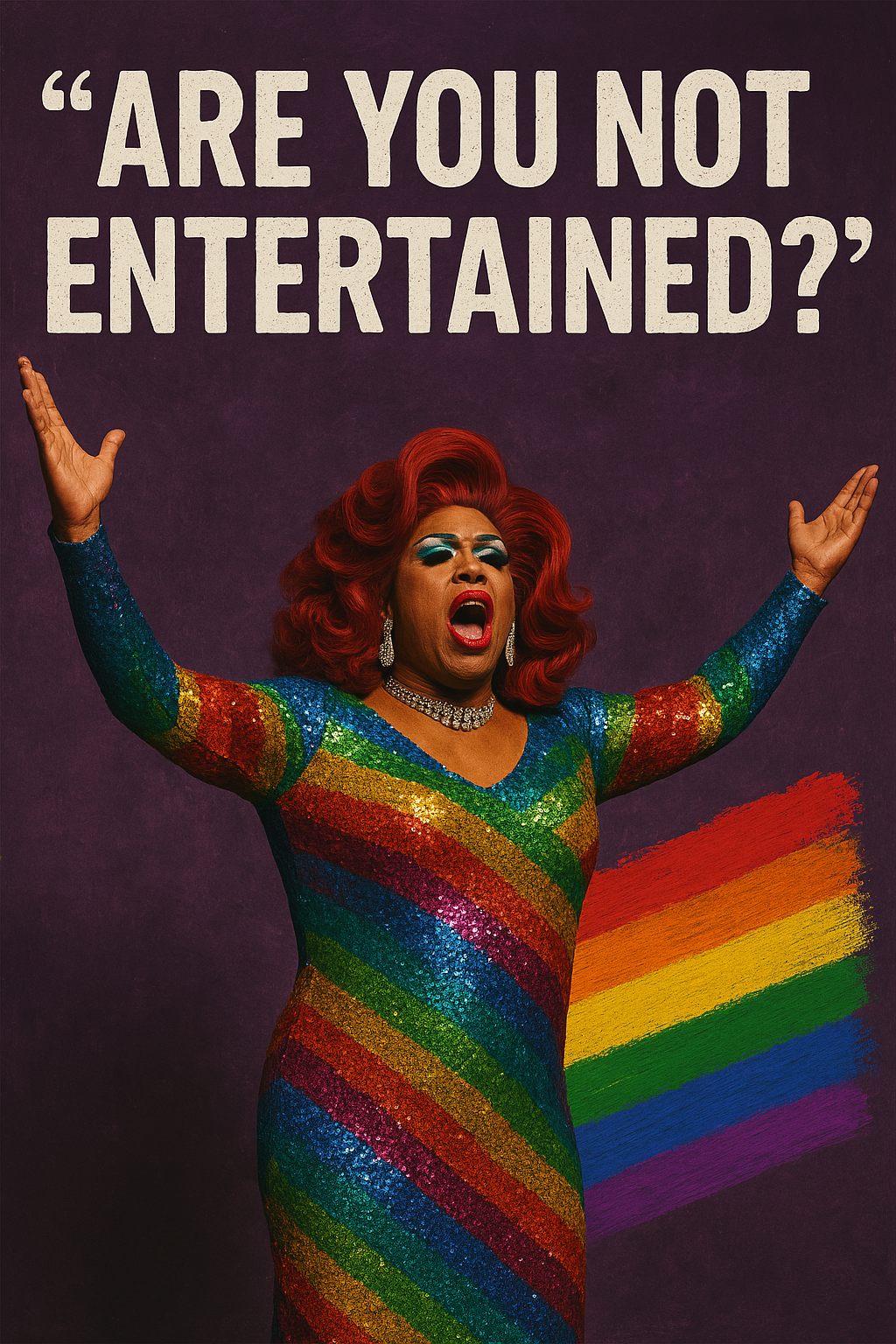
“Are you not entertained?”
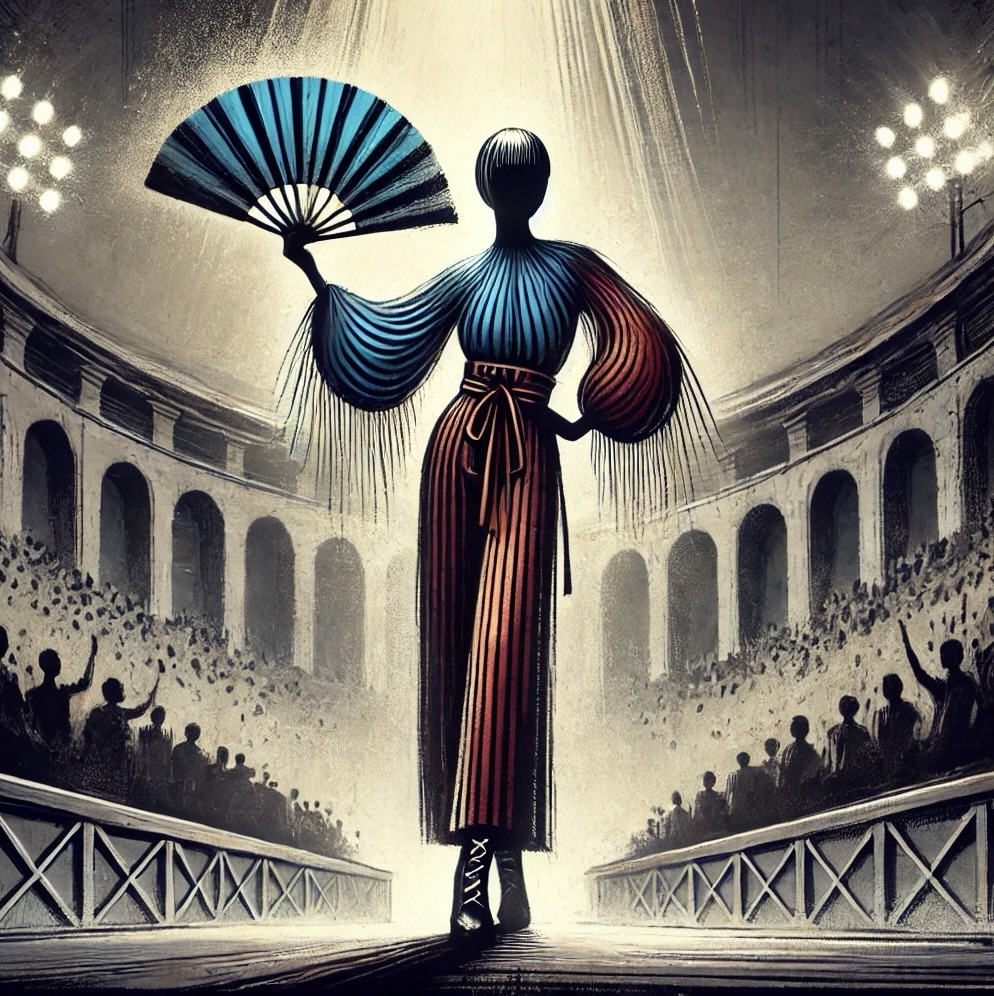
This iconic line, shouted by a bloodied Maximus in Gladiator, wasn’t a celebration of victory — it was a challenge. A callout. A haunting indictment of a society addicted to violence, numbed by spectacle, and detached from the humanity of those forced to perform. He wasn’t seeking applause. He was holding up a mirror.
More than two decades later, that same mirror reflects something eerily similar in the experience of queer people today — especially those whose identities are flamboyant, loud, expressive, and unapologetically visible.
The Spectacle of Queer Visibility
From Pride parades to drag performances, queer expression is often seen — and dismissed — as mere show. Colorful. Chaotic. Entertaining. Aesthetic. It’s packaged and consumed like a streaming show, a TikTok trend, a night out on the town. But beneath the glitter lies a deeper truth: visibility for queer people isn’t a costume — it’s courage.
Society too often views expressive queerness — especially drag, gender nonconformity, or flamboyant behavior — as performance. But these aren’t acts for applause. They’re acts of defiance in a world that polices difference. Every strut, every sequin, every “yes queen!” is stitched together by centuries of resistance, pain, and the radical right to exist.
So when society asks, “Why are they doing all this? Why do they need attention?”
The answer, echoing from Maximus, is simple: Are you not entertained?
The Double Bind of Visibility
Queer people walk a tightrope of contradiction. Be visible enough to advocate for rights, but not so visible that it makes others uncomfortable. Be proud, but not too proud. Be out, but not too loud.
This paradox plays out every day:
• A trans woman is called brave on a magazine cover, then harassed on the street.
• A drag performer wins an Emmy, then is banned from reading to children.
• A gay teen posts a dance video, then is doxxed and bullied offline.
Visibility becomes both lifeline and lightning rod. And the irony? The same society that celebrates queer culture in curated doses often vilifies it when it challenges their comfort.
Drag Is Not a Distraction — It’s a Declaration
Drag, in particular, sits at the center of this cultural conflict. Once underground, now mainstream (thanks in part to RuPaul’s Drag Race), it has been simultaneously commodified and condemned.
Drag is dismissed by critics as obscene, as grooming, as “just for fun.” But that framing erases its political roots. Drag was — and still is — a rebellion. A theatrical protest against gender norms, patriarchy, and erasure. It says: We’re here. We’re fierce. We won’t shrink to fit your expectations.
When a drag queen steps onto a stage or reads a book to children, that is not a performance for approval. It’s a statement of presence in a world that would rather they disappear.
Flamboyance Is Survival, Not Showboating
The flamboyant gay man. The femme nonbinary teen. The trans woman with bright eyeshadow and higher heels. These expressions aren’t for applause — they’re armor.
In a culture where queerness has historically been criminalized, pathologized, and punished, to exist out loud is an act of survival. These individuals aren’t performing for your amusement. They’re breathing in their full truth — something so many are denied.
And when people react with discomfort or accusation — “They’re just doing it for attention” — it reveals more about the observer than the observed.
When the World Demands Conformity, Expression Is Resistance
Every culture has norms. But when those norms are rigid, any deviation becomes disruption. Queer visibility disrupts the narrative of binary gender, heteronormative romance, and quiet assimilation. That disruption often triggers backlash.
But conformity is not peace — it’s compliance. And for queer people, especially those from marginalized intersections (Black, brown, disabled, poor), compliance has never guaranteed safety.
So instead, many choose to live vividly. Loudly. Colorfully. Not to entertain, but to exist on their own terms.
Society’s Uneasy Addiction to Queer Culture
Here lies the ultimate irony: society can’t stop watching queer people. From voguing in pop videos to queer slang in advertising, from Pride floats to rainbow capitalism, the world profits from queer aesthetics while rejecting queer lives.
It’s like watching Maximus fight — cheering the bloodshed but ignoring the cost.
So again we ask:
Are you not entertained?
Because if visibility rattles you, maybe it’s not the expression that’s the problem — it’s your expectations.
FAQs
1. Why is drag considered political?
Drag challenges gender norms and stereotypes. It has historically been a form of protest, particularly during events like the Stonewall Riots. Today, it still represents resistance, especially in the face of anti-LGBTQ+ legislation and cultural backlash.
2. Isn’t queer expression just for attention?
No. Queer expression is often a survival mechanism and a form of self-affirmation. It challenges conformity and gives voice to identities that have been historically erased or marginalized.
3. Why do some people feel uncomfortable with queer visibility?
Discomfort often stems from internalized biases or rigid expectations about gender and identity. Queer visibility challenges these norms, which can feel threatening to some.
4. How can allies support expressive queer culture?
By listening, learning, advocating, and showing up. Support local queer artists, attend drag shows, push back against harmful narratives, and vote for inclusive policies.
5. Isn’t visibility enough for LGBTQ+ rights?
Visibility is important but not sufficient. Legal protections, healthcare access, education, and cultural acceptance are all critical. Visibility without safety can still be dangerous.
6. What’s wrong with enjoying queer culture for entertainment?
Appreciating queer culture is fine, but problems arise when it’s consumed without respect for the people behind it. Enjoying the art while ignoring or undermining the artist’s humanity is exploitative.
The Cost of the Curtain Call
Queer people don’t exist to perform. And yet, every day, they are forced to audition for acceptance — in families, schools, jobs, and public life. The performance is relentless, and the stakes are life and death.
So when the world gawks at drag queens, critiques gay men for being “too much,” or questions why a trans person is “so visible,” remember this:
They’re not asking for your entertainment. They’re demanding your recognition.
Your True Direction is dedicated to empowering individuals navigating life’s transitions. Through inspiring stories and actionable strategies, we aim to help you reclaim ambition, overcome challenges, and thrive in every stage of your journey.
Connect with Us
Follow us on Medium @YourTrueDirection
Your journey is yours to shape — take the next step in Your True Direction.
Day 1 of a 7-part series exploring the emotional cost of conditional love, family estrangement, and the quiet strength it takes to heal when those meant to love you choose silence instead.
Sometimes, the loudest absences are the ones that never needed words. This empty chair holds the weight of what was missing.
The Day Love Was Conditional
On what should’ve been one of the happiest days of my life, my wedding, I was met not with celebration, but silence. Not because I didn’t invite my father, but because he chose not to come. He couldn’t support me marrying the man I love. That silence has lasted for 3,116 days.
And it still echoes.
What Is Parental Rejection and Why It Hurts So Deeply
Parental rejection is the denial of emotional, physical, or moral support from a parent to a child. It cuts especially deep when rooted in identity, whether it’s about sexuality, gender, religion, or personal choices. For LGBTQ+ individuals, this kind of rejection can be life-altering.
When a parent turns their back not on your actions, but your essence, it sends one clear message: You are not enough.
The Hidden Weight of Conditional Love
Love that comes with strings attached is not love; it’s control in disguise. It’s the unspoken rule that says, “Be who we want you to be, or else.”
When my father said, “I love you, but…,” I learned that love had conditions. That I had to earn my worth. That my joy came second to his discomfort.
“I Love You, But…” — The Words That Haunt
Those five words are silent daggers. They divide families. They teach shame. They echo for years.
For LGBTQ+ individuals, these statements validate a lie we’ve heard too often: You are not worthy of love unless you conform.
This leads to internal conflict, wanting to be accepted, while also needing to be authentic.
The Long-Term Effects of Being Rejected by a Parent
Here’s what many don’t realize: this pain doesn’t fade. It morphs into:
Anxiety and self-doubt
Fear of abandonment in adult relationships
Difficulty trusting others
Depression and complex trauma
Perfectionism or people-pleasing
Estrangement from family
Loss of cultural or religious identity
We carry it silently until we don’t anymore.
Rewriting the Narrative: Healing Through Self-Acceptance
Healing begins when you stop seeking approval from those who can’t give it, when you stop blaming yourself. When you realize you are worthy of love, just as you are.
I stopped chasing their acceptance and began creating my own definition of family. I chose to love myself the way they couldn’t.
And it changed everything.
7 Ways Parental Rejection Damages LGBTQ+ Children
Shame-Based Identity — Children internalize guilt over something they cannot change.
Mental Health Struggles — Higher rates of depression, self-harm, and suicide.
Loss of Safety Net — Lack of emotional or financial support during critical years.
Estrangement Trauma — Fear of being “cut off” for who they are.
Delayed Self-Acceptance — Many suppress their identity far into adulthood.
Attachment Wounds — Struggles with romantic and platonic relationships.
Life-Limiting Beliefs — “I’m not enough,” “I’m unlovable,” “I’ll be alone forever.”
Resources: Support Systems for Healing and Growth
If you or someone you love has experienced parental rejection, you’re not alone. Here are some powerful resources:
PFLAG — The nation’s largest organization for LGBTQ+ people, their parents, and families.
The Trevor Project — Crisis intervention and suicide prevention for LGBTQ+ youth.
GLAAD — Media advocacy and resources to support LGBTQ+ representation and support.
FAQs About Parental Rejection and LGBTQ+ Identity
Q1: Is it common for LGBTQ+ people to be rejected by their parents? Yes, unfortunately. Studies show nearly 40% of LGBTQ+ youth report parental rejection at some point in their lives.
Q2: How can I begin to heal after being rejected by a parent? Start by affirming your own identity, seeking LGBTQ+ communities, and working with a trauma-informed therapist.
Q3: Should I try to reconcile with my parents? Only if it supports your healing. Reconciliation should never come at the cost of your mental health or authenticity.
Q4: What if my parents say they love me but still don’t support my relationship? That’s conditional love. You deserve to be supported fully, without exceptions.
Q5: Is it okay to set boundaries or go no contact with parents? Yes. Boundaries are essential for healing and safety — especially in toxic dynamics.
Q6: How do I find chosen family or supportive communities? Start with LGBTQ+ support groups, online forums, or local centers. Community is healing.
The Light Beyond the Silence
If your story mirrors mine, know this: You are not broken. You are not unworthy. And the absence of someone at your wedding — or in your life — does not define your value.
The day love became conditional was painful, yes. But it also became the day I chose myself.
Your True Direction is dedicated to empowering individuals navigating life’s transitions. Through inspiring stories and actionable strategies, we aim to help you reclaim ambition, overcome challenges, and thrive in every stage of your journey.
Connect with Us
Follow us on Medium @YourTrueDirection
Your journey is yours to shape — take the next step in Your True Direction.
Alone at the edge, where silence meets the sky, the first step of a thousand begins with stillness.
A Poem Created from Silence, Rejection, and the Battle to Heal. A very personal letter — one written in the wake of quiet endured, love rejected, and the agonizing cost of staying true to oneself in the face of rejection from family, inspired this poem, “3,116 Days.” There is more to this story than just one missed wedding day. There are years of mental damage, quiet fights, and the heartbreaking realization that not all love is unconditional.
The poem will be the essence of a weeklong study of issues many LGBTQ+ people and adult children of toxic homes can relate to as we travel into this road together. Every stanza opens one of the seven wounds; each wound will be dissected further via daily releases throughout the next week.
Designed to provide understanding, support, and healing for everyone who has ever felt invisible by people who should have loved them most, the poem in full is below, together with links to each related topic.
🔗 Explore the Journey (Each Will Be Hyperlinked Below As They Publish)
Below is the poem that inspired this entire series — a journey through grief, resilience, and self-liberation. Each verse is a mirror of emotional truths that too many carry in silence.
“3,116 Days”
All of us walk a winding road, Seeking love, our hearts exposed. But even love, when left unmet, Can carve deep wounds we can’t forget.
Three thousand one hundred sixteen nights, Since joy was stolen from my sights. A wedding day, meant full of grace, But marked by absence — your empty place.
Dad, you chose silence over me, Not even fifteen minutes free. Because of who I dared to love, You turned away, no push, no shove.
And Mom, you stood there, still and cold, Not brave enough, not strong, not bold. You asked me not to dance that night, To dim my truth, to dim my light.
You feared what others thought or said, While my soul bled in silent dread. No empathy, no “why” or “how,” Just shame and silence, then and now.
You say you love, but with a “but” — A little word that wounds and cuts. It takes that love and twists it sharp, Till all that’s left is a broken heart.
You held traditions in your hands, While stepping on where true love stands. And now, I speak, no longer mute, From pain that once, I dared dispute.
Gaslight, guilt, the subtle jabs, The echo of emotional grabs. The child you knew is grown and free, And no, you won’t manipulate me.
You gave to others what you denied, To me, your son, you pushed aside. You drove for weddings, gave your cheer, But couldn’t come when I stood near.
I see it now, I see it plain, The roots of all this hurt and strain. For years I tried, for years I gave, But now I rise, my soul to save.
No longer held in tangled chains, Of fear, and guilt, and silent pain. You taught me love — how it can break, But also how new love can wake.
I found it in a man so kind, In chosen family, redefined. And though your absence scars my core, It taught me I deserve much more.
So this is not an “I’m sorry” song, It’s truth I’ve held inside too long. It’s courage born of quiet tears, And standing strong through all these years.
You may not see, or understand, But still I walk, still I withstand. I do not hate, I do not curse, But I will no longer make it worse.
For healing asks we let things go, And plant new seeds, and let love grow. And though I’ve cried, and still may cry, This is not a goodbye; this is my why.
So if you love me, love me whole, Without conditions, without control. Until that day, I’ll find my way, And let the past no longer stay.
💔 From Verse to Reality: Why We Begin With Parental Rejection
The poem above captures the heartbreak of being unseen and unloved by those who were supposed to love unconditionally. And it all began with a single, defining moment — the day love was no longer freely given.
In Day 1 of this series, we take a closer look at what it means to experience parental rejection, especially for LGBTQ+ individuals, and how it affects the heart, the mind, and the path to healing.
Your True Direction is dedicated to empowering individuals navigating life’s transitions. Through inspiring stories and actionable strategies, we aim to help you reclaim ambition, overcome challenges, and thrive in every stage of your journey.
Connect with Us
Follow us on Medium @YourTrueDirection
Your journey is yours to shape — take the next step in Your True Direction.
Discover the moving story of a gay soldier’s battle for understanding, his fight against love disguised as control, and the powerful letter that set him free.
By R.T. Garner
“True love is not about holding on — it’s about listening, letting go, and allowing someone to be their truest self.” — Inspired by John’s Story
Image generated by author
The silence between loved ones can wound as deeply as any battle. For John — a 35-year-old Army Officer, seasoned soldier, and a gay man who had lived through years of service in the military; homecoming was not the solace he had imagined. His return was supposed to be about healing, about rediscovering himself after enduring the trauma of war and the emotional toll of a life lived under the shadow of “Don’t Ask, Don’t Tell.”
Instead of finding peace, John finds himself locked in a silent war with his mother, a conflict over control, identity, and love. This war fought without weapons broke him in ways combat never had.
In his final attempt to be heard, John wrote a heartbreaking letter pleading for liberation and understanding.
“I Am Your Mother”: A Mantra of Control
From his earliest memories, John’s mother wielded the phrase “I am your mother” as both a shield and a sword.
As a child, those words were comforting:
“I am your mother; I’ll always protect you.”
“I am your mother; I know what’s best for you.”
However, as John grew older and began to navigate his own identity, the phrase became a leash. It was no longer a promise of love but a declaration of dominance.
When he came out to her at 18, she refused to accept it. “You’re confused,” she said. “You’ll see. I know what’s best for you. I am your mother.”
The military became his escape. At West Point, John found the discipline, structure, and camaraderie he craved. Yet even in the brotherhood of service, he kept a part of himself hidden, fearing rejection. For 15 years, he buried his true self while serving his country with honor.
But when he came home at 35, his mother’s refrain still echoed in his life: “I know what’s best. You’re my son. I’ll always have the final say.”
Love Disguised as Control
His mother had tricked him into returning home, insisting it was out of love. She told him she wanted to “heal” him after his years of military service. She pointed to his PTSD, his weariness, and his guarded demeanor as proof that he needed her care.
Image generated by author
But John soon realized her love came with conditions. She didn’t want to heal him; she wanted to reshape him.
Her attempts to “fix” him ignored the reality of his experiences, both as a soldier and as a gay man. She dismissed the ways war and repression had shaped him, insisting she knew better.
Her words, once a source of comfort, now felt like chains:
“You’ll thank me one day for bringing you home.”
“I’m doing this because I love you.”
“You don’t know what you need — I do.”
What she called love was control. She dismissed his pain, his identity, and his independence as misguided and broken. To her, he was still a boy in need of her guidance, not a man who had fought wars both within himself and on the battlefield.
The Heavy Silence of Home
John tried, night after night, to explain to his mother what he needed. He told her about the weight he carried from years of war. He tried to explain how being forced to hide his identity in the military had left scars more profound than the ones on his body.
“I’m not broken, Mom,” he said. “I just need time. I need space to figure things out on my own.”
But her response was always the same:
“You don’t know what you’re saying, John.”
“I’m your mother — I know what’s best.”
“You’ve never been able to make good decisions for yourself.”
Each dismissal stung like a fresh wound. To her, John was still a child, incapable of knowing what was best for his own life.
Her refusal to acknowledge his identity, to see him as a soldier, a gay man, a person in his own right, was suffocating.
The Final Letter
One night, after another argument where his words were drowned out by hers, John realized he would never reach her. The silence between them would never be broken unless he left.
So, he sat down to write his final letter.
“Dear Mom,” he began. “This will be the last time I try to reach you. I’ve spoken, but my words mean nothing to you. So I’ll write them down, hoping you’ll finally hear me.”
In his letter, John poured out the pain he had carried for years. He spoke of the battles he had fought on foreign soil and in his own heart. He spoke of the shame and silence forced upon him by his mother’s inability to accept him for who he was.
“You’ve always said, ‘I am your mother,’ as if those words give you the right to control my life. But being my mother doesn’t mean you own me. It doesn’t mean you can dismiss my feelings or erase my identity.”
He told her how her love had turned into a cage:
“I know you think you’re helping me, but you’re not. Your version of love doesn’t heal me; it hurts me. You tricked me into coming home, thinking it would fix things. But it hasn’t. This place, your words, your control; it’s breaking me.”
Finally, he wrote the words that had been trapped in his heart for years:
“I love you, Mom, but I can’t stay. You have to let me go. You have to accept that I’m not the boy you raised; I’m the man I’ve become. Goodbye, for now.”
Much like the lyrics of “Listen,” John found himself shouting, unheard:
“I’m done believing you,
You don’t know what I’m feeling.”
John’s story is a powerful reminder that love, when entangled with control, can transform into an emotional prison, stifling growth and individuality.
A Heartbreaking Truth
John’s letter was not just a plea for understanding; it was an act of liberation. For years, he had hidden parts of himself, first in the military and then at home. In leaving, he finally chose to live as his true self.
His mother’s love, though well-meaning, had become suffocating. It left no room for him to grow, to heal, or to be seen for who he indeed was.
The Power of Listening
John’s story mirrors the heart-wrenching themes of Broadway Backwards’ version of “Listen.” The lyrics — rewritten to reflect a gay man’s plea to be seen; capture the depth of John’s journey:
“I’m more than what you made of me.
I followed the voice you gave to me.
But now I’ve got to find my own.”
His journey is a powerful reminder:
To those who feel silenced: Your voice matters. Speak your truth, even if it means leaving behind those who refuse to hear you.
To parents and loved ones: Love is not about control. True love means listening, trusting, and allowing your children to grow into who they are.
John’s story is for anyone who has ever felt unseen, unheard, or misunderstood. It’s a call to action — to listen, to love, and to let go.
If this moves you, share it. Let’s remind the world of the courage it takes to speak and the love it takes to listen truly.
Resources for Healing, Support, and Understanding
If John’s story resonates with you or someone you know, these resources can offer valuable guidance and support:
About Your True Direction
Your True Direction is dedicated to empowering individuals navigating life’s transitions. Through inspiring stories and actionable strategies, we aim to help you reclaim ambition, overcome challenges, and thrive in every stage of your journey.
Connect with Us
Follow us on Medium: @YourTrueDirection
Have a story to share or want to collaborate? Email Ryan at ryan@yourtruedirection.com.
Thank You for Reading! Your journey is yours to shape — take the next step in Your True Direction.
They were children, young and bright, Dreams like stars in the quiet night. But in their homes, those dreams grew thin, Boxed in by the beliefs held within.
Jonah loved the sky so wide, With planets and stars he could not hide. But his parents saw him through a narrow frame, Autism became his only name.
“Be realistic,” they softly sighed, And Jonah’s dreams began to die. He learned to lower his hopeful gaze, Caught in their well-meaning, fearful haze.
He stopped speaking of the stars above, Became a stranger to his own love. His spirit dimmed, his world shrank small, Trapped in a diagnosis, behind a wall.
Across town, Emily faced her fight, Her truth unfolding in the soft moonlight. Bisexual, she whispered in the dark, But her parents’ hearts couldn’t bear the spark.
They saw her truth as a storm to outlast, Hoping it was something that soon would pass. “Maybe in time, you’ll see what’s right,” But Emily’s world became wrapped in night.
She lived two lives, her spirit split, Hiding herself just to fit. Her love and dreams, locked away tight, Shame and fear clouding her sight.
Their homes, meant to be safe and warm, Became places of silent, internal storms. Their parents, loving but lost in belief, Gave them a world built on fear and grief.
But there’s more to Jonah than a label’s mark, More to Emily than a love kept dark. They are not the limits their parents see, They are endless oceans yearning to be free.
Let us learn from the stories they tell, Of how belief can lift or build a shell. For every child deserves a space, Where they are loved, not put in place.
So may we see them whole and true, Not what we fear, but what they pursue. For in their dreams, their hopes, their flight— They hold the world in their own right.
“I am not what happened to me, I am what I choose to become.”
-Carl Jung
When asked of choices, hardest in my life, I spoke without pause, without a knife— Leaving my family was the choice I made, Not from desire, but a path I had to pave.
As a veteran scarred by battles unseen, With PTSD, my life became a screen— A lens through which they could not see, A person beyond a diagnosis, beyond the debris.
For years, I tried to make it right, To show them the man beyond the fight, But I saw myself fading in their eyes, Trapped in a version they’d idealize.
To stay would mean losing who I am, A soul drowned by what they couldn’t understand. Choosing myself meant stepping away, From love that had turned to a suffocating cage.
I chose my sanity, my right to be whole, Not just a “condition” with limits to control. For every moment of doubt they instilled, I sought to reclaim the truth that they killed.
Their love was filtered through fear and disdain, They couldn’t see past the scars, only the pain. Every bad day was a symptom to fix, Not a moment of humanness they could coexist.
I was never a problem; I was never a disease, Yet in their eyes, I was never set free. To love them was to change, to bend and to break, But my spirit needed more than they could ever remake.
I remember my sister’s words, her cold plea, “He just wants us to change for him,” said to me. Yet they tried to mold me into what they could bear, Not a person who fought battles, but someone to repair.
The hypocrisy stung, but it opened my eyes, To the limits they set, to the narrative I defied. My dreams were dismissed, capped by their doubt, But I chose a life where my spirit could shout.
It wasn’t easy, the choice to depart, It came with grief, tearing at the heart. But I missed what family should be, not what it became, A space where love was free, not a diagnosis’ name.
I don’t miss the judgment or the toxic weight, The feeling of being “fixed” for their sake. I chose to walk away, to seek my own light, To build a life where I could freely write.
Now, I’m not just PTSD; I’m a person alive, With dreams to chase, with strength to survive. I’ve found a freedom in choosing my path, In stepping away from what bound me to wrath.
Do I love them? Yes. Do I miss them? True. But not the narrative that kept me askew. I reclaimed my story, my worth, and my peace, By choosing myself, I chose to be free.
So when asked of the hardest choice I’ve made, It was leaving behind what love had decayed. It was choosing a future where I define my worth, Where I am whole, where I walk my own earth.
I chose to live fiercely, to love without chains, To refuse to be boxed by others’ refrains. To honor my journey, each scar and each breath, I chose to be free, and it saved me from death.