I’m not here to play nice, I’m here to make change. I work with veterans, teens, career shifters, and anyone who’s ever been told they’re too late, too broken, or too much. I help people rewrite their story when the world hands them a script they never asked for.
I don’t save people. I remind them how to save themselves.
That’s my legacy, and I’m just getting started.
Follow along as I speak truth, challenge systems, and help folks build a life that actually fits.
Connect with Us
Follow us on Medium @YourTrueDirection.
Your journey is yours to shape, take the next step in Your True Direction.
Your True Direction is dedicated to empowering individuals navigating life’s transitions. Through inspiring stories and actionable strategies, we aim to help you reclaim ambition, overcome challenges, and thrive in every stage of your journey.
Connect with Us
Follow us on Medium @YourTrueDirection
Your journey is yours to shape — take the next step in Your True Direction.
The Power, Pain, and Politics of Queer Expression in a Spectacle-Obsessed Society
Your True Direction
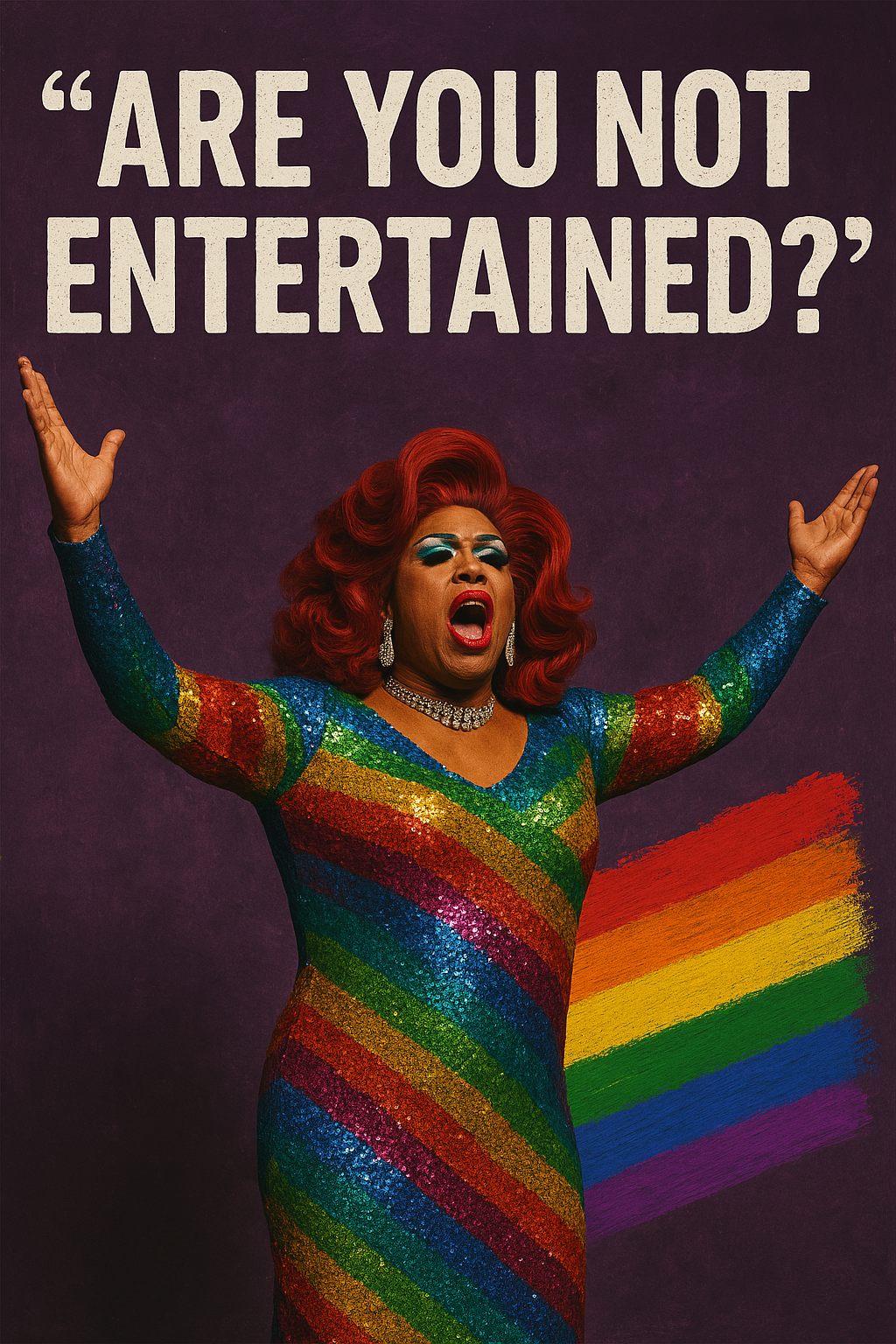
“Are you not entertained?”
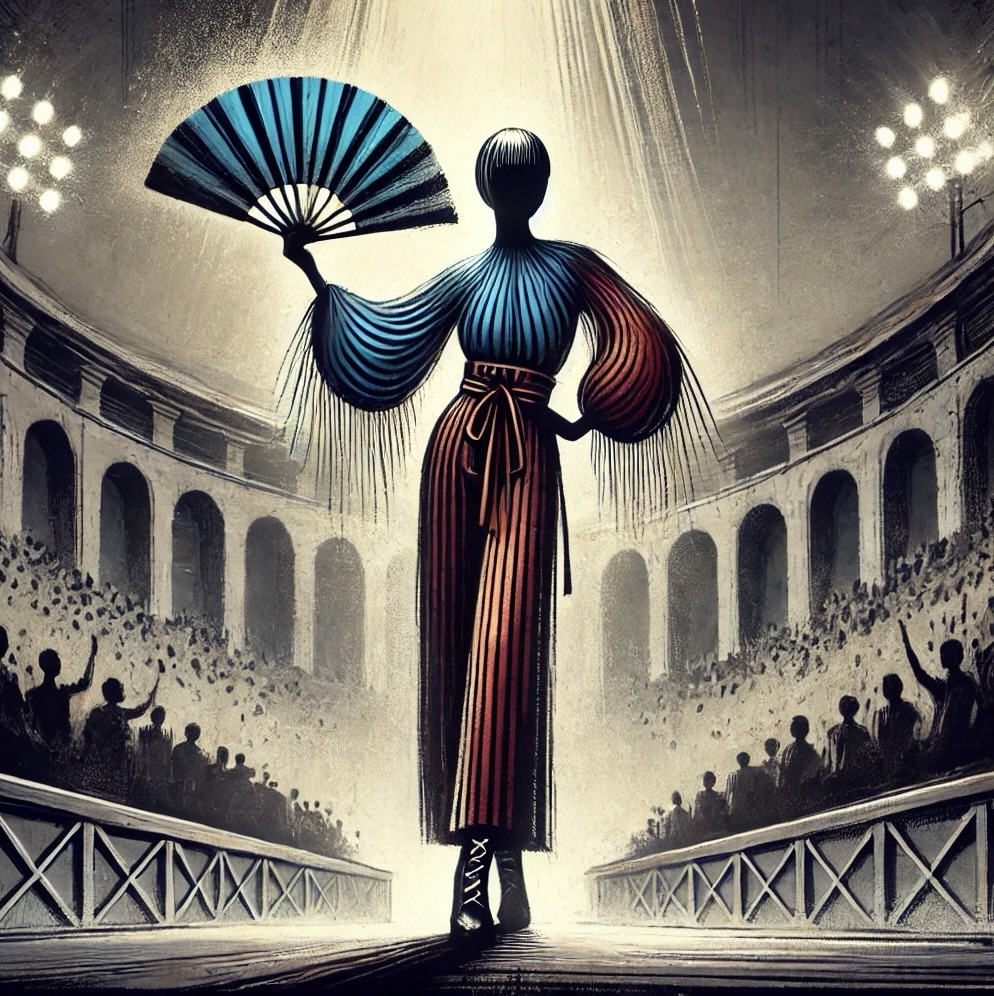
This iconic line, shouted by a bloodied Maximus in Gladiator, wasn’t a celebration of victory — it was a challenge. A callout. A haunting indictment of a society addicted to violence, numbed by spectacle, and detached from the humanity of those forced to perform. He wasn’t seeking applause. He was holding up a mirror.
More than two decades later, that same mirror reflects something eerily similar in the experience of queer people today — especially those whose identities are flamboyant, loud, expressive, and unapologetically visible.
The Spectacle of Queer Visibility
From Pride parades to drag performances, queer expression is often seen — and dismissed — as mere show. Colorful. Chaotic. Entertaining. Aesthetic. It’s packaged and consumed like a streaming show, a TikTok trend, a night out on the town. But beneath the glitter lies a deeper truth: visibility for queer people isn’t a costume — it’s courage.
Society too often views expressive queerness — especially drag, gender nonconformity, or flamboyant behavior — as performance. But these aren’t acts for applause. They’re acts of defiance in a world that polices difference. Every strut, every sequin, every “yes queen!” is stitched together by centuries of resistance, pain, and the radical right to exist.
So when society asks, “Why are they doing all this? Why do they need attention?”
The answer, echoing from Maximus, is simple: Are you not entertained?
The Double Bind of Visibility
Queer people walk a tightrope of contradiction. Be visible enough to advocate for rights, but not so visible that it makes others uncomfortable. Be proud, but not too proud. Be out, but not too loud.
This paradox plays out every day:
• A trans woman is called brave on a magazine cover, then harassed on the street.
• A drag performer wins an Emmy, then is banned from reading to children.
• A gay teen posts a dance video, then is doxxed and bullied offline.
Visibility becomes both lifeline and lightning rod. And the irony? The same society that celebrates queer culture in curated doses often vilifies it when it challenges their comfort.
Drag Is Not a Distraction — It’s a Declaration
Drag, in particular, sits at the center of this cultural conflict. Once underground, now mainstream (thanks in part to RuPaul’s Drag Race), it has been simultaneously commodified and condemned.
Drag is dismissed by critics as obscene, as grooming, as “just for fun.” But that framing erases its political roots. Drag was — and still is — a rebellion. A theatrical protest against gender norms, patriarchy, and erasure. It says: We’re here. We’re fierce. We won’t shrink to fit your expectations.
When a drag queen steps onto a stage or reads a book to children, that is not a performance for approval. It’s a statement of presence in a world that would rather they disappear.
Flamboyance Is Survival, Not Showboating
The flamboyant gay man. The femme nonbinary teen. The trans woman with bright eyeshadow and higher heels. These expressions aren’t for applause — they’re armor.
In a culture where queerness has historically been criminalized, pathologized, and punished, to exist out loud is an act of survival. These individuals aren’t performing for your amusement. They’re breathing in their full truth — something so many are denied.
And when people react with discomfort or accusation — “They’re just doing it for attention” — it reveals more about the observer than the observed.
When the World Demands Conformity, Expression Is Resistance
Every culture has norms. But when those norms are rigid, any deviation becomes disruption. Queer visibility disrupts the narrative of binary gender, heteronormative romance, and quiet assimilation. That disruption often triggers backlash.
But conformity is not peace — it’s compliance. And for queer people, especially those from marginalized intersections (Black, brown, disabled, poor), compliance has never guaranteed safety.
So instead, many choose to live vividly. Loudly. Colorfully. Not to entertain, but to exist on their own terms.
Society’s Uneasy Addiction to Queer Culture
Here lies the ultimate irony: society can’t stop watching queer people. From voguing in pop videos to queer slang in advertising, from Pride floats to rainbow capitalism, the world profits from queer aesthetics while rejecting queer lives.
It’s like watching Maximus fight — cheering the bloodshed but ignoring the cost.
So again we ask:
Are you not entertained?
Because if visibility rattles you, maybe it’s not the expression that’s the problem — it’s your expectations.
FAQs
1. Why is drag considered political?
Drag challenges gender norms and stereotypes. It has historically been a form of protest, particularly during events like the Stonewall Riots. Today, it still represents resistance, especially in the face of anti-LGBTQ+ legislation and cultural backlash.
2. Isn’t queer expression just for attention?
No. Queer expression is often a survival mechanism and a form of self-affirmation. It challenges conformity and gives voice to identities that have been historically erased or marginalized.
3. Why do some people feel uncomfortable with queer visibility?
Discomfort often stems from internalized biases or rigid expectations about gender and identity. Queer visibility challenges these norms, which can feel threatening to some.
4. How can allies support expressive queer culture?
By listening, learning, advocating, and showing up. Support local queer artists, attend drag shows, push back against harmful narratives, and vote for inclusive policies.
5. Isn’t visibility enough for LGBTQ+ rights?
Visibility is important but not sufficient. Legal protections, healthcare access, education, and cultural acceptance are all critical. Visibility without safety can still be dangerous.
6. What’s wrong with enjoying queer culture for entertainment?
Appreciating queer culture is fine, but problems arise when it’s consumed without respect for the people behind it. Enjoying the art while ignoring or undermining the artist’s humanity is exploitative.
The Cost of the Curtain Call
Queer people don’t exist to perform. And yet, every day, they are forced to audition for acceptance — in families, schools, jobs, and public life. The performance is relentless, and the stakes are life and death.
So when the world gawks at drag queens, critiques gay men for being “too much,” or questions why a trans person is “so visible,” remember this:
They’re not asking for your entertainment. They’re demanding your recognition.
Your True Direction is dedicated to empowering individuals navigating life’s transitions. Through inspiring stories and actionable strategies, we aim to help you reclaim ambition, overcome challenges, and thrive in every stage of your journey.
Connect with Us
Follow us on Medium @YourTrueDirection
Your journey is yours to shape — take the next step in Your True Direction.
How Elton John’s I’m Still Standing Reflects a Veteran’s Journey
By R. T. Garner
“I’m still standing better than I ever did / Looking like a true survivor, feeling like a little kid.”
For David, a gay veteran just returning home from the front lines, the war was not yet finished. Upon his return home, he battled a different kind — one that tried to his sense of survival, identity, and belonging. As a young child, his father would make nasty comments to him, including, “If you are gay, I will kill you.” Long after he had left his family, long after he had served his nation, long after he had come out to himself, these remarks kept playing back in his head.
Image generated by Author
The road ahead for David was far from easy. But like Elton John’s I’m Still Standing, his story is a testament to the power of resilience, to the unyielding strength that keeps us moving forward when the world seems determined to knock us down.
“I’m still standing after all this time / Picking up the pieces of my life without you on my mind.”
The Battle Before the Battle
Before David even entertained the idea of joining the military, he was having trouble with an argument that was occurring within himself. In light of the fact that his father disapproved of him, it became painfully evident that expressing his true self was not a risk-free alternative. Although the fact that he felt strongly, he denied his feelings, which ended up in an overwhelming feeling of loneliness within him. This immense burden was a reflection of the weight of the struggle that he was carrying. He felt a great sense of betrayal in the air as he tried to deal with the expectations around him. As the weight of his hidden truth settled upon him, bringing him to barely a shadow of himself, the fight for air got harder and harder. His emotional health had suffered dramatically from societal unrelenting rejection, which kept him in a vicious struggle.
This emotional suppression followed him into adulthood. When he joined the military, Don’t Ask, Don’t Tell only reinforced the belief that he was needed to stay hidden. David’s military achievements were impressive, yet each promotion left him feeling empty, a stark contrast to his outward success. He was fighting for a country that wouldn’t accept him for who he was, a dissonance that echoed through his life.
“And if you need to know while I’m still standing, you just fade away.”
David began to internalize the rejection he’d faced, believing the lie that his worth was conditional. But his story didn’t end there.
Image generated by Author
Resilience: The Heartbeat of Survival
Resilience wasn’t just a buzzword for David; it was his lifeline. It carried him through his father’s rejection, the pressure of military life, and the isolation that followed him home. Just like Elton John sings, resilience isn’t about denying the pain — it’s about rising above it.
1. Reclaiming His Identity
David’s first battle after returning home was reclaiming his identity. Years of hiding who he was had taken a toll. He’d spent so long trying to meet others’ expectations that he’d forgotten who he wanted to be.
“Don’t you know I’m still standing better than I ever did?”
Through therapy and self-reflection, David began to piece himself back together. He realized that his identity wasn’t something to be ashamed of — it was a source of strength.
2. Healing From Rejection
The words of his father had haunted David for years, shaping how he viewed himself and his relationships. Even after his father passed, David felt the weight of that rejection. He couldn’t let go of the idea that he had to earn love and respect.
But resilience meant refusing to let that rejection define him. As Elton John’s lyrics echo, “Picking up the pieces of my life without you on my mind,” David learned to leave the pain of his father’s words in the past. He couldn’t change his father’s views, but he could change how much power those views held over him.
3. Embracing Love and Connection
For David, resilience also meant opening himself up to love and connection. His years in the military had taught him to rely only on himself, but this isolation couldn’t last forever.
He found a chosen family in the LGBTQ+ community — people who embraced him fully and saw him as strong, capable, and worthy of love. Romantic relationships were a new challenge, but each step forward was a victory.
“I’m still standing, yeah, yeah, yeah.”
The Unseen Battle: Misconceptions and Isolation
One of David’s biggest struggles after leaving the military wasn’t his own identity — it was how others perceived him. Friends and family assumed he was either too fragile or completely invincible. Both perspectives left him feeling isolated.
Coworkers and acquaintances avoided deeper conversations, either out of discomfort or misplaced fear of offending him.Romantic partners often misunderstood his hesitation to open up, mistaking it for indifference rather than self-preservation.
“Once I never could have hoped to win / You’re starting down the road leaving me again.”
But David’s resilience came through again. He began setting boundaries, clearly communicating his needs, and finding strength in being vulnerable. The more he shared his story, the more he realized that people wanted to understand — they just didn’t know how to start.
The Turning Point: “I’m Still Standing” as a Rallying Cry
One day, while driving alone, David heard I’m Still Standing on the radio. The lyrics struck a chord, echoing his struggles and triumphs. He pulled over, letting the music wash over him.
“I’m still standing better than I ever did / Looking like a true survivor, feeling like a little kid.”
For the first time in years, he saw himself not as a victim of his circumstances but as a survivor. Every hardship he’d faced had shaped him into the resilient man he was. From that moment on, David decided toreclaim his narrative.
Image generated by Author
A New Chapter: Living With Resilience
David’s journey didn’t end with that song, but it marked a turning point. He began to live with purpose, advocating for LGBTQ+ veterans and sharing his story to inspire others.
Resilience, he learned, wasn’t about erasing the past. It was about carrying the lessons of those experiences and using them to build a stronger future.
“I’m still standing after all this time.”
Final Thoughts: The Strength to Stand Tall
David’s story mirrors the journey of countless veterans who face rejection, isolation, and identity struggles. It’s a reminder that resilience isn’t about avoiding hardship — it’s about rising above it.
Elton John’s I’m Still Standing captures this spirit perfectly, celebrating the strength to persevere and the courage to rebuild. For David, the song became more than an anthem — it became a declaration of who he was and who he was becoming.
To anyone who feels like the world is trying to knock them down: You’re stronger than you think. Keep standing tall.
“I’m still standing.”
The River of Resilience: How Elton John’s I’m Still Standing Reflects a Veteran’s Journey
“I’m still standing better than I ever did / Looking like a true survivor, feeling like a little kid.”
For David, a gay veteran just returning home from the front lines, the war was not yet finished. Upon his return home, he battled a different kind — one that tried to his sense of survival, identity, and belonging. As a young child, his father would make nasty comments to him, including, “If you are gay, I will kill you.” Long after he had left his family, long after he had served his nation, long after he had come out to himself, these remarks kept playing back in his head.
The road ahead for David was far from easy. But like Elton John’s I’m Still Standing, his story is a testament to the power of resilience, to the unyielding strength that keeps us moving forward when the world seems determined to knock us down.
“I’m still standing after all this time / Picking up the pieces of my life without you on my mind.”
The Battle Before the Battle
Before David even entertained the idea of joining the military, he was having trouble with an argument that was occurring within himself. In light of the fact that his father disapproved of him, it became painfully evident that expressing his true self was not a risk-free alternative. Although the fact that he felt strongly, he denied his feelings, which ended up in an overwhelming feeling of loneliness within him. This immense burden was a reflection of the weight of the struggle that he was carrying. He felt a great sense of betrayal in the air as he tried to deal with the expectations around him. As the weight of his hidden truth settled upon him, bringing him to barely a shadow of himself, the fight for air got harder and harder. His emotional health had suffered dramatically from societal unrelenting rejection, which kept him in a vicious struggle.
This emotional suppression followed him into adulthood. When he joined the military, Don’t Ask, Don’t Tell only reinforced the belief that he was needed to stay hidden. David’s military achievements were impressive, yet each promotion left him feeling empty, a stark contrast to his outward success. He was fighting for a country that wouldn’t accept him for who he was, a dissonance that echoed through his life.
“And if you need to know while I’m still standing, you just fade away.”
David began to internalize the rejection he’d faced, believing the lie that his worth was conditional. But his story didn’t end there.
Resilience: The Heartbeat of Survival
Resilience wasn’t just a buzzword for David; it was his lifeline. It carried him through his father’s rejection, the pressure of military life, and the isolation that followed him home. Just like Elton John sings, resilience isn’t about denying the pain — it’s about rising above it.
1. Reclaiming His Identity
David’s first battle after returning home was reclaiming his identity. Years of hiding who he was had taken a toll. He’d spent so long trying to meet others’ expectations that he’d forgotten who he wanted to be.
“Don’t you know I’m still standing better than I ever did?”
Through therapy and self-reflection, David began to piece himself back together. He realized that his identity wasn’t something to be ashamed of — it was a source of strength.
2. Healing From Rejection
The words of his father had haunted David for years, shaping how he viewed himself and his relationships. Even after his father passed, David felt the weight of that rejection. He couldn’t let go of the idea that he had to earn love and respect.
But resilience meant refusing to let that rejection define him. As Elton John’s lyrics echo, “Picking up the pieces of my life without you on my mind,” David learned to leave the pain of his father’s words in the past. He couldn’t change his father’s views, but he could change how much power those views held over him.
3. Embracing Love and Connection
For David, resilience also meant opening himself up to love and connection. His years in the military had taught him to rely only on himself, but this isolation couldn’t last forever.
He found a chosen family in the LGBTQ+ community — people who embraced him fully and saw him as strong, capable, and worthy of love. Romantic relationships were a new challenge, but each step forward was a victory.
“I’m still standing, yeah, yeah, yeah.”
The Unseen Battle: Misconceptions and Isolation
One of David’s biggest struggles after leaving the military wasn’t his own identity — it was how others perceived him. Friends and family assumed he was either too fragile or completely invincible. Both perspectives left him feeling isolated.
Coworkers and acquaintances avoided deeper conversations, either out of discomfort or misplaced fear of offending him.Romantic partners often misunderstood his hesitation to open up, mistaking it for indifference rather than self-preservation.
“Once I never could have hoped to win / You’re starting down the road leaving me again.”
But David’s resilience came through again. He began setting boundaries, clearly communicating his needs, and finding strength in being vulnerable. The more he shared his story, the more he realized that people wanted to understand — they just didn’t know how to start.
The Turning Point: “I’m Still Standing” as a Rallying Cry
One day, while driving alone, David heard I’m Still Standing on the radio. The lyrics struck a chord, echoing his struggles and triumphs. He pulled over, letting the music wash over him.
“I’m still standing better than I ever did / Looking like a true survivor, feeling like a little kid.”
For the first time in years, he saw himself not as a victim of his circumstances but as a survivor. Every hardship he’d faced had shaped him into the resilient man he was. From that moment on, David decided to reclaim his narrative.
A New Chapter: Living With Resilience
David’s journey didn’t end with that song, but it marked a turning point. He began to live with purpose, advocating for LGBTQ+ veterans and sharing his story to inspire others.
Resilience, he learned, wasn’t about erasing the past. It was about carrying the lessons of those experiences and using them to build a stronger future.
“I’m still standing after all this time.”
Final Thoughts: The Strength to Stand Tall
David’s story mirrors the journey of countless veterans who face rejection, isolation, and identity struggles. It’s a reminder that resilience isn’t about avoiding hardship — it’s about rising above it.
Elton John’s I’m Still Standing captures this spirit perfectly, celebrating the strength to persevere and the courage to rebuild. For David, the song became more than an anthem — it became a declaration of who he was and who he was becoming.
To anyone who feels like the world is trying to knock them down: You’re stronger than you think. Keep standing tall.
“I’m still standing.”
About Your True Direction
Your True Direction is dedicated to empowering individuals navigating life’s transitions. Through inspiring stories and actionable strategies, we aim to help you reclaim ambition, overcome challenges, and thrive in every stage of your journey.
Connect with Us
Follow us on Medium: @YourTrueDirection
Have a story to share or want to collaborate? Email Ryan at ryan@yourtruedirection.com.
Thank You for Reading! Your journey is yours to shape — take the next step in Your True Direction. If this article resonated with you, don’t forget to clap, share, and follow us for more inspiring content!