Tag: Relationships

  • If My Pride Offends You, That’s the Point

    Your True Direction

    This isn’t a phase. This isn’t a performance. This is my truth — loud, raw, and unapologetic. If it makes you uncomfortable, that’s the point. 🏳️‍🌈🔥

    Yeah.

    I’m gay.

    And I say it with my whole chest.

    Not just a whisper in safe spaces.

    Not just a hashtag in June.

    Not just when I’m around people who “get it.”

    I’m gay. Loud. Proud. And not here to make it easier for you to swallow.

    You uncomfortable?

    Good.

    Sit in it.

    Because I marinated in your comfort for years —

    choking on my own truth

    so you could keep sipping coffee in your illusion.

    I’ve had people look me dead in the face and say,

    “I don’t care what you do — just don’t make it political.”

    But my existence has always been political.

    You politicized me before I ever opened my mouth.

    Before I ever held the hand of someone I loved.

    Before I ever said the words out loud that almost killed me in silence.

    You don’t get to say

    “Live and let live”

    and then look away when laws strip my humanity.

    You don’t get to say

    “I have no problem with gay people”

    but then flinch when we stop apologizing for being visible.

    You don’t get to play peacekeeper

    when you’ve been sitting on the side of the oppressor

    just because you weren’t holding the weapon.

    Let me make this clear:

    I don’t exist for your approval.

    I don’t walk into rooms hoping to be tolerated.

    I walk in knowing I belong — whether you like it or not.

    I’ve spent years editing myself,

    softening my voice,

    adjusting the way I speak,

    the way I dress,

    the way I breathe —

    just to make myself smaller for a world that couldn’t handle someone like me.

    And now?

    Now I expand.

    Now I take up space.

    Now I let every ounce of who I am fill the room,

    because I’m done pretending that survival is the same thing as peace.

    You don’t know what it’s like

    to love with one eye over your shoulder.

    To laugh carefully.

    To watch how you sit, speak, smile, exist —

    because any part of you might give away a truth

    they’re still ready to crucify.

    But I do.

    And I survived it.

    So I’m not going back.

    You wanna roll your eyes at Pride?

    You wanna call it “too much”?

    You wanna scoff at the flags,

    the colors,

    the noise?

    That’s because you’ve never had to fight

    just to feel normal in your own f*cking skin.

    Pride isn’t decoration.

    It’s declaration.

    It’s defiance.

    It’s a middle finger to every system, every church, every family

    that made us believe we were born broken.

    So yeah.

    I’m gay.

    And I don’t owe you an explanation.

    I don’t owe you a filter.

    I don’t owe you the watered-down version

    that makes you feel okay.

    You don’t like it?

    Block me.

    Mute me.

    Write me off.

    But what you won’t do — what you can’t do — is erase me.

    Because I’m not going anywhere.

    I’m not some trend.

    Not some “phase.”

    Not some character in a sitcom made for your entertainment.

    I am real.

    I am alive.

    I am not asking.

    I speak now for every queer kid who’s still hiding.

    For every adult who still flinches when someone asks about their personal life.

    For every soul who thought loving who they love meant losing everything else.

    I speak now because silence was never peace —

    it was a slow death dressed in politeness.

    But this?

    This is life.

    This is freedom.

    This is fire.

    So if my truth is too loud for you,

    cover your ears.

    But don’t expect me to lower my voice.

    Because I was quiet once.

    And it almost destroyed me.

    Now I live with the volume all the way up.

    And I’m not turning it down for anyone.

    Happy Pride.

    We’re not here to be liked.

    We’re here to live.

    We’re here to lead.

    We’re here to burn down every lie

    that told us we had to earn the right to exist.

    Yes.

    I’m gay.

    And if you can’t handle that —

    that’s a you problem.

    Enjoyed this article? Please support our work!

    ☕ Buy me a coffee: Thank You!

    About Your True Direction

    I’m not here to play nice, I’m here to make change. I work with veterans, teens, career shifters, and anyone who’s ever been told they’re too late, too broken, or too much. I help people rewrite their story when the world hands them a script they never asked for.

    I don’t save people. I remind them how to save themselves.

    That’s my legacy, and I’m just getting started.

    Follow along as I speak truth, challenge systems, and help folks build a life that actually fits.

    Connect with Us

    Follow us on Medium @YourTrueDirection.

    Your journey is yours to shape, take the next step in Your True Direction.

  • If My Pride Offends You – That’s the Point

    A letter to the mother who taught me how to hide myself.

    Your True Direction

    For every son or daughter who’s ever been told to tone it down, hide who they are, or “keep it in the family” – this is for you.

    For every queer kid whose parents tried to shove them back in the closet after they finally broke free of it.

    This isn’t a plea for acceptance.

    It’s a warning shot.

    We’re done apologizing.

    I walked away from the house that taught me to hate my own reflection – and I didn’t look back.

    Mom,

    Let’s cut through the crap.

    That poem I posted – “If My Pride Offends You, That’s the Point” 

    Yeah. That was about you.

    Every single line.

    Every word carved out of the silence you insisted I keep.

    Every sentence soaked in all the times I swallowed myself to keep you comfortable.

    You want to know why I wrote it?

    Why I don’t come around anymore?

    Why the version of me who still wanted your approval is dead and buried?

    Because I got tired of being the only one who ever had to shrink.

    Let’s go back.

    When I told you I wanted to marry Chris,

    you didn’t smile.

    You didn’t cry happy tears.

    You didn’t ask what kind of cake we were having or what colors we picked.

    You looked me dead in the eye and said,

    “Are you sure?”

    Like I just told you I was getting a face tattoo, not committing my life to the person I love.

    Then you tried to walk it back.

    Tried to say you asked Benny and Ashley the same thing.

    No, you didn’t.

    Don’t insult my intelligence.

    You celebrated their love because it fit inside your box.

    You accepted their marriages without a flinch.

    But with me?

    You flinched.

    And then came the wedding.

    Your judgment didn’t stop.

    You said we shouldn’t dance.

    Because “someone might not like it.”

    You ever ask me if I liked spending my life editing who I am just to be allowed in a room?

    You didn’t care about that.

    You cared about optics.

    About shame.

    About what people would say.

    Then Dad didn’t show up.

    And you say, “I argued with him.”

    Really?

    When?

    Where?

    Because I never saw it.

    You didn’t raise your voice.

    You didn’t defend me.

    You didn’t say,

    “Then I’m not going either.”

    You didn’t say,

    “That’s your son, and he matters.”

    You just stayed quiet.

    Sat in it.

    Normalized it.

    You want points for arguing behind closed doors?

    You don’t get credit for invisible battles when your son was left standing alone at his own wedding.

    And if all that wasn’t enough?

    Let’s talk about Thanksgiving.

    Our first one after we were married.

    Chris and I show up – husband and husband.

    Legal. Legitimate. Real.

    And what do you do?

    You introduce him as “Ryan’s friend.”

    Not my partner.

    Not my husband.

    Not family.

    A friend.

    And when my nephew tried to introduce Chris properly,

    you corrected him.

    You corrected him.

    Let’s talk about that, Mom.

    Because what you said in that moment was loud as hell:

    That I was an embarrassment.

    That Chris, who is legally part of this family, wasn’t welcome as who he was.

    That being gay is something to downplay, something to manage, something to cover in polite company.

    What if Cody was gay?

    What did you just teach him?

    That if he ever loved differently, he’d have to hide it?

    That his truth would embarrass you, too?

    Because that’s what you said without saying it.

    And let me tell you:

    I heard you.

    He heard you.

    Everyone heard you.

    I used to think you just didn’t understand.

    But now I realize you did.

    And you chose silence anyway.

    You say, “I’ve always loved you.”

    No, Mom.

    You loved the version of me that was small.

    Quiet.

    Careful.

    Filtered.

    Tolerable.

    You loved me when I was convenient.

    But every time I stepped closer to truth – you stepped back.

    That poem?

    That wasn’t for show.

    That was the sound of my ribs cracking open so my soul could finally breathe.

    It was everything I never got to say while you smiled and shifted and pretended everything was fine.

    You’ve said things like, “Don’t post that.”

    “Don’t say that at dinner.”

    “Keep it private.”

    No.

    I’m done keeping your secrets.

    Done protecting people who never protected me.

    Done tiptoeing around your shame like it’s my burden to carry.

    If my pride offends you?

    Good. That means it’s working.

    Because I’m not here to make it easy for you anymore.

    I’m not here to fold my love into something that fits your dinner plates.

    I’m not here to pretend your silence was love when it was just fear wearing a cardigan.

    You had a chance to love me boldly.

    You had a chance to say,

    “That’s my son. That’s his husband. This is family.”

    You didn’t.

    You chose quiet.

    You chose image.

    You chose your comfort over my dignity.

    So no, I don’t call.

    No, I don’t come around.

    Because every time I did, I had to leave pieces of myself at the door.

    And now?

    I refuse.

    I take up space.

    I speak loud.

    I post what I want.

    I dance with my husband.

    And if that makes you uncomfortable?

    That’s. The. Point.

    You had your chance to show up.

    You had your chance to speak out.

    You had your chance to be proud.

    Now I’ll do it for myself.

    And I won’t lower the volume just because you’re still not ready to hear the truth.

    – Ryan

    Enjoyed this article? Please support our work!

    ☕ Buy me a coffee: Thank You!

    About Your True Direction

    I’m not here to play nice, I’m here to make change. I work with veterans, teens, career shifters, and anyone who’s ever been told they’re too late, too broken, or too much. I help people rewrite their story when the world hands them a script they never asked for.

    I don’t save people. I remind them how to save themselves.

    That’s my legacy, and I’m just getting started.

    Follow along as I speak truth, challenge systems, and help folks build a life that actually fits.

    Connect with Us

    Follow us on Medium @YourTrueDirection.

    Your journey is yours to shape, take the next step in Your True Direction.

  • The Day Love Was Conditional: Healing Without Closure from Family Estrangement

    The Day Love Was Conditional: Healing Without Closure from Family Estrangement

    Day 1 of a 7-part series exploring the emotional cost of conditional love, family estrangement, and the quiet strength it takes to heal when those meant to love you choose silence instead.

    Your True Direction

    Sometimes, the loudest absences are the ones that never needed words. This empty chair holds the weight of what was missing.

    The Day Love Was Conditional

    On what should’ve been one of the happiest days of my life, my wedding, I was met not with celebration, but silence. Not because I didn’t invite my father, but because he chose not to come. He couldn’t support me marrying the man I love. That silence has lasted for 3,116 days.

    And it still echoes.

    What Is Parental Rejection and Why It Hurts So Deeply

    Parental rejection is the denial of emotional, physical, or moral support from a parent to a child. It cuts especially deep when rooted in identity, whether it’s about sexuality, gender, religion, or personal choices. For LGBTQ+ individuals, this kind of rejection can be life-altering.

    When a parent turns their back not on your actions, but your essence, it sends one clear message: You are not enough.

    The Hidden Weight of Conditional Love

    Love that comes with strings attached is not love; it’s control in disguise. It’s the unspoken rule that says, “Be who we want you to be, or else.”

    When my father said, “I love you, but…,” I learned that love had conditions. That I had to earn my worth. That my joy came second to his discomfort.

    “I Love You, But…” — The Words That Haunt

    Those five words are silent daggers. They divide families. They teach shame. They echo for years.

    For LGBTQ+ individuals, these statements validate a lie we’ve heard too often: You are not worthy of love unless you conform.

    This leads to internal conflict, wanting to be accepted, while also needing to be authentic.

    The Long-Term Effects of Being Rejected by a Parent

    Here’s what many don’t realize: this pain doesn’t fade. It morphs into:

    • Anxiety and self-doubt
    • Fear of abandonment in adult relationships
    • Difficulty trusting others
    • Depression and complex trauma
    • Perfectionism or people-pleasing
    • Estrangement from family
    • Loss of cultural or religious identity

    We carry it silently until we don’t anymore.

    Rewriting the Narrative: Healing Through Self-Acceptance

    Healing begins when you stop seeking approval from those who can’t give it, when you stop blaming yourself. When you realize you are worthy of love, just as you are.

    I stopped chasing their acceptance and began creating my own definition of family. I chose to love myself the way they couldn’t.

    And it changed everything.

    7 Ways Parental Rejection Damages LGBTQ+ Children

    1. Shame-Based Identity — Children internalize guilt over something they cannot change.
    2. Mental Health Struggles — Higher rates of depression, self-harm, and suicide.
    3. Loss of Safety Net — Lack of emotional or financial support during critical years.
    4. Estrangement Trauma — Fear of being “cut off” for who they are.
    5. Delayed Self-Acceptance — Many suppress their identity far into adulthood.
    6. Attachment Wounds — Struggles with romantic and platonic relationships.
    7. Life-Limiting Beliefs — “I’m not enough,” “I’m unlovable,” “I’ll be alone forever.”

    Resources: Support Systems for Healing and Growth

    If you or someone you love has experienced parental rejection, you’re not alone. Here are some powerful resources:

    • PFLAG — The nation’s largest organization for LGBTQ+ people, their parents, and families.
    • The Trevor Project — Crisis intervention and suicide prevention for LGBTQ+ youth.
    • It Gets Better Project — Uplifting stories and resources for LGBTQ+ teens and adults.
    • Therapy for LGBTQ+ Issues on Psychology Today — Find LGBTQ-affirming therapists in your area.
    • GLAAD — Media advocacy and resources to support LGBTQ+ representation and support.

    FAQs About Parental Rejection and LGBTQ+ Identity

    Q1: Is it common for LGBTQ+ people to be rejected by their parents?
    Yes, unfortunately. Studies show nearly 40% of LGBTQ+ youth report parental rejection at some point in their lives.

    Q2: How can I begin to heal after being rejected by a parent?
    Start by affirming your own identity, seeking LGBTQ+ communities, and working with a trauma-informed therapist.

    Q3: Should I try to reconcile with my parents?
    Only if it supports your healing. Reconciliation should never come at the cost of your mental health or authenticity.

    Q4: What if my parents say they love me but still don’t support my relationship?
    That’s conditional love. You deserve to be supported fully, without exceptions.

    Q5: Is it okay to set boundaries or go no contact with parents?
    Yes. Boundaries are essential for healing and safety — especially in toxic dynamics.

    Q6: How do I find chosen family or supportive communities?
    Start with LGBTQ+ support groups, online forums, or local centers. Community is healing.

    The Light Beyond the Silence

    If your story mirrors mine, know this: You are not broken. You are not unworthy. And the absence of someone at your wedding — or in your life — does not define your value.

    The day love became conditional was painful, yes. But it also became the day I chose myself.

    And that is a love that cannot be revoked.

    🗓️ Up Next in the Series…

    Coming Tomorrow:
    👉 Day 2 — Emotional Abuse Doesn’t End in Childhood →

    Follow me on Medium to get notified when the next part goes live 💌

    Enjoyed this article? Support our work!

    ☕ Buy me a coffee: Thank You!

    About Your True Direction

    Your True Direction is dedicated to empowering individuals navigating life’s transitions. Through inspiring stories and actionable strategies, we aim to help you reclaim ambition, overcome challenges, and thrive in every stage of your journey.

    Connect with Us

    Follow us on Medium @YourTrueDirection

    Your journey is yours to shape — take the next step in Your True Direction.

  • The Day Love Was Conditional: Healing Without Closure from Family Estrangement

    Day 1 of a 7-part series exploring the emotional cost of conditional love, family estrangement, and the quiet strength it takes to heal when those meant to love you choose silence instead.

    Sometimes, the loudest absences are the ones that never needed words. This empty chair holds the weight of what was missing.

    The Day Love Was Conditional

    What Is Parental Rejection and Why It Hurts So Deeply

    The Hidden Weight of Conditional Love

    “I Love You, But…” — The Words That Haunt

    The Long-Term Effects of Being Rejected by a Parent

    • Anxiety and self-doubt
    • Fear of abandonment in adult relationships
    • Difficulty trusting others
    • Depression and complex trauma
    • Perfectionism or people-pleasing
    • Estrangement from family
    • Loss of cultural or religious identity

    Rewriting the Narrative: Healing Through Self-Acceptance

    7 Ways Parental Rejection Damages LGBTQ+ Children

    1. Shame-Based Identity — Children internalize guilt over something they cannot change.
    2. Mental Health Struggles — Higher rates of depression, self-harm, and suicide.
    3. Loss of Safety Net — Lack of emotional or financial support during critical years.
    4. Estrangement Trauma — Fear of being “cut off” for who they are.
    5. Delayed Self-Acceptance — Many suppress their identity far into adulthood.
    6. Attachment Wounds — Struggles with romantic and platonic relationships.
    7. Life-Limiting Beliefs — “I’m not enough,” “I’m unlovable,” “I’ll be alone forever.”

    Resources: Support Systems for Healing and Growth

    • PFLAG — The nation’s largest organization for LGBTQ+ people, their parents, and families.
    • The Trevor Project — Crisis intervention and suicide prevention for LGBTQ+ youth.
    • It Gets Better Project — Uplifting stories and resources for LGBTQ+ teens and adults.
    • Therapy for LGBTQ+ Issues on Psychology Today — Find LGBTQ-affirming therapists in your area.
    • GLAAD — Media advocacy and resources to support LGBTQ+ representation and support.

    FAQs About Parental Rejection and LGBTQ+ Identity

    The Light Beyond the Silence

    🗓️ Up Next in the Series…

    Enjoyed this article? Support our work!

  • Am I the Villain?

    Facing Toxic Family Dynamics Head-On

    By R.T. Garner

    Let’s be real—sometimes, doing the right thing doesn’t feel heroic. When it comes to calling out toxic family behavior, that’s doubly true. Speaking up in the name of mental clarity and self-respect? That might get you branded the “bad guy.” But guess what? You’ve got every right to question, to challenge, and to confront. Let’s cut through the sentimentality and dig into why standing up for yourself in family settings can feel like an emotional minefield, especially when it makes you public enemy number one.

    ”Am I The Villain?“ generated by author

    The Hard Truth About Toxic Relationships

    Here’s the rub: plenty of people trudge through life clinging to unhealthy family dynamics because, hey, it’s family, right? Toxicity shows up in many guises — manipulation, constant criticism, guilt-tripping, and, of course, the all-time favorite: gaslighting. These patterns can rip you apart mentally and emotionally, leaving you with anxiety, self-doubt, or worse.

    The hardest part? Realizing it’s not on you to carry the weight of this dysfunction just because society has gift-wrapped family loyalty as some sacred bond. It’s possible that a parent or close relative is the primary source of your emotional strain, and recognizing that takes guts. But awareness is only the start — you have actually to decide what you’re going to do about it.

    (Read more about Toxic family dynamics: signs you grew up in a dysfunctional family here)

    Taking a Stand: No One Said This Would Be Easy

    Deciding to confront a family member isn’t about nit-picking old wounds. It’s about breaking cycles that should’ve been shattered years ago. But let’s face it: calling out these behaviors might just be the hardest thing you have ever done. You’re not just questioning an individual’s actions; you’re upending an entire family system built on looking the other way.

    And this confrontation? It won’t just shake the person you’re calling out; it will rock the entire family. Your call for honesty might get met with resistance, denial, and downright hostility because, frankly, change scares people. If everyone’s been playing by unwritten rules for years, they’re not going to like someone showing up and tossing the rulebook out the window.

    ”Taking A Stand!“ geberated by author

    Why Do I Look Like the Bad Guy?

    So you did it. You spoke up. But instead of applause for your bravery, you get side-eyes and a cold shoulder. Welcome to the club. The truth is that family members might prefer to stay comfortably in denial, even if it means sacrificing your well-being. Here’s why:

    Comfort in Dysfunction: Family systems thrive on equilibrium — even if it’s an equilibrium based on emotional blackmail and selective silence. Your attempt to break the cycle forces everyone to look in the mirror, and for some, that’s a step too far.

    Blind Loyalty & Manipulation: Toxic family members are often masters of manipulation. They’ll play the sympathy card, the guilt card, or whatever card is necessary to keep everyone on their side. Other family members may feel torn between supporting you and upholding a lifetime of emotional loyalty, choosing comfort over truth, and labeling you as the disruptor.

    Cultural and Social Pressure: Many people grew up in cultures that hold family, particularly parents, in a place of sacred respect. To them, questioning a parent feels like heresy, making you seem defiant or disrespectful. But respect and blind allegiance aren’t the same thing, and it’s okay to remind yourself of that.

    Handling the Backlash: It’s Tough, But You’re Tougher

    Standing up for yourself doesn’t mean you’re just bulldozing through emotional landmines without taking care of yourself. Here’s what you need to do to protect your own peace:

    Find Real Support: Lean on friends, therapists, or support groups who won’t guilt-trip you for standing your ground. These people help you stay grounded and remind you that your feelings are valid.

    Set Boundaries, Hard and Fast: Boundaries aren’t suggestions — they’re survival mechanisms. Decide what behaviors you won’t tolerate and stick to it. Whether that means reducing contact or having zero tolerance for manipulation, make your lines clear.

    Focus on Healing: Healing isn’t passive. It’s a daily choice. Whether it’s therapy, journaling, exercise, or anything else that helps, make sure you’re building yourself back up as fiercely as you’re breaking away from toxic dynamics.

    (Read more Surviving Toxic Family Relationships: When to Set Boundaries and Walk Away)

    Boundaries generated by author

    You’ve Made the Right Call

    Yes, speaking up might paint you as the “bad guy” for now. But keep this front of mind: choosing your mental health, your peace, and your self-respect is never the wrong call. Sure, some family members may not understand. They may never come around. But over time, your clarity of purpose and the improvement in your mental well-being will tell you everything you need to know.

    Real families support, respect, and care for each other. If yours isn’t giving you that, it’s okay to seek that love and support elsewhere. You only get one life. Don’t let the voices in your head — or in your family — tell you otherwise. So yeah, embrace being the “bad guy.” Because at the end of the day, advocating for yourself isn’t villainy; it’s the ultimate act of courage.

    Facebook

  • Narcissistic Parenting — How They Keep You Small and Powerless

    By Aiden Cross

    Last time, we exposed the sneaky truth behind the phrase, “You’re not a parent, so you don’t understand.” It’s more than just dismissive — it’s a weapon in the narcissist’s arsenal of control. This time, we’re diving even deeper to uncover how narcissistic parents use manipulation to keep you doubting yourself and stuck in their cycle of power plays.

    Here’s the Harsh Reality:

    Narcissistic parents are all about staying on top, and they do it by cutting you down at every turn. It’s not about raising you to be independent or strong — it’s about keeping you dependent, weak, and always questioning your own worth. Why? Because the moment you realize you can think for yourself, their control over you begins to crumble. They can’t have that.

    So, what’s their game plan? Simple — they sabotage your confidence and keep you in a constant loop of self-doubt.

    Undermining Your Independence: The Power Play Behind “You Don’t Understand”

    Every time they throw out the line, “You don’t understand because you’re not a parent,” what they’re really saying is, “Stay in your place. I’m in charge. You’re just the kid.”

    This is more than just a dismissive comment — it’s a tactic to belittle your perspective and reinforce their dominance. It’s a not-so-subtle way of saying, “Don’t even try to have a different opinion, because my status as ‘the parent’ trumps whatever you think.”

    Make no mistake, this isn’t about parental wisdom or experience. It’s about keeping you small and in your lane, always beneath them. It’s about making sure you never feel like you have the right to challenge their authority or make decisions for yourself.

    Emotional Manipulation at Its Finest: Twisting Reality to Keep You in Check

    Narcissistic parents thrive on emotional manipulation because it’s their number one tool for control. They don’t just want to win the argument — they want you to feel like you’re fundamentally wrong for even thinking differently.

    When they drop phrases like “You don’t understand,” it’s not just shutting down the conversation. It’s a tactic to deflect any real dialogue and keep the focus on their superiority. They’ll twist your words, make you second-guess yourself, and deflect any responsibility. The goal is simple: to make you question your reality, leaving you scrambling for their approval.

    It’s gaslighting, plain and simple. And it’s meant to keep you confused, off-balance, and always under their thumb.

    Destroying Your Confidence: The Silent Sabotage

    Here’s the brutal truth — after years of hearing that you “don’t understand,” you start to believe it. Slowly but surely, your confidence erodes. You second-guess your decisions. You doubt your instincts. And that’s exactly what they want.

    Narcissistic parents aren’t interested in your growth or self-assurance. They’d rather keep you insecure because that’s when you’re most vulnerable. That’s when you’re most likely to turn to them for validation, for permission to trust your own judgment.

    This is their endgame: to keep you questioning yourself so they can maintain control over you. It’s a subtle but powerful form of sabotage that leaves deep scars.

    Break the Cycle: Recognize the Game They’re Playing

    This isn’t just a family dynamic — it’s a game, and narcissistic parents play to win. But once you recognize their tactics, you can start to break free. Seeing through the manipulation is the first step in reclaiming your independence, your confidence, and your sense of self.

    Now that we’ve called out how narcissistic parents keep you down, it’s time to talk about the damage it causes. In Part 3, we’ll unpack how this constant emotional manipulation takes a toll on your self-esteem, your trust in others, and your mental health. Spoiler: the fallout is messy, but we’re going to face it head-on and figure out how to heal.

  • The Manipulation Behind ‘You’re Not a Parent, So You Don’t Understand

    By Aiden Cross

    Let me cut to the chase: every time the line is dropped, “You’re not a parent, so you don’t understand,” it’s not some sort of esoteric knowledge they’re trying to impart, which only parents have; it’s a tactical move. It’s a way to silence one before they get to say their piece. We plunge into what is actually happening when this sentence is thrown out, and it’s not pretty: manipulation, plain and simple.

    But what that actually means is, “You’re not a parent, so you don’t count.” What that really means is, “I’m going to dismiss your opinion because I don’t want to be challenged.” It’s not about the complexities of parenting — it’s about control. Above all, narcissistic parents brandish this phrase as a weapon to maintain their authority, shut down dissent, and make sure you stay in your place. They don’t want to teach you anything; all they want to do is save their ego at your expense.

    The thing is, you don’t need kids to understand life, relationships, or emotions. But the narcissistic parents are going to cling to this for dear life and make it their one and only trump card to invalidate your thoughts and feelings. They want you to believe that because you’re not a parent, you’re somehow less qualified to speak on matters. Let’s call that BS.

    Your lived experiences, your emotions, your insights — they don’t count to them, never having had a child notwithstanding. Narcissistic parents do not care about that. They have absolutely no interest in how one feels or what one has to say. What they do care about is topping every argument, keeping control, and reinforcing the notion that you must always give in to them. This is done to keep you in doubt at just that level where you keep quiet.

    This isn’t a casual throwaway line but a premeditated move in some bigger game. It’s about power: narcissistic parents use this phrase as a declaration of dominance, to make crystal clear that they hold the expertise and that, for some reason or another, you are somehow beneath them. And over time, this line eats away at your confidence. You start to wonder whether your perspective counts for anything at all. You begin to question yourself, thinking, “Perhaps they are right; maybe I’m the one who just doesn’t get it.” But don’t fall for it.

    What’s Next?

    Now that we have peeled back the layers around this manipulative phrase, let’s dig deeper. In the next part, we will discuss how narcissistic parents don’t stop at the one-line deliveries but have a complete set of tactics to keep you doubting yourself and undermine any kind of independence from them. Think that was bad? Wait until we unpack their full strategy.

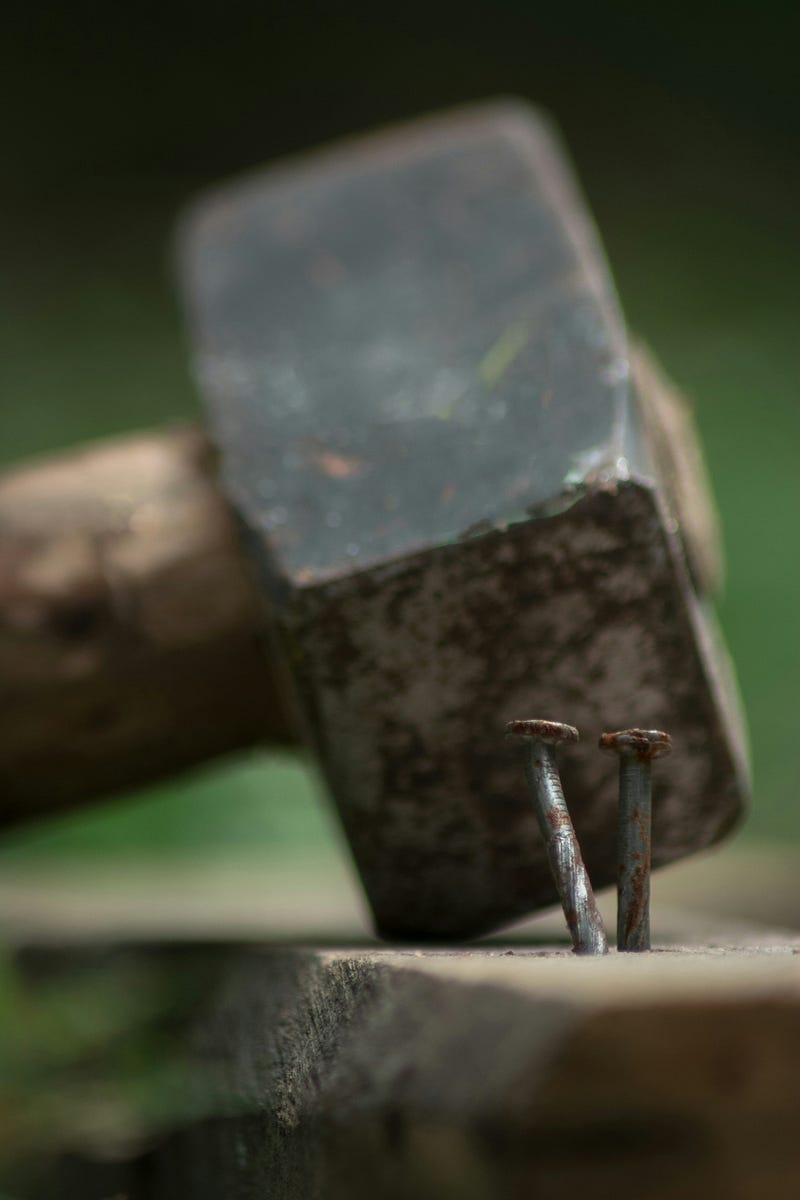
  • The Nail

    By R. T. Garner

    Photo by Fausto Marqués on Unsplash

    I come to you seeking to open your mind,
    Yet all too often, what I find,
    Is someone convinced they can refine.

    I may appear irrational, overly emotional, and unstable,
    But all I ask is for you to sit at the table,
    And listen without turning the situation into a fable.

    Instead, you persist in driving home the stigma,
    Trying to pry out the nail with your enigma,
    Offering unwanted advice like an imposing enigma.

    The perpetuation of power imbalances and inequalities,
    Is something you pound in, with some trivialities,
    Perhaps feeling as helpless as me, amidst these formalities.

    All I seek is a listening ear,
    No need for a facade or veneer,
    It’s about fostering a connection that’s sincere.

    It’s about effective communication,
    Navigating through the misinterpretation,
    Yet you persist in hammering, causing further alienation.

    I acknowledge my own challenges,
    But your fixation on them becomes a barrage,
    Why do you disregard my desires for our dialogue?

    You shift the focus to the nail,
    Failing to see beyond that veil,
    Missing the depth of what I entail.

    I value those who can engage in dialogue,
    But that doesn’t mean I need you to prologue,
    Just the freedom to express without this catalogue.

    When things get tough,
    Why is fostering connection,
    Made to seem like a complex junction?

    Your actions speak volumes,
    Filled with misinterpretations and assumptions,
    While you insist it’s a mere concoction of my presumptions.

    I possess more insight than you perceive,
    So how can I help you conceive,
    It’s not about what you perceive, but what we achieve.