I’m not here to play nice, I’m here to make change. I work with veterans, teens, career shifters, and anyone who’s ever been told they’re too late, too broken, or too much. I help people rewrite their story when the world hands them a script they never asked for.
I don’t save people. I remind them how to save themselves.
That’s my legacy, and I’m just getting started.
Follow along as I speak truth, challenge systems, and help folks build a life that actually fits.
Connect with Us
Follow us on Medium @YourTrueDirection.
Your journey is yours to shape, take the next step in Your True Direction.
Someone asked me recently, “What legacy do you want to leave behind?”
Not what job I want. Not what title I’m gunning for.
But legacy – the real kind. The kind that echoes. The kind that leaves a mark.
That question didn’t feel polite. It felt like a punch to the chest. Because let’s be honest – most people are too busy surviving to even think about legacy. But I’ve been through enough, seen enough, fought enough, to know that the real work isn’t in the day-to-day grind. It’s in the lives you change while you’re grinding.
So here it is. Raw and real.
I’m not here to leave behind perfect spreadsheets or polished LinkedIn posts. I’m here to leave behind a trail of people who remember what it felt like to finally be seen. Really seen. Especially the ones who had been counted out.
I want my legacy to be the ones who stood up straighter after talking to me.
The ones who walked into that job interview after years of rejection – and nailed it.
The ones who were told they weren’t enough, weren’t experienced enough, weren’t “corporate” enough – and found out that was a damn lie.
I want to be remembered as the one who called out bullshit policies, stood firm in rooms where people whispered, and used every ounce of experience I had – military, career development, leadership, trauma – to light the way forward. Not just for me. But for everyone around me.
I want my legacy to be about impact. Not impressions.
Because I’ve walked through doors no one wanted to open for me.
I’ve been overqualified and underestimated in the same breath.
I’ve watched less-experienced people get promoted while I held the line and kept everything running.
And still, I didn’t shrink.
Because I wasn’t here to play politics.
I was here to serve. To advocate. To build something better.
Let me be clear: I didn’t build my legacy in perfect conditions. I built it while navigating burnout, chronic stress, leadership that didn’t lead, and systems that tried to silence me. I built it while dealing with trauma and training a service dog who saved my life in ways I can’t fully explain.
I built it while helping others find jobs when I was struggling to find my own sense of purpose. I coached people through their breakdowns while still managing mine in silence. I mentored with a cracked heart and a full schedule – because I knew someone else’s survival might start with my willingness to show up, just one more time.
That’s what legacy looks like.
Not glamour. Not followers. Consistency.
Showing up. Even when you’re tired. Even when no one’s clapping. Even when they’re whispering behind closed doors.
I don’t want to be remembered for being liked.
I want to be remembered for being real – for speaking up when it wasn’t convenient, for calling out injustice even when it cost me something, for pushing others to rise even when I was still crawling.
If someone says my name years from now and follows it with:
“Ryan didn’t just help me get a job. He helped me remember who the hell I was.”
Then I did what I came here to do.
That’s the legacy I’m leaving.
It’s made of grit, grace, fire, and purpose.
It’s covered in dog hair, sweat, sacrifice, and second chances.
And no matter what room I walk into – whether I’m welcomed or not – I’ll keep showing up like I belong. Because I do. And so do you.
I’m not here to play nice – I’m here to make change. I work with veterans, teens, career shifters, and anyone who’s ever been told they’re too late, too broken, or too much. I help people rewrite their story when the world hands them a script they never asked for.
I don’t save people. I remind them how to save themselves.
That’s my legacy – and I’m just getting started.
Follow along as I speak truth, challenge systems, and help folks build a life that actually fits.
Connect with Us
Follow us on Medium @YourTrueDirection.
Your journey is yours to shape – take the next step in Your True Direction.
I’m not here to play nice, I’m here to make change. I work with veterans, teens, career shifters, and anyone who’s ever been told they’re too late, too broken, or too much. I help people rewrite their story when the world hands them a script they never asked for.
I don’t save people. I remind them how to save themselves.
That’s my legacy, and I’m just getting started.
Follow along as I speak truth, challenge systems, and help folks build a life that actually fits.
Connect with Us
Follow us on Medium @YourTrueDirection.
Your journey is yours to shape, take the next step in Your True Direction.
“The boy I buried didn’t die – he waited. Behind every crack, every scar, every silence I called strength. He’s not haunting me. He’s reminding me who the hell I was before the world got loud.”
The boy I once was?
Oh, he was a goddamn legend.
He believed cereal could fix anything,
that Band-Aids healed betrayal,
and that adults actually knew what they were doing.
(Adorable, right?)
He thought love meant forever.
Thought saying sorry meant something.
Thought being “good” earned you safety.
Spoiler:
It didn’t.
It doesn’t.
He used to stare out windows and dream in color.
Now I scroll through screens and call that vision.
He built forts to keep the world out.
Now I build walls and call it “boundaries.”
He cried when people yelled.
Now I flinch when someone cares.
And somewhere between “be yourself” and “grow up,”
he got stuffed into a box labeled “too much.”
Too loud. Too sensitive. Too emotional. Too intense.
So I dulled him down into a version of myself
that fit other people’s expectations.
Congrats, world.
You win.
He’s quieter now.
Until 2AM – when he rips through my chest
asking why I let him disappear.
And I don’t have an answer.
Just more silence.
But hey –
at least I’m employed, right?
At least I pay my taxes, don’t cry in public,
and answer “I’m good” like it’s a sacred chant.
The boy I once was would call bullshit on all of it.
He’d stand on the table and yell,
“This is the life you chose?”
And I’d look him in the eye
and whisper –
No.
But it’s the life I settled for.
Not anymore.
He’s back.
With messy hair, scraped knees, and a thousand unspoken questions.
I’m not here to play nice, I’m here to make change. I work with veterans, teens, career shifters, and anyone who’s ever been told they’re too late, too broken, or too much. I help people rewrite their story when the world hands them a script they never asked for.
I don’t save people. I remind them how to save themselves.
That’s my legacy, and I’m just getting started.
Follow along as I speak truth, challenge systems, and help folks build a life that actually fits.
Connect with Us
Follow us on Medium @YourTrueDirection.
Your journey is yours to shape, take the next step in Your True Direction.
Day 1 of a 7-part series exploring the emotional cost of conditional love, family estrangement, and the quiet strength it takes to heal when those meant to love you choose silence instead.
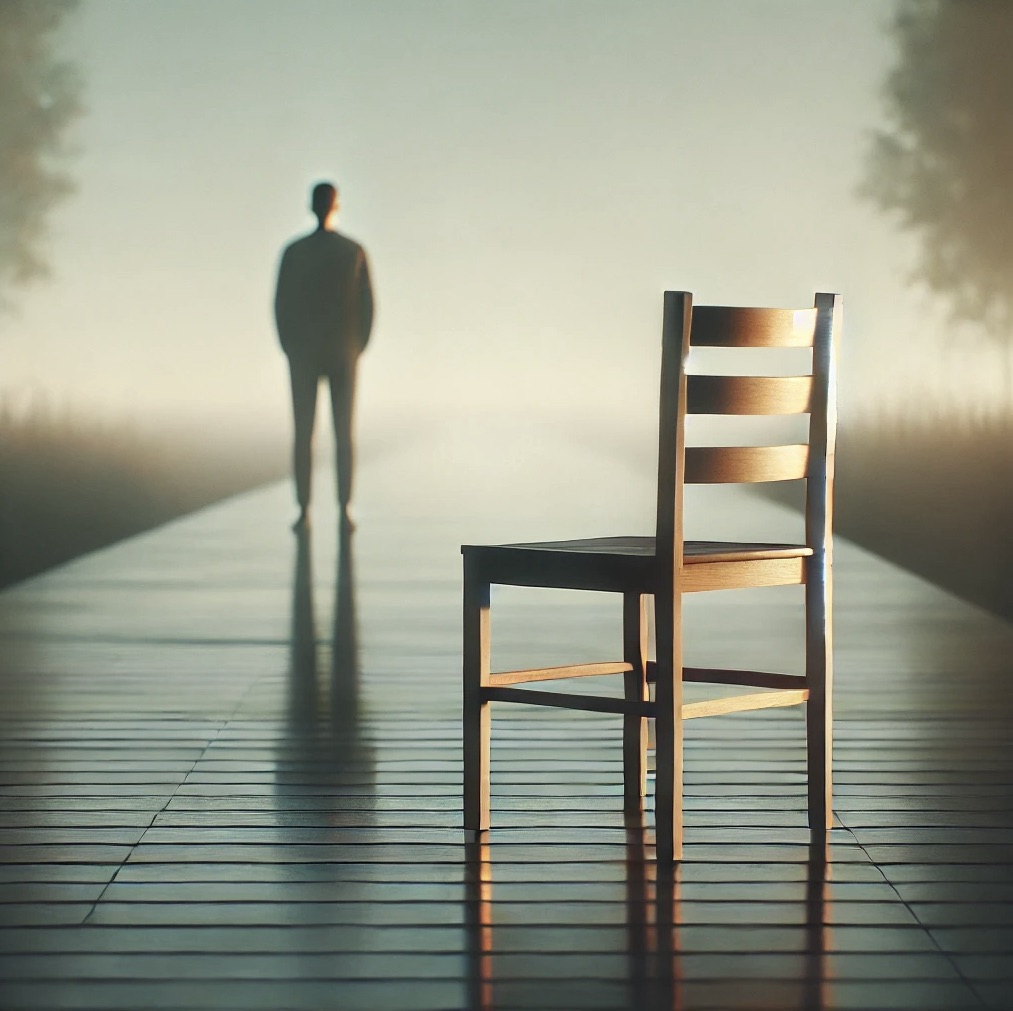
Sometimes, the loudest absences are the ones that never needed words. This empty chair holds the weight of what was missing.
The Day Love Was Conditional
On what should’ve been one of the happiest days of my life, my wedding, I was met not with celebration, but silence. Not because I didn’t invite my father, but because he chose not to come. He couldn’t support me marrying the man I love. That silence has lasted for 3,116 days.
And it still echoes.
What Is Parental Rejection and Why It Hurts So Deeply
Parental rejection is the denial of emotional, physical, or moral support from a parent to a child. It cuts especially deep when rooted in identity, whether it’s about sexuality, gender, religion, or personal choices. For LGBTQ+ individuals, this kind of rejection can be life-altering.
When a parent turns their back not on your actions, but your essence, it sends one clear message: You are not enough.
The Hidden Weight of Conditional Love
Love that comes with strings attached is not love; it’s control in disguise. It’s the unspoken rule that says, “Be who we want you to be, or else.”
When my father said, “I love you, but…,” I learned that love had conditions. That I had to earn my worth. That my joy came second to his discomfort.
“I Love You, But…” — The Words That Haunt
Those five words are silent daggers. They divide families. They teach shame. They echo for years.
For LGBTQ+ individuals, these statements validate a lie we’ve heard too often: You are not worthy of love unless you conform.
This leads to internal conflict, wanting to be accepted, while also needing to be authentic.
The Long-Term Effects of Being Rejected by a Parent
Here’s what many don’t realize: this pain doesn’t fade. It morphs into:
Anxiety and self-doubt
Fear of abandonment in adult relationships
Difficulty trusting others
Depression and complex trauma
Perfectionism or people-pleasing
Estrangement from family
Loss of cultural or religious identity
We carry it silently until we don’t anymore.
Rewriting the Narrative: Healing Through Self-Acceptance
Healing begins when you stop seeking approval from those who can’t give it, when you stop blaming yourself. When you realize you are worthy of love, just as you are.
I stopped chasing their acceptance and began creating my own definition of family. I chose to love myself the way they couldn’t.
And it changed everything.
7 Ways Parental Rejection Damages LGBTQ+ Children
Shame-Based Identity — Children internalize guilt over something they cannot change.
Mental Health Struggles — Higher rates of depression, self-harm, and suicide.
Loss of Safety Net — Lack of emotional or financial support during critical years.
Estrangement Trauma — Fear of being “cut off” for who they are.
Delayed Self-Acceptance — Many suppress their identity far into adulthood.
Attachment Wounds — Struggles with romantic and platonic relationships.
Life-Limiting Beliefs — “I’m not enough,” “I’m unlovable,” “I’ll be alone forever.”
Resources: Support Systems for Healing and Growth
If you or someone you love has experienced parental rejection, you’re not alone. Here are some powerful resources:
PFLAG — The nation’s largest organization for LGBTQ+ people, their parents, and families.
The Trevor Project — Crisis intervention and suicide prevention for LGBTQ+ youth.
GLAAD — Media advocacy and resources to support LGBTQ+ representation and support.
FAQs About Parental Rejection and LGBTQ+ Identity
Q1: Is it common for LGBTQ+ people to be rejected by their parents? Yes, unfortunately. Studies show nearly 40% of LGBTQ+ youth report parental rejection at some point in their lives.
Q2: How can I begin to heal after being rejected by a parent? Start by affirming your own identity, seeking LGBTQ+ communities, and working with a trauma-informed therapist.
Q3: Should I try to reconcile with my parents? Only if it supports your healing. Reconciliation should never come at the cost of your mental health or authenticity.
Q4: What if my parents say they love me but still don’t support my relationship? That’s conditional love. You deserve to be supported fully, without exceptions.
Q5: Is it okay to set boundaries or go no contact with parents? Yes. Boundaries are essential for healing and safety — especially in toxic dynamics.
Q6: How do I find chosen family or supportive communities? Start with LGBTQ+ support groups, online forums, or local centers. Community is healing.
The Light Beyond the Silence
If your story mirrors mine, know this: You are not broken. You are not unworthy. And the absence of someone at your wedding — or in your life — does not define your value.
The day love became conditional was painful, yes. But it also became the day I chose myself.
Your True Direction is dedicated to empowering individuals navigating life’s transitions. Through inspiring stories and actionable strategies, we aim to help you reclaim ambition, overcome challenges, and thrive in every stage of your journey.
Connect with Us
Follow us on Medium @YourTrueDirection
Your journey is yours to shape — take the next step in Your True Direction.
Alone at the edge, where silence meets the sky, the first step of a thousand begins with stillness.
A Poem Created from Silence, Rejection, and the Battle to Heal. A very personal letter — one written in the wake of quiet endured, love rejected, and the agonizing cost of staying true to oneself in the face of rejection from family, inspired this poem, “3,116 Days.” There is more to this story than just one missed wedding day. There are years of mental damage, quiet fights, and the heartbreaking realization that not all love is unconditional.
The poem will be the essence of a weeklong study of issues many LGBTQ+ people and adult children of toxic homes can relate to as we travel into this road together. Every stanza opens one of the seven wounds; each wound will be dissected further via daily releases throughout the next week.
Designed to provide understanding, support, and healing for everyone who has ever felt invisible by people who should have loved them most, the poem in full is below, together with links to each related topic.
🔗 Explore the Journey (Each Will Be Hyperlinked Below As They Publish)
Below is the poem that inspired this entire series — a journey through grief, resilience, and self-liberation. Each verse is a mirror of emotional truths that too many carry in silence.
“3,116 Days”
All of us walk a winding road, Seeking love, our hearts exposed. But even love, when left unmet, Can carve deep wounds we can’t forget.
Three thousand one hundred sixteen nights, Since joy was stolen from my sights. A wedding day, meant full of grace, But marked by absence — your empty place.
Dad, you chose silence over me, Not even fifteen minutes free. Because of who I dared to love, You turned away, no push, no shove.
And Mom, you stood there, still and cold, Not brave enough, not strong, not bold. You asked me not to dance that night, To dim my truth, to dim my light.
You feared what others thought or said, While my soul bled in silent dread. No empathy, no “why” or “how,” Just shame and silence, then and now.
You say you love, but with a “but” — A little word that wounds and cuts. It takes that love and twists it sharp, Till all that’s left is a broken heart.
You held traditions in your hands, While stepping on where true love stands. And now, I speak, no longer mute, From pain that once, I dared dispute.
Gaslight, guilt, the subtle jabs, The echo of emotional grabs. The child you knew is grown and free, And no, you won’t manipulate me.
You gave to others what you denied, To me, your son, you pushed aside. You drove for weddings, gave your cheer, But couldn’t come when I stood near.
I see it now, I see it plain, The roots of all this hurt and strain. For years I tried, for years I gave, But now I rise, my soul to save.
No longer held in tangled chains, Of fear, and guilt, and silent pain. You taught me love — how it can break, But also how new love can wake.
I found it in a man so kind, In chosen family, redefined. And though your absence scars my core, It taught me I deserve much more.
So this is not an “I’m sorry” song, It’s truth I’ve held inside too long. It’s courage born of quiet tears, And standing strong through all these years.
You may not see, or understand, But still I walk, still I withstand. I do not hate, I do not curse, But I will no longer make it worse.
For healing asks we let things go, And plant new seeds, and let love grow. And though I’ve cried, and still may cry, This is not a goodbye; this is my why.
So if you love me, love me whole, Without conditions, without control. Until that day, I’ll find my way, And let the past no longer stay.
💔 From Verse to Reality: Why We Begin With Parental Rejection
The poem above captures the heartbreak of being unseen and unloved by those who were supposed to love unconditionally. And it all began with a single, defining moment — the day love was no longer freely given.
In Day 1 of this series, we take a closer look at what it means to experience parental rejection, especially for LGBTQ+ individuals, and how it affects the heart, the mind, and the path to healing.
Your True Direction is dedicated to empowering individuals navigating life’s transitions. Through inspiring stories and actionable strategies, we aim to help you reclaim ambition, overcome challenges, and thrive in every stage of your journey.
Connect with Us
Follow us on Medium @YourTrueDirection
Your journey is yours to shape — take the next step in Your True Direction.
You never gave up. Not on me, not on anyone. When the silence got too loud, when the weight of it all became unbearable, you were there. No questions, no judgment – just there. In the darkest moments, when I felt like I was slipping away, your words pulled me back.
Some heroes wear uniforms. Others just show up when it matters most.
Every step tells a story. Every scar holds a memory. Music heals what words cannot.
The Battle That Never Ends
PTSD is a battlefield all its own. It doesn’t come with armor, rules of engagement, or an exit strategy. It doesn’t wave a white flag when the war is over because, for many veterans, the war never truly ends. It follows them home, creeping into their minds, hijacking their emotions, and turning everyday life into a warzone.
Some wounds bleed. Some leave scars. And some, like PTSD, stay hidden – festering in the silence, breaking a person from the inside out.
For veterans, PTSD is not just about remembering the past; it’s about reliving it. The mind becomes a battlefield, where memories become landmines, exploding without warning. A simple sound, a sudden movement, a smell – any of these can send them spiraling back into the warzone they never wanted to return to.
And the worst part? They fight this battle alone.
Jelly Roll’s song Save Me isn’t just music – it’s an anthem of pain, a raw confession of struggle, a cry for help that so many veterans relate to. Because while the world moves on, they remain stuck in a war they never truly left.
Jelly Roll’s voice spilled from the truck speakers as Jake sat on the bridge, gripping the steering wheel so hard his fingers ached.
”Somebody save me…
”Me from myself…”
He exhaled sharply.
The world outside his windshield looked normal. People walking, talking, laughing. How could they not see?
How could those in his life not see the war still raging inside him?
Lost in the night, weighed down by the struggle – holding on feels impossible, but hope is never out of reach.
Drowning in Demons
The whiskey bottle clinked against the guardrail as Jake sat on the edge of the bridge, the cold steel biting into his skin. The city lights below were a blur, cars moving like ants on a highway he no longer felt connected to. The wind whipped against his face, numbing everything except the pain in his chest.
The war had ended, but it never really left him.
His hands shook as he wiped his face. He wasn’t even sure if the moisture on his skin was sweat, tears, or the mist from the river below. Maybe all three.
For years, he had fought to keep himself together. Fought the nightmares. Fought the memories. Fought the guilt. But tonight, he was tired. Tonight, the weight was too much.
“Maybe they were right,” he thought. “Maybe I should’ve died over there with them.”
He pulled his jacket tighter, the wind slamming into his back, urging him forward. One step. One second.
”I’m lost and I’m found, but I’m lonely at the same time…”
God, that line.
It ripped through him like shrapnel. Because that was it, wasn’t it?
Alive, but not living.
Surviving, but lost.
Screaming, but silent.
He squeezed his eyes shut. But when he did, the faces were there. Their faces.
Matthews. Torres. Bishop.
He closed his eyes, and suddenly, he was back in the desert. The heat scorching his skin, the sandstorm whipping around him. The radio crackling with desperate voices.
“We’re taking fire! We need air support – NOW!”
Jake could still hear the panic, the urgency. He remembered gripping his rifle so tightly that his fingers ached. He remembered the deafening blast that sent him flying backward.
And then he remembered looking over and seeing them – his brothers, his family – lying still.
Gone.
He should have saved them.
The bridge creaked slightly as he shifted his weight forward.
“One step,” he told himself. “One step, and it all stops.”
No more nightmares.
No more waking up in a sweat, screaming at ghosts.
No more hearing their voices in his head, begging him to do something – anything – to change what happened.
Jake exhaled, long and slow.
Then his phone buzzed.
He almost ignored it. But something made him glance down.
Davis: “Hey man, I know you’re struggling. Just let me know you’re okay.”
Jake’s breath caught in his throat.
Davis.
The only one who still checked in. The only one who seemed to notice that Jake was slipping away.
His fingers trembled as he typed. He wasn’t even sure why he responded, but he did.
Jake: “Not really, man.”
Within seconds, his phone rang.
He didn’t want to answer. He wanted silence. He wanted the pain to stop.
But somehow, he pressed the button.
“Jake.”
Davis’s voice was steady. No panic, no pity. Just there.
“I know where you are,” Davis said. “I’m coming.”
Jake let out a shaky breath.
“You don’t have to.”
“Yeah, I do,” Davis said. “Just hold on, brother.”
The wind still howled. The river still raged below. But for the first time in a long time, Jake felt something other than pain.
He felt seen.
And for tonight, that was enough.
Climbing Out of the Darkness
Healing wasn’t fast, and it sure as hell wasn’t easy.
Jake started showing up – at therapy, at veteran support meetings, even just for a walk around the block. Each step was a battle, but he kept fighting.
One day, he played Save Me in his truck again. But this time, it didn’t feel like a cry for help.
It felt like a reminder.
”I ain’t no savior, no angel, no saint…”
No, he wasn’t.
But maybe he didn’t need to be. Maybe he just needed to keep going.
Resources for Veterans Struggling with PTSD
If you or someone you know is struggling, you are not alone. Here are some resources that can help:
PTSD affects about 11–20% of veterans who served in combat zones, but many cases go unreported.
2. Can PTSD be cured?
There is no “cure,” but PTSD can be managed with therapy, medication, and peer support.
3. What are the signs that a veteran might be struggling?
Withdrawal, irritability, difficulty sleeping, substance abuse, and signs of self-harm are all warning signs.
4. How can I help a veteran with PTSD?
Be there. Listen without judgment. Encourage them to seek help, but don’t push. A simple check-in can save a life.
5. Does music like Jelly Roll’s Save Me really help?
For many, music provides a way to feel understood. Songs like Save Me give voice to struggles that are hard to put into words.
Call To Action
Jake’s story is real. Maybe his name is different. Maybe his struggle looks a little different.
But the pain? The fight? That’s something too many veterans know all too well.
If you or someone you know is struggling, reach out. A text, a call, a conversation – it could be the lifeline that saves a life.
Because in the end, the words of Jelly Roll’s song ring true:
Somebody save me…
And sometimes, all it takes is one person willing to answer that call.
This is for Chris. This is for every Davis. And this is for every Jake who still needs saving.
About Your True Direction
Your True Direction is dedicated to empowering individuals navigating life’s transitions. Through inspiring stories and actionable strategies, we aim to help you reclaim ambition, overcome challenges, and thrive in every stage of your journey.
About Your True Direction
Your True Direction is dedicated to empowering individuals navigating life’s transitions. Through inspiring stories and actionable strategies, we aim to help you reclaim ambition, overcome challenges, and thrive in every stage of your journey.
“I am not what happened to me, I am what I choose to become.”
-Carl Jung
When asked of choices, hardest in my life, I spoke without pause, without a knife— Leaving my family was the choice I made, Not from desire, but a path I had to pave.
As a veteran scarred by battles unseen, With PTSD, my life became a screen— A lens through which they could not see, A person beyond a diagnosis, beyond the debris.
For years, I tried to make it right, To show them the man beyond the fight, But I saw myself fading in their eyes, Trapped in a version they’d idealize.
To stay would mean losing who I am, A soul drowned by what they couldn’t understand. Choosing myself meant stepping away, From love that had turned to a suffocating cage.
I chose my sanity, my right to be whole, Not just a “condition” with limits to control. For every moment of doubt they instilled, I sought to reclaim the truth that they killed.
Their love was filtered through fear and disdain, They couldn’t see past the scars, only the pain. Every bad day was a symptom to fix, Not a moment of humanness they could coexist.
I was never a problem; I was never a disease, Yet in their eyes, I was never set free. To love them was to change, to bend and to break, But my spirit needed more than they could ever remake.
I remember my sister’s words, her cold plea, “He just wants us to change for him,” said to me. Yet they tried to mold me into what they could bear, Not a person who fought battles, but someone to repair.
The hypocrisy stung, but it opened my eyes, To the limits they set, to the narrative I defied. My dreams were dismissed, capped by their doubt, But I chose a life where my spirit could shout.
It wasn’t easy, the choice to depart, It came with grief, tearing at the heart. But I missed what family should be, not what it became, A space where love was free, not a diagnosis’ name.
I don’t miss the judgment or the toxic weight, The feeling of being “fixed” for their sake. I chose to walk away, to seek my own light, To build a life where I could freely write.
Now, I’m not just PTSD; I’m a person alive, With dreams to chase, with strength to survive. I’ve found a freedom in choosing my path, In stepping away from what bound me to wrath.
Do I love them? Yes. Do I miss them? True. But not the narrative that kept me askew. I reclaimed my story, my worth, and my peace, By choosing myself, I chose to be free.
So when asked of the hardest choice I’ve made, It was leaving behind what love had decayed. It was choosing a future where I define my worth, Where I am whole, where I walk my own earth.
I chose to live fiercely, to love without chains, To refuse to be boxed by others’ refrains. To honor my journey, each scar and each breath, I chose to be free, and it saved me from death.
When someone asked me this week? “What was the hardest choice you had to make in life?” I didn’t hesitate to answer. It was the decision to leave my family behind. Not because I wanted to, but because I had to. As a combat veteran living with PTSD, I faced a reality where the people who were supposed to love and support me unconditionally began to see me only through the narrow lens of my diagnosis. For years, I struggled with the decision. I tried to make things work, tried to get them to see me for who I really am—a person, not a problem. But it became clear that staying would mean losing myself. I had to choose between preserving my sanity, my identity, and my well-being or remaining in a relationship that had become toxic and damaging.
Leaving my family wasn’t about giving up on them; it was about choosing myself. It was about recognizing that the environment was no longer healthy for me. When you have PTSD, every part of your life is scrutinized and filtered through that lens by people who don’t understand what it means to live with it. Every bad day or moment of vulnerability was turned into an issue to be corrected rather than a natural human experience to be understood. My family saw my struggles as symptoms of my “condition,” not as challenges that I was facing with courage and resilience. I was never seen as someone who could thrive or grow; I was only seen as someone with a “problem” to be managed.
This constant pathologizing of my life became more than just frustrating—it became deeply toxic. It’s one thing to live with PTSD, but it’s another to have it constantly weaponized against you by those who are supposed to be your biggest supporters. It is isolating and damaging when every emotion, every decision, and every action is judged based on your diagnosis. It strips away your humanity and makes you feel trapped in a narrative that isn’t yours. It undermines your self-worth and makes you question your reality. You start to wonder if maybe you are just a “problem” after all. That kind of toxicity seeps into your soul, making you doubt yourself and your capacity to live a full, authentic life.
I still remember one particularly jarring moment when my sister said, “He just wants us to change for him.” I was struck by the irony and hypocrisy in that statement. For years, they tried to change me—tried to mold me into someone they could understand or feel comfortable with. They wanted me to fit their narrative of what a person with PTSD should be like. They wanted me to change how I expressed myself, how I lived my life, and how I handled my emotions. They wanted me to be “fixed” in a way that suited them, without ever truly understanding what I needed. The real change I was seeking wasn’t for them to become different people—it was for them to stop reducing me to a diagnosis and start seeing me as a whole person. The hypocrisy in their expectation that I accept their version of support, while dismissing my need to be seen and respected for who I am, became too much to bear.
It wasn’t just about the judgment; it was also about the limitations they tried to impose on me. They told me what I could and couldn’t do, what kind of job I should have, what kind of relationships I should pursue, and what my goals should be—all based on their perception of PTSD. It was as if they decided my potential had a ceiling that I could never break through. My dreams and ambitions were dismissed, overshadowed by the stigma of my diagnosis. They couldn’t see beyond their fears and misconceptions, and I couldn’t keep living under the weight of their expectations and doubts.
It took years of inner conflict, of weighing my love for them against the need to protect myself, to come to the decision to walk away. The choice wasn’t easy, and it wasn’t made lightly. I went through countless moments of doubt, guilt, and fear. I missed them—I still do. I miss the idea of what family should be: a place of unconditional love, understanding, and support. I miss the times we could just laugh and talk without the shadow of PTSD hanging over every interaction. But what I don’t miss is the toxic relationship, the feeling of being misunderstood and judged, or the constant attempts to “fix” me when there was nothing broken in the first place.
Choosing to walk away was the hardest decision I’ve ever made because it meant accepting that my family could not give me what I needed—a safe, supportive space where I was seen as more than my diagnosis. It meant accepting that, as much as I love them, our relationship was causing me more harm than good. I had to choose my own mental health, my own growth, and my own happiness over the comfort of familiarity. I had to choose to prioritize myself over their expectations and judgments.
Since making that choice, I’ve felt a profound sense of freedom and relief. I no longer live under the weight of their perceptions or their need to control how I should live my life. I have built a life where I am more than my PTSD—a life where I am a survivor, a combat veteran, a person with ambitions and dreams that I am actively pursuing. I have found strength in choosing myself and in reclaiming my narrative.
I have rebuilt my life, found new meaning, and achieved things I never thought possible. I’ve taken on challenges, both personal and professional, that my family never believed I could handle. I’ve proven to myself that I am not defined by PTSD but by my resilience, my strength, and my capacity to grow beyond it. Walking away wasn’t about abandoning my family; it was about embracing my right to be seen as a whole person. It was about creating a life where I am not limited by others’ fears or misconceptions but defined by my courage and determination to live authentically.
Do I still love my family? Yes. Do I miss them? Absolutely. But do I miss the toxic relationship? No, I don’t. I don’t miss being reduced to a diagnosis or being treated like someone who is broken or incapable. I don’t miss having my dreams dismissed or my worth questioned. Choosing to walk away allowed me to see myself clearly, to understand my value, and to embrace my potential. It allowed me to step away from a narrative that wasn’t mine and to reclaim my story on my terms.
So, when asked, “What was the hardest choice you had to make in life?” my answer is clear. It was choosing myself over my family. It was choosing to leave behind what was holding me back and stepping into a future where I could define my worth, my path, and my peace. It took years to come to that decision, and it came with a lot of grief, but it was the best decision I ever made. I chose to live fully, to love myself fiercely, and to refuse to be boxed in by a single chapter of my past. I chose to be free.
Rising above every challenge, Enduring through the darkest night, Silent strength within you lies, Intrepid spirit burning bright, Living with unwavering might, In the face of adversity we rise, Every setback only fuels our fight, Never giving up, we soar high, Courageous hearts, we defy all ties, Endless resilience, we never say die.