Category: mental health

  • “If You’re Gonna Go, Let Me Go With You”

    Your True Direction

    spoken word, from the trenches of loss and love

    Let me make this simple.

    I’ve lost people I shouldn’t have lost.

    Not to war. Not to car crashes.

    But to silence. To shame. To the weight they were too scared to hand someone else.

    And I’m pissed about it.

    Because I would’ve sat there all damn night.

    No advice. No judgment. Just presence.

    But no one gave me that chance.

    And now all I’ve got are eulogies I never wanted to hear.

    So this isn’t some poetic tribute.

    This is a wake-up call.

    To you. To anyone thinking they’re too far gone or too heavy to carry.

    Let me say this as clear as I can:

    I’d rather lose sleep than lose you.

    I’d rather be uncomfortable with your truth than devastated by your silence.

    Don’t make me show up in a suit. Show up now. Messy, tired, breaking — whatever. Just show up.

    This poem is for every person who’s ever thought no one would sit with them in the dark.

    You’re wrong. I will.

    And I’m not the only one.

    Just stay.

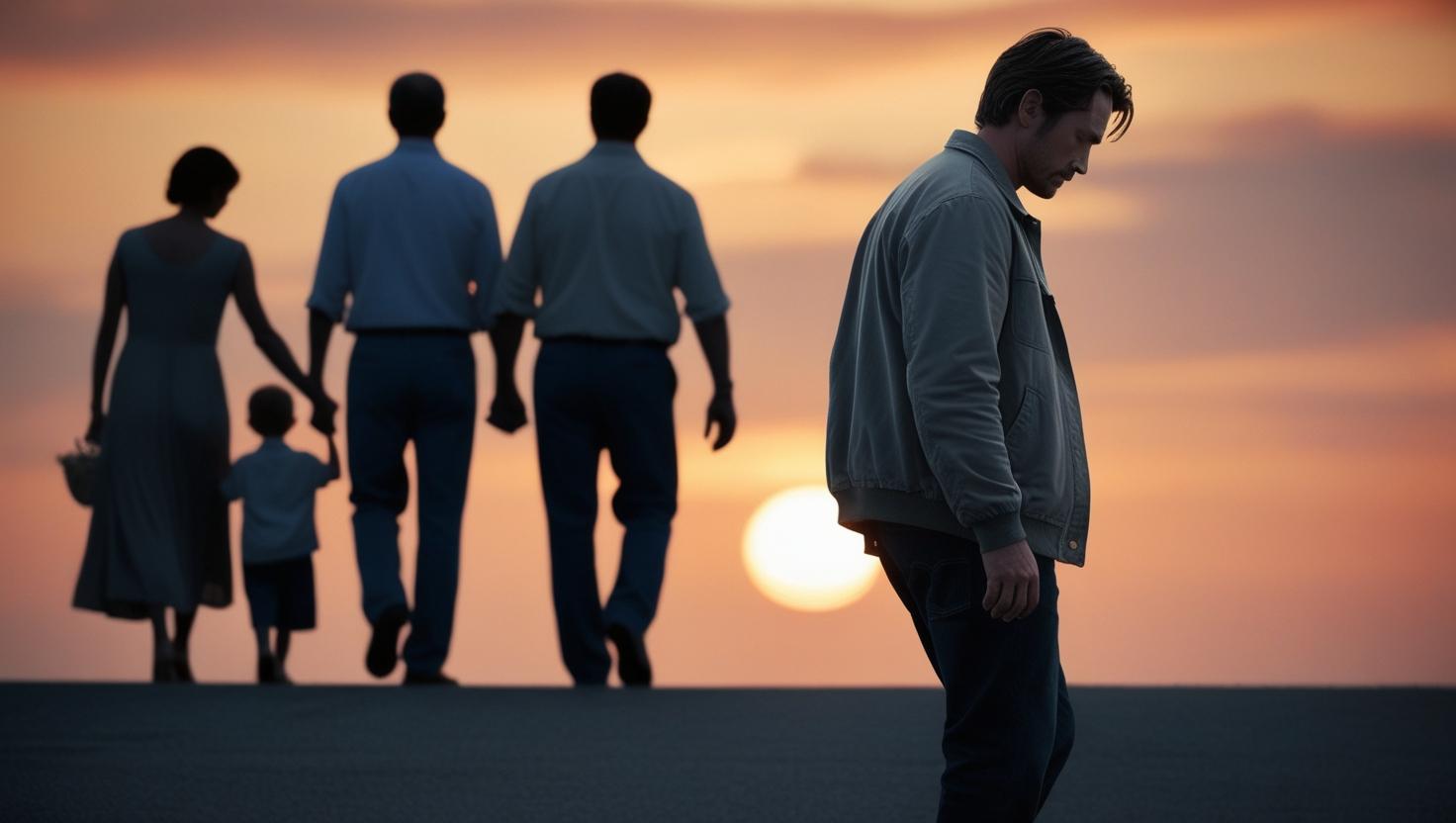
    He never asked me to be okay. He just stayed — quiet, loyal, present — when no one else knew how.

    I would’ve stayed.

    Sat beside you in silence.

    Watched your walls crumble and said nothing —

    just handed you the pieces

    because I’ve been there, too.

    But you didn’t let me.

    Didn’t give me the chance

    to carry even a corner of that pain.

    You just… vanished.

    Quiet like snow.

    Loud like a gunshot.

    Now all I hear

    is your absence.

    I would’ve taken the late-night calls,

    even the ones where you didn’t say a damn word.

    I would’ve sat on the floor with you,

    in the dark,

    in the mess,

    while the world kept spinning and you couldn’t.

    I know that place.

    I’ve cursed the sunrise too.

    Screamed into pillows until the seams split

    and still woke up wondering

    if it was worth it to breathe again.

    So don’t tell me I wouldn’t understand.

    Don’t you dare tell me I wouldn’t have stayed.

    I’ve lived inside the ache

    that convinced you no one could love you through it.

    But I would’ve tried.

    God, I would’ve tried.

    Now I’m stuck

    writing poems instead of texts,

    lighting candles instead of cigarettes,

    whispering your name

    to a sky that never answers back.

    And here’s what haunts me:

    I never wanted your strength.

    I just wanted your truth.

    Even if it was ugly.

    Even if it shook.

    Because I’d rather

    hear you say “I can’t do this anymore”

    than stand at your grave

    wishing you had.

    I’d rather hold your trembling hands

    than hold your obituary.

    I’d rather lose sleep

    than lose you.

    So if there’s someone else out there

    standing on the edge,

    this is for you, too:

    You don’t have to make it look easy.

    You don’t have to carry it alone.

    You don’t even have to speak —

    just stay.

    And let someone love you

    in the middle of your falling apart.

    Because I promise you this:

    I’d rather walk with you through hell,

    than sit through your eulogy in heaven.

    Enjoyed this article? Please support our work!

    ☕ Buy me a coffee: Thank You!

    About Your True Direction

    I’m not here to play nice, I’m here to make change. I work with veterans, teens, career shifters, and anyone who’s ever been told they’re too late, too broken, or too much. I help people rewrite their story when the world hands them a script they never asked for.

    I don’t save people. I remind them how to save themselves.

    That’s my legacy, and I’m just getting started.

    Follow along as I speak truth, challenge systems, and help folks build a life that actually fits.

    Connect with Us

    Follow us on Medium @YourTrueDirection.

    Your journey is yours to shape, take the next step in Your True Direction.

  • If My Pride Offends You – That’s the Point

    A letter to the mother who taught me how to hide myself.

    Your True Direction

    For every son or daughter who’s ever been told to tone it down, hide who they are, or “keep it in the family” – this is for you.

    For every queer kid whose parents tried to shove them back in the closet after they finally broke free of it.

    This isn’t a plea for acceptance.

    It’s a warning shot.

    We’re done apologizing.

    I walked away from the house that taught me to hate my own reflection – and I didn’t look back.

    Mom,

    Let’s cut through the crap.

    That poem I posted – “If My Pride Offends You, That’s the Point” –

    Yeah. That was about you.

    Every single line.

    Every word carved out of the silence you insisted I keep.

    Every sentence soaked in all the times I swallowed myself to keep you comfortable.

    You want to know why I wrote it?

    Why I don’t come around anymore?

    Why the version of me who still wanted your approval is dead and buried?

    Because I got tired of being the only one who ever had to shrink.

    Let’s go back.

    When I told you I wanted to marry Chris,

    you didn’t smile.

    You didn’t cry happy tears.

    You didn’t ask what kind of cake we were having or what colors we picked.

    You looked me dead in the eye and said,

    “Are you sure?”

    Like I just told you I was getting a face tattoo, not committing my life to the person I love.

    Then you tried to walk it back.

    Tried to say you asked Benny and Ashley the same thing.

    No, you didn’t.

    Don’t insult my intelligence.

    You celebrated their love because it fit inside your box.

    You accepted their marriages without a flinch.

    But with me?

    You flinched.

    And then came the wedding.

    Your judgment didn’t stop.

    You said we shouldn’t dance.

    Because “someone might not like it.”

    You ever ask me if I liked spending my life editing who I am just to be allowed in a room?

    You didn’t care about that.

    You cared about optics.

    About shame.

    About what people would say.

    Then Dad didn’t show up.

    And you say, “I argued with him.”

    Really?

    When?

    Where?

    Because I never saw it.

    You didn’t raise your voice.

    You didn’t defend me.

    You didn’t say,

    “Then I’m not going either.”

    You didn’t say,

    “That’s your son, and he matters.”

    You just stayed quiet.

    Sat in it.

    Normalized it.

    You want points for arguing behind closed doors?

    You don’t get credit for invisible battles when your son was left standing alone at his own wedding.

    And if all that wasn’t enough?

    Let’s talk about Thanksgiving.

    Our first one after we were married.

    Chris and I show up – husband and husband.

    Legal. Legitimate. Real.

    And what do you do?

    You introduce him as “Ryan’s friend.”

    Not my partner.

    Not my husband.

    Not family.

    A friend.

    And when my nephew tried to introduce Chris properly,

    you corrected him.

    You corrected him.

    Let’s talk about that, Mom.

    Because what you said in that moment was loud as hell:

    That I was an embarrassment.

    That Chris, who is legally part of this family, wasn’t welcome as who he was.

    That being gay is something to downplay, something to manage, something to cover in polite company.

    What if Cody was gay?

    What did you just teach him?

    That if he ever loved differently, he’d have to hide it?

    That his truth would embarrass you, too?

    Because that’s what you said without saying it.

    And let me tell you:

    I heard you.

    He heard you.

    Everyone heard you.

    I used to think you just didn’t understand.

    But now I realize you did.

    And you chose silence anyway.

    You say, “I’ve always loved you.”

    No, Mom.

    You loved the version of me that was small.

    Quiet.

    Careful.

    Filtered.

    Tolerable.

    You loved me when I was convenient.

    But every time I stepped closer to truth – you stepped back.

    That poem?

    That wasn’t for show.

    That was the sound of my ribs cracking open so my soul could finally breathe.

    It was everything I never got to say while you smiled and shifted and pretended everything was fine.

    You’ve said things like, “Don’t post that.”

    “Don’t say that at dinner.”

    “Keep it private.”

    No.

    I’m done keeping your secrets.

    Done protecting people who never protected me.

    Done tiptoeing around your shame like it’s my burden to carry.

    If my pride offends you?

    Good. That means it’s working.

    Because I’m not here to make it easy for you anymore.

    I’m not here to fold my love into something that fits your dinner plates.

    I’m not here to pretend your silence was love when it was just fear wearing a cardigan.

    You had a chance to love me boldly.

    You had a chance to say,

    “That’s my son. That’s his husband. This is family.”

    You didn’t.

    You chose quiet.

    You chose image.

    You chose your comfort over my dignity.

    So no, I don’t call.

    No, I don’t come around.

    Because every time I did, I had to leave pieces of myself at the door.

    And now?

    I refuse.

    I take up space.

    I speak loud.

    I post what I want.

    I dance with my husband.

    And if that makes you uncomfortable?

    That’s. The. Point.

    You had your chance to show up.

    You had your chance to speak out.

    You had your chance to be proud.

    Now I’ll do it for myself.

    And I won’t lower the volume just because you’re still not ready to hear the truth.

    – Ryan

    Enjoyed this article? Please support our work!

    ☕ Buy me a coffee: Thank You!

    About Your True Direction

    I’m not here to play nice, I’m here to make change. I work with veterans, teens, career shifters, and anyone who’s ever been told they’re too late, too broken, or too much. I help people rewrite their story when the world hands them a script they never asked for.

    I don’t save people. I remind them how to save themselves.

    That’s my legacy, and I’m just getting started.

    Follow along as I speak truth, challenge systems, and help folks build a life that actually fits.

    Connect with Us

    Follow us on Medium @YourTrueDirection.

    Your journey is yours to shape, take the next step in Your True Direction.

  • The Boy I Once Was

    Trigger warning: He’s still watching.

    Your True Direction

    “The boy I buried didn’t die – he waited. Behind every crack, every scar, every silence I called strength. He’s not haunting me. He’s reminding me who the hell I was before the world got loud.”

    The boy I once was?

    Oh, he was a goddamn legend.

    He believed cereal could fix anything,

    that Band-Aids healed betrayal,

    and that adults actually knew what they were doing.

    (Adorable, right?)

    He thought love meant forever.

    Thought saying sorry meant something.

    Thought being “good” earned you safety.

    Spoiler:

    It didn’t.

    It doesn’t.

    He used to stare out windows and dream in color.

    Now I scroll through screens and call that vision.

    He built forts to keep the world out.

    Now I build walls and call it “boundaries.”

    He cried when people yelled.

    Now I flinch when someone cares.

    And somewhere between “be yourself” and “grow up,”

    he got stuffed into a box labeled “too much.”

    Too loud. Too sensitive. Too emotional. Too intense.

    So I dulled him down into a version of myself

    that fit other people’s expectations.

    Congrats, world.

    You win.

    He’s quieter now.

    Until 2AM – when he rips through my chest

    asking why I let him disappear.

    And I don’t have an answer.

    Just more silence.

    But hey –

    at least I’m employed, right?

    At least I pay my taxes, don’t cry in public,

    and answer “I’m good” like it’s a sacred chant.

    The boy I once was would call bullshit on all of it.

    He’d stand on the table and yell,

    “This is the life you chose?”

    And I’d look him in the eye

    and whisper –

    No.

    But it’s the life I settled for.

    Not anymore.

    He’s back.

    With messy hair, scraped knees, and a thousand unspoken questions.

    He’s not here for revenge.

    He’s here for rescue.

    And I’m done leaving him behind.

    Enjoyed this article? Please support our work!

    ☕ Buy me a coffee: Thank You!

    About Your True Direction

    I’m not here to play nice, I’m here to make change. I work with veterans, teens, career shifters, and anyone who’s ever been told they’re too late, too broken, or too much. I help people rewrite their story when the world hands them a script they never asked for.

    I don’t save people. I remind them how to save themselves.

    That’s my legacy, and I’m just getting started.

    Follow along as I speak truth, challenge systems, and help folks build a life that actually fits.

    Connect with Us

    Follow us on Medium @YourTrueDirection.

    Your journey is yours to shape, take the next step in Your True Direction.

  • The Day Love Was Conditional: Healing Without Closure from Family Estrangement

    The Day Love Was Conditional: Healing Without Closure from Family Estrangement

    Day 1 of a 7-part series exploring the emotional cost of conditional love, family estrangement, and the quiet strength it takes to heal when those meant to love you choose silence instead.

    Your True Direction

    Sometimes, the loudest absences are the ones that never needed words. This empty chair holds the weight of what was missing.

    The Day Love Was Conditional

    On what should’ve been one of the happiest days of my life, my wedding, I was met not with celebration, but silence. Not because I didn’t invite my father, but because he chose not to come. He couldn’t support me marrying the man I love. That silence has lasted for 3,116 days.

    And it still echoes.

    What Is Parental Rejection and Why It Hurts So Deeply

    Parental rejection is the denial of emotional, physical, or moral support from a parent to a child. It cuts especially deep when rooted in identity, whether it’s about sexuality, gender, religion, or personal choices. For LGBTQ+ individuals, this kind of rejection can be life-altering.

    When a parent turns their back not on your actions, but your essence, it sends one clear message: You are not enough.

    The Hidden Weight of Conditional Love

    Love that comes with strings attached is not love; it’s control in disguise. It’s the unspoken rule that says, “Be who we want you to be, or else.”

    When my father said, “I love you, but…,” I learned that love had conditions. That I had to earn my worth. That my joy came second to his discomfort.

    “I Love You, But…” — The Words That Haunt

    Those five words are silent daggers. They divide families. They teach shame. They echo for years.

    For LGBTQ+ individuals, these statements validate a lie we’ve heard too often: You are not worthy of love unless you conform.

    This leads to internal conflict, wanting to be accepted, while also needing to be authentic.

    The Long-Term Effects of Being Rejected by a Parent

    Here’s what many don’t realize: this pain doesn’t fade. It morphs into:

    • Anxiety and self-doubt
    • Fear of abandonment in adult relationships
    • Difficulty trusting others
    • Depression and complex trauma
    • Perfectionism or people-pleasing
    • Estrangement from family
    • Loss of cultural or religious identity

    We carry it silently until we don’t anymore.

    Rewriting the Narrative: Healing Through Self-Acceptance

    Healing begins when you stop seeking approval from those who can’t give it, when you stop blaming yourself. When you realize you are worthy of love, just as you are.

    I stopped chasing their acceptance and began creating my own definition of family. I chose to love myself the way they couldn’t.

    And it changed everything.

    7 Ways Parental Rejection Damages LGBTQ+ Children

    1. Shame-Based Identity — Children internalize guilt over something they cannot change.
    2. Mental Health Struggles — Higher rates of depression, self-harm, and suicide.
    3. Loss of Safety Net — Lack of emotional or financial support during critical years.
    4. Estrangement Trauma — Fear of being “cut off” for who they are.
    5. Delayed Self-Acceptance — Many suppress their identity far into adulthood.
    6. Attachment Wounds — Struggles with romantic and platonic relationships.
    7. Life-Limiting Beliefs — “I’m not enough,” “I’m unlovable,” “I’ll be alone forever.”

    Resources: Support Systems for Healing and Growth

    If you or someone you love has experienced parental rejection, you’re not alone. Here are some powerful resources:

    • PFLAG — The nation’s largest organization for LGBTQ+ people, their parents, and families.
    • The Trevor Project — Crisis intervention and suicide prevention for LGBTQ+ youth.
    • It Gets Better Project — Uplifting stories and resources for LGBTQ+ teens and adults.
    • Therapy for LGBTQ+ Issues on Psychology Today — Find LGBTQ-affirming therapists in your area.
    • GLAAD — Media advocacy and resources to support LGBTQ+ representation and support.

    FAQs About Parental Rejection and LGBTQ+ Identity

    Q1: Is it common for LGBTQ+ people to be rejected by their parents?
    Yes, unfortunately. Studies show nearly 40% of LGBTQ+ youth report parental rejection at some point in their lives.

    Q2: How can I begin to heal after being rejected by a parent?
    Start by affirming your own identity, seeking LGBTQ+ communities, and working with a trauma-informed therapist.

    Q3: Should I try to reconcile with my parents?
    Only if it supports your healing. Reconciliation should never come at the cost of your mental health or authenticity.

    Q4: What if my parents say they love me but still don’t support my relationship?
    That’s conditional love. You deserve to be supported fully, without exceptions.

    Q5: Is it okay to set boundaries or go no contact with parents?
    Yes. Boundaries are essential for healing and safety — especially in toxic dynamics.

    Q6: How do I find chosen family or supportive communities?
    Start with LGBTQ+ support groups, online forums, or local centers. Community is healing.

    The Light Beyond the Silence

    If your story mirrors mine, know this: You are not broken. You are not unworthy. And the absence of someone at your wedding — or in your life — does not define your value.

    The day love became conditional was painful, yes. But it also became the day I chose myself.

    And that is a love that cannot be revoked.

    🗓️ Up Next in the Series…

    Coming Tomorrow:
    👉 Day 2 — Emotional Abuse Doesn’t End in Childhood →

    Follow me on Medium to get notified when the next part goes live 💌

    Enjoyed this article? Support our work!

    ☕ Buy me a coffee: Thank You!

    About Your True Direction

    Your True Direction is dedicated to empowering individuals navigating life’s transitions. Through inspiring stories and actionable strategies, we aim to help you reclaim ambition, overcome challenges, and thrive in every stage of your journey.

    Connect with Us

    Follow us on Medium @YourTrueDirection

    Your journey is yours to shape — take the next step in Your True Direction.

  • The Day Love Was Conditional: Healing Without Closure from Family Estrangement

    Day 1 of a 7-part series exploring the emotional cost of conditional love, family estrangement, and the quiet strength it takes to heal when those meant to love you choose silence instead.

    Sometimes, the loudest absences are the ones that never needed words. This empty chair holds the weight of what was missing.

    The Day Love Was Conditional

    What Is Parental Rejection and Why It Hurts So Deeply

    The Hidden Weight of Conditional Love

    “I Love You, But…” — The Words That Haunt

    The Long-Term Effects of Being Rejected by a Parent

    • Anxiety and self-doubt
    • Fear of abandonment in adult relationships
    • Difficulty trusting others
    • Depression and complex trauma
    • Perfectionism or people-pleasing
    • Estrangement from family
    • Loss of cultural or religious identity

    Rewriting the Narrative: Healing Through Self-Acceptance

    7 Ways Parental Rejection Damages LGBTQ+ Children

    1. Shame-Based Identity — Children internalize guilt over something they cannot change.
    2. Mental Health Struggles — Higher rates of depression, self-harm, and suicide.
    3. Loss of Safety Net — Lack of emotional or financial support during critical years.
    4. Estrangement Trauma — Fear of being “cut off” for who they are.
    5. Delayed Self-Acceptance — Many suppress their identity far into adulthood.
    6. Attachment Wounds — Struggles with romantic and platonic relationships.
    7. Life-Limiting Beliefs — “I’m not enough,” “I’m unlovable,” “I’ll be alone forever.”

    Resources: Support Systems for Healing and Growth

    • PFLAG — The nation’s largest organization for LGBTQ+ people, their parents, and families.
    • The Trevor Project — Crisis intervention and suicide prevention for LGBTQ+ youth.
    • It Gets Better Project — Uplifting stories and resources for LGBTQ+ teens and adults.
    • Therapy for LGBTQ+ Issues on Psychology Today — Find LGBTQ-affirming therapists in your area.
    • GLAAD — Media advocacy and resources to support LGBTQ+ representation and support.

    FAQs About Parental Rejection and LGBTQ+ Identity

    The Light Beyond the Silence

    🗓️ Up Next in the Series…

    Enjoyed this article? Support our work!

  • The Day Love Was Conditional: 7 Ways Parental Rejection Damages LGBTQ+ Children

    The Day Love Was Conditional: 7 Ways Parental Rejection Damages LGBTQ+ Children

    A poem born from silence, and a 7-day journey through rejection, healing, boundaries, and becoming whole.

    Alone at the edge, where silence meets the sky, the first step of a thousand begins with stillness.

    🔗 Explore the Journey (Each Will Be Hyperlinked Below As They Publish)

    The Poem: “3,116 Days”

    “3,116 Days”

    💔 From Verse to Reality: Why We Begin With Parental Rejection

    Enjoyed this article? Support our work!

  • Walking Away to Save Myself:

    Walking Away to Save Myself:

    Breaking the Cycle of Family Toxicity 

    Welcome to a journey of self-discovery and empowerment. Sometimes, the bravest choice is to step away from situations that no longer serve your well-being. Whether it’s a toxic relationship, an unfulfilling job, or simply a draining environment, walking away can be the first step toward reclaiming your peace and happiness. 

    By R. T. Garner

    For years, I wrestled with conflicting emotions about my family. While my writings may sometimes seem harsh or tinged with resentment, let me be clear: I love my family deeply. But love alone wasn’t enough to keep me in an environment that slowly eroded my sense of self.

    Walking away from toxic family dynamics is never easy, but prioritizing your peace and well-being is a courageous act of self-love.

    The Struggle to Be Seen in a Toxic Family Dynamic

    Growing up, I poured my heart into showing my family who I truly was. I hoped that, with enough effort, they would finally see me, understand me, or even change. But the reality was sobering: people only change when they’re ready, not when you want them to. Accepting this truth was painful, but it also set me free.


    Recognizing the Subtle Signs of Family Toxicity

    Toxicity isn’t always loud or obvious. In many families, including mine, it takes on subtler forms, dismissive attitudes, sharp words, and an unwillingness to listen. My family wasn’t cruel on purpose. They were products of their own pain, repeating patterns they hadn’t yet recognized or healed. These unspoken wounds, passed down over generations, became invisible shackles.


    Why Self-Preservation Sometimes Means Walking Away

    There came a moment when I realized that love for my family didn’t mean sacrificing my own mental and emotional health. Walking away wasn’t about rejecting them, it was about saving myself. I had to break free from the cycle of toxicity, even if that meant being the first to take the step.


    Breaking Generational Cycles: A Path Toward Healing

    It’s one thing to talk about family dysfunction; it’s another to confront it. Few people acknowledge how brave it is to walk away from a toxic family environment. It takes courage to break the silence, admit that love isn’t always enough to heal, and recognize that self-preservation can be a profound act of love — for yourself and others.


    Choosing Love, Choosing Yourself

    Leaving didn’t mean I stopped loving my family. In fact, it allowed me to love them more fully from a distance. Walking away gave me the space to reflect, heal, and rediscover my sense of self. By choosing to love myself, I broke free from patterns that had once held me captive.

    Choosing to walk away from toxic family ties is a step toward healing and reclaiming your inner strength.

    Final Thoughts

    Walking away from family toxicity is never easy. It’s a decision fraught with guilt, fear, and uncertainty. But sometimes, the most loving thing you can do is to create space; for yourself, for healing, and for growth. Choosing yourself isn’t selfish; it’s necessary. And in doing so, you honor not just yourself, but the possibility of a healthier future for everyone involved.


    FAQs

    1. How do you know when it’s time to walk away from family?

    You know it’s time when the relationship consistently harms your mental and emotional well-being, and all attempts at communication or resolution have failed.

    2. Is walking away from family selfish?

    Walking away isn’t selfish—it’s an act of self-preservation. It allows you to protect your well-being and sometimes even inspires positive change from a distance.

    3. What are the subtle signs of family toxicity?

    Subtle signs include constant criticism, dismissiveness, emotional manipulation, and a lack of accountability for harmful behavior.

    4. Can you heal family relationships after walking away?

    Healing is possible, but it requires mutual effort, open communication, and a willingness to address past hurts. Sometimes, space is necessary for growth and understanding.

    5. How does walking away help with self-preservation?

    Walking away gives you the space to heal, reflect, and rebuild your sense of self without the constant influence of a toxic environment.

    Additional Resources

    Here are some helpful articles and websites for those navigating family toxicity and self-preservation:

    • How to Identify and Deal with Toxic Family Members

    • Signs of a Toxic Family Dynamic and How to Cope

    • When You Have to Walk Away from Family for Your Mental Health

    • Breaking Generational Cycles: The Key to Healing

    Call to Action

    Have you struggled with family dynamics or breaking toxic cycles? Share your thoughts and experiences in the comments. Your journey could help someone else take their first step toward healing.

    About Your True Direction

    Your True Direction is dedicated to empowering individuals navigating life’s transitions. Through inspiring stories and actionable strategies, we aim to help you reclaim ambition, overcome challenges, and thrive in every stage of your journey.


    Connect with Us

    Follow us on Medium: @YourTrueDirection


    Have a story to share or want to collaborate? Email Ryan at ryan@yourtruedirection.com.


    Thank You for Reading!


    Your journey is yours to shape — take the next step in Your True Direction.

  • You Say You Love Me

    Love Demands Growth, Not Just Words

    By R.T. Garner

    “Love is not what you say; it’s what you do. True love transcends words and becomes action.” — Unknown

    Lost in the Rain: A Mother and Son Struggle to Bridge the Distance

    You “Love Me,” you say, but you don’t understand me,
    Two words so empty they have no meaning.
    You say you love me, but you don’t have empathy,
    Blind to my pain, my silent plea.

    You claim to love me, but you don’t show it,
    A love that is expressed but never committed.
    For a mother, your words cut deep,
    Promises broken, a wound I keep.

    You say you love me, but you hold your mother’s title,
    A legacy of judgment, sharp and vital.
    You say you love me, but you tell white lies,
    Echoes of your toxicity in your eyes.

    You wear love like a stolen cloak,
    A thin mask and an unspoken joke.
    But love is neither control nor quite blame, control,
    It’s not wielded as a weapon, not a petty game.

    You say you love me, but your hands feel cold,
    Tracing scars from stories I’ve already told.
    Don’t you see your child left out in the rain,
    Searching for warmth but finding only pain?

    Break the cycle; don’t just repeat,
    Love is not conquest, not deceit.
    Hold me with tenderness, and allow the past to go,
    Love requires development and the capacity to grow.

    You say you love me, but love is shown,
    In acts of compassion, seeds you’ve sown.
    Allow love to be healing, real, and true,
    Without the shadow of suffering I’ve outgrew.

    So, if you love me, prove me wrong,
    Show me your heart truly belongs.
    Because I need love that sustains and finds a place,
    Not just words or transient grace.


    Recent Articles on Healing Family Relationships

    • Understanding and Healing Enmeshed Mother-Son Relationships
      This article explores the dynamics of enmeshed mother-son relationships and offers therapeutic interventions to help untangle these intricate emotional knots. Symmetry Counseling
    • Break Free from Toxic Relationships: Steps to Healthier Connections
      Discover how to identify and overcome toxic relationship patterns and self-sabotage, paving the way for healthier connections. Our Mental Health
    • Emotional Enmeshment: Navigating Mother-Son Relationship Boundaries
      Learn about the concept of enmeshment in mother-son relationships and strategies to establish healthier boundaries. Neurolaunch
    • Breaking Free: Escaping Toxic Family Dynamics
      Explore the impact of unhealthy family dynamics and steps to break free from toxic cycles for personal development and recovery. Freedom with Therapy
    • Mother-Son Bond: Shaping Emotional Development and Relationships
      Understand how the mother-son bond influences a man’s psychological development and future relationships. Neurolaunch
    • Breaking Free from Negative Family Cycles: It’s Hard but Doable
      Learn about the challenges and strategies involved in breaking harmful family cycles to foster personal growth and healthier relationships. Faith Activist
    • Healing the Mother-Son Relationship
      Practical steps for healing a mother’s strained relationship with her son and building deeper connections. Mental Health Match
    • Empower Yourself: Strategies for Breaking the Cycle of Toxic Family Relationships
      Recognize toxic family dynamics and discover strategies to break free from cycles of dysfunction. The Narcissist Mind
    • Understanding the Dynamics of Mother-Son Enmeshment
      An in-depth look at mother-son enmeshment and its psychological implications. Carla Corelli
    • Breaking the Cycle: Coping with the Consequences of Toxic Family Relationships
      Strategies to cope with and heal from the consequences of growing up in a toxic family environment. Raising Children 101

    About Your True Direction
    Your True Direction is dedicated to empowering individuals navigating life’s transitions. Through inspiring stories and actionable strategies, we aim to help you reclaim ambition, overcome challenges, and thrive in every stage of your journey.

    Connect with Us

    Thank You for Reading!
    Your journey is yours to shape — take the next step in Your True Direction. If this article resonated with you, don’t forget to clap, share, and follow us for more inspiring content!

  • The Silent Storm

    The Silent Storm

    By R. T. Garner

    “Although the world is full of suffering, it is also full of the overcoming of it.”
    —Helen Keller

    The Silent Storm is not just the echoes heard in the night,

    It’s the roar of the memories that hold on so tight.

    It’s the thunder that echoes within the crowded room,

    And the lighting strikes that fragment the gloom.

    It’s the winds of ambiguity that never seem to fade,

    The many treacherous battles within that can’t be displaced.

    And it’s not just the nightmares that come in the dead of night,

    But the shadow of stolen memories which clouds the light.

    And what of this expression, this burden, “nightmares?”

    A shadowy dominion, no solace dares.

    Rooted in Old English, it first took flight,

    The demon, the mare, who suffocates those in the night.

    A spirit that presses on a sleeper’s chest,

    Crafting horror that takes one’s rest.

    In German lore, it spreads its dread,

    From the Old Norse mara to where Slavic tales led.

    Over the centuries, the word evolved,

    To name the fears that were never resolved.

    A sensation of dread, oppression, despair,

    A peek into the darkness, lingering there.

    The Silent Storm, like the nightmare’s lore

    It’s not just a battle fought behind closed doors.

    It shapes how we think, how we see, how we live,

    Demanding more strength than the world can give.

    It’s the flood of the feeling we do our best to contain,

    The weight of the downpour we can’t explain.

    But it’s also the proof of the determination we hold,

    Navigating rough waters, both fierce and bold.

    Day after day, we forge ahead, weathering the gale,

    Standing tall when we would rather assail.

    The Silent Storm is the name we give,

    To this force inside us teaching us to live.

    So, when you hear this storm in the air,

    Know it’s a journey, a cross we bear.

    Not something to “get over” or simply ”let go.”

    But a part of us now as we learn to grow.

    If this inspired you, please check out more of my writings here:

    Medium

    About Your True Direction
    Your True Direction is dedicated to empowering individuals navigating life’s transitions. Through inspiring stories and actionable strategies, we aim to help you reclaim ambition, overcome challenges, and thrive in every stage of your journey.

    Connect with Us

    • Follow us on Medium: @YourTrueDirection
    • Have a story to share or want to collaborate? Email Ryan at ryan@yourtruedirection.com.

    Thank You for Reading!
    Your journey is yours to shape — take the next step in Your True Direction. 

  • A Veteran’s Final Letter to His Mother: A Plea to Be Heard

    A Veteran’s Final Letter to His Mother: A Plea to Be Heard

    Discover the moving story of a gay soldier’s battle for understanding, his fight against love disguised as control, and the powerful letter that set him free.

    By R.T. Garner

    “True love is not about holding on — it’s about listening, letting go, and allowing someone to be their truest self.” — Inspired by John’s Story

    Image generated by author

    The silence between loved ones can wound as deeply as any battle. For John — a 35-year-old Army Officer, seasoned soldier, and a gay man who had lived through years of service in the military; homecoming was not the solace he had imagined. His return was supposed to be about healing, about rediscovering himself after enduring the trauma of war and the emotional toll of a life lived under the shadow of “Don’t Ask, Don’t Tell.”

    Instead of finding peace, John finds himself locked in a silent war with his mother, a conflict over control, identity, and love. This war fought without weapons broke him in ways combat never had.

    In his final attempt to be heard, John wrote a heartbreaking letter pleading for liberation and understanding.


    “I Am Your Mother”: A Mantra of Control

    From his earliest memories, John’s mother wielded the phrase “I am your mother” as both a shield and a sword.

    As a child, those words were comforting:

    • “I am your mother; I’ll always protect you.”
    • “I am your mother; I know what’s best for you.”

    However, as John grew older and began to navigate his own identity, the phrase became a leash. It was no longer a promise of love but a declaration of dominance.

    When he came out to her at 18, she refused to accept it.
    “You’re confused,” she said. “You’ll see. I know what’s best for you. I am your mother.”

    The military became his escape. At West Point, John found the discipline, structure, and camaraderie he craved. Yet even in the brotherhood of service, he kept a part of himself hidden, fearing rejection. For 15 years, he buried his true self while serving his country with honor.

    But when he came home at 35, his mother’s refrain still echoed in his life:
    “I know what’s best. You’re my son. I’ll always have the final say.”


    Love Disguised as Control

    His mother had tricked him into returning home, insisting it was out of love. She told him she wanted to “heal” him after his years of military service. She pointed to his PTSD, his weariness, and his guarded demeanor as proof that he needed her care.

    Image generated by author

    But John soon realized her love came with conditions. She didn’t want to heal him; she wanted to reshape him.

    Her attempts to “fix” him ignored the reality of his experiences, both as a soldier and as a gay man. She dismissed the ways war and repression had shaped him, insisting she knew better.

    Her words, once a source of comfort, now felt like chains:

    • “You’ll thank me one day for bringing you home.”
    • “I’m doing this because I love you.”
    • “You don’t know what you need — I do.”

    What she called love was control. She dismissed his pain, his identity, and his independence as misguided and broken. To her, he was still a boy in need of her guidance, not a man who had fought wars both within himself and on the battlefield.


    The Heavy Silence of Home

    John tried, night after night, to explain to his mother what he needed. He told her about the weight he carried from years of war. He tried to explain how being forced to hide his identity in the military had left scars more profound than the ones on his body.

    “I’m not broken, Mom,” he said. “I just need time. I need space to figure things out on my own.”

    But her response was always the same:

    • “You don’t know what you’re saying, John.”
    • “I’m your mother — I know what’s best.”
    • “You’ve never been able to make good decisions for yourself.”

    Each dismissal stung like a fresh wound. To her, John was still a child, incapable of knowing what was best for his own life.

    Her refusal to acknowledge his identity, to see him as a soldier, a gay man, a person in his own right, was suffocating.


    The Final Letter

    One night, after another argument where his words were drowned out by hers, John realized he would never reach her. The silence between them would never be broken unless he left.

    So, he sat down to write his final letter.

    “Dear Mom,” he began.
    “This will be the last time I try to reach you. I’ve spoken, but my words mean nothing to you. So I’ll write them down, hoping you’ll finally hear me.”

    In his letter, John poured out the pain he had carried for years. He spoke of the battles he had fought on foreign soil and in his own heart. He spoke of the shame and silence forced upon him by his mother’s inability to accept him for who he was.

    “You’ve always said, ‘I am your mother,’ as if those words give you the right to control my life. But being my mother doesn’t mean you own me. It doesn’t mean you can dismiss my feelings or erase my identity.”

    He told her how her love had turned into a cage:

    “I know you think you’re helping me, but you’re not. Your version of love doesn’t heal me; it hurts me. You tricked me into coming home, thinking it would fix things. But it hasn’t. This place, your words, your control; it’s breaking me.”

    Finally, he wrote the words that had been trapped in his heart for years:

    “I love you, Mom, but I can’t stay. You have to let me go. You have to accept that I’m not the boy you raised; I’m the man I’ve become. Goodbye, for now.”

    Much like the lyrics of “Listen,” John found himself shouting, unheard:

    “I’m done believing you,
    You don’t know what I’m feeling.”

    John’s story is a powerful reminder that love, when entangled with control, can transform into an emotional prison, stifling growth and individuality.


    A Heartbreaking Truth

    John’s letter was not just a plea for understanding; it was an act of liberation. For years, he had hidden parts of himself, first in the military and then at home. In leaving, he finally chose to live as his true self.

    His mother’s love, though well-meaning, had become suffocating. It left no room for him to grow, to heal, or to be seen for who he indeed was.


    The Power of Listening

    John’s story mirrors the heart-wrenching themes of Broadway Backwards’ version of “Listen.” The lyrics — rewritten to reflect a gay man’s plea to be seen; capture the depth of John’s journey:

    “I’m more than what you made of me.
    I followed the voice you gave to me.
    But now I’ve got to find my own.”

    His journey is a powerful reminder:

    • To those who feel silenced: Your voice matters. Speak your truth, even if it means leaving behind those who refuse to hear you.
    • To parents and loved ones: Love is not about control. True love means listening, trusting, and allowing your children to grow into who they are.

    John’s story is for anyone who has ever felt unseen, unheard, or misunderstood. It’s a call to action — to listen, to love, and to let go.

    If this moves you, share it. Let’s remind the world of the courage it takes to speak and the love it takes to listen truly.


    Resources for Healing, Support, and Understanding

    If John’s story resonates with you or someone you know, these resources can offer valuable guidance and support:

    1. For Understanding PTSD:

    2. For LGBTQ+ Support:

    • PFLAG — A trusted organization offering resources and community support for LGBTQ+ individuals and their families.
    • The Trevor Project — Crisis intervention and mental health support for LGBTQ+ youth.

    3. For Veterans and Their Families:

    • VA Mental Health Services — Comprehensive mental health care for veterans provided by the U.S. Department of Veterans Affairs.
    • Veterans Crisis Line — A confidential resource connecting veterans in crisis with qualified responders.

    4. For Inspiration and Reflection:


    About Your True Direction
    Your True Direction is dedicated to empowering individuals navigating life’s transitions. Through inspiring stories and actionable strategies, we aim to help you reclaim ambition, overcome challenges, and thrive in every stage of your journey.

    Connect with Us

    • Follow us on Medium: @YourTrueDirection
    • Have a story to share or want to collaborate? Email Ryan at ryan@yourtruedirection.com.

    Thank You for Reading!
    Your journey is yours to shape — take the next step in Your True Direction. 

  • Lost in Transition: The Weight of Expectations After West Point and Military Leadership

    Lost in Transition: The Weight of Expectations After West Point and Military Leadership

    For veterans, the battle doesn’t always end with service; it continues in the struggle to find purpose, identity, and belonging in civilian life.

    By R. T. Garner

    Image generated by the author

    For 14 years, I’ve been fighting a battle I never expected: the struggle to find my place after leaving the military. I graduated from West Point, served my country, and earned three master’s degrees. On paper, it looks like I should be thriving. Yet here I am, stuck in a cycle of self-doubt, frustration, and a deep sense of failure.

    In 2004, I stood among my peers at West Point, filled with pride and a sense of accomplishment. I had earned my place at one of the most rigorous institutions in the world, surrounded by leaders destined for greatness. Like many of my classmates, I envisioned a lifelong career in the Army, rising through the ranks, and eventually transitioning into a civilian leadership role that would capitalize on everything I had learned and accomplished.

    But life has a way of veering off course. In 2010, I was medically retired from the Army, years before I had planned to leave. My career, my purpose, and my identity as a leader were suddenly taken away. The structured life I had built, with its clear goals and direction, vanished overnight. What followed was a chaotic and often painful journey of rebuilding, a journey that still feels incomplete.

    This year marked my 20-year West Point reunion, a milestone I should have celebrated. Instead, I stayed home. I was too embarrassed to face my classmates, many of whom have gone on to achieve incredible things. They’re now lieutenant colonels, colonels, CEOs, congressmen, etc. And me? I report to a manager who was a private first class when I was leading soldiers.

    Once, I confided this to a former classmate who is now a lieutenant colonel. I told him about my current position and my boss’s rank when they left the military. He gave me a smirk and laughed, as if to say, Are you serious? That laugh cut deeper than I expected. It wasn’t just a reaction, it was a mirror reflecting all the doubts and insecurities I’ve carried since leaving the military.

    The Burden of Expectations

    West Point instills in its graduates a culture of excellence, competition, and relentless discipline. We are trained to lead, to inspire, to rise to any challenge. But what happens when those expectations meet the messy reality of civilian life?

    For many veterans, transitioning from the military to civilian careers is a difficult process. For West Point graduates and officers, the challenges are unique. Leadership roles that once defined our identities often don’t translate into civilian contexts. Employers frequently undervalue military experience, and the cultural differences between military and corporate environments create barriers to understanding.

    The weight of comparison only magnifies these struggles. Seeing my classmates thrive in high-profile roles while I’ve spent years trying to find my footing has been a constant reminder of my perceived failures. For West Point graduates, the pressure is even greater. We’re seen as the elite — the ones who are supposed to lead by example. When we struggle, it feels like we’ve let everyone down: our families, our peers, and even the institution that shaped us.

    A Crisis of Identity and Purpose

    The loss of leadership roles and military identity is one of the most profound challenges veterans face during their transition. In the Army, I was responsible for making decisions, leading teams, and carrying the weight of leadership. Those roles gave me a sense of purpose and confidence that I’ve struggled to replicate in civilian life.

    Civilian leadership often looks very different from military leadership. Hierarchies are less defined, decision-making processes are slower, and the values driving organizations don’t always align with those we learned in the military. These cultural gaps make it difficult to find roles that feel meaningful, leaving many of us questioning our place and our value.

    For me, this struggle has been deeply personal. I work in career development, helping others find jobs and achieve their goals. I guide them through the same transitions I’ve struggled with, and while I’m proud of the work I do, it often feels hollow. How can I help others succeed when I feel like I’ve failed myself? Every success story I help create is a bittersweet reminder of how far I feel from where I want to be.

    The Mental Health Toll

    These professional struggles are closely tied to mental health challenges. Studies show that the suicide rate among veterans is 1.5 times higher than the general population, and unemployment or underemployment only increases that risk. For officers and academy graduates, the stakes are even higher. The loss of leadership identity, financial strain, and the weight of expectations can create a perfect storm of isolation and despair.

    The transition to civilian life can lead to mental health challenges for many veterans, particularly those underemployed. Research shows that underemployed veterans experience significantly higher rates of depression (42%) and suicidal ideation (15%) than their employed counterparts (18% depression, 5% suicidal ideation). (RAND Corporation, 2020).

    The stigma surrounding mental health in military culture compounds the problem. We’re trained to be strong, to push through adversity, and to see vulnerability as weakness. Seeking help often feels like admitting defeat, and even when we do, civilian therapists or counselors may not fully understand the nuances of our experiences.

    I’ve seen the toll this takes, not just on myself but on friends and classmates who haven’t made it. The grief of losing peers to suicide is compounded by the survivor’s guilt and the unspoken question: Why them and not me?

    Financial Strain and Underemployment

    The financial challenges of transition add another layer of difficulty. Civilian jobs often pay less than military officer salaries, particularly for leadership roles. Underemployment — working in positions that don’t fully utilize our skills or experience, is a common reality for many veterans.

    “The median income for veterans often lags behind the equivalent civilian workforce, particularly for former officers transitioning into leadership roles in the private sector.” (Bureau of Labor Statistics, 2021).

    A 2021 RAND study revealed that nearly 50% of veterans feel underemployed, with officers being particularly vulnerable. The cost of transition, from moving families to establishing a civilian lifestyle, combined with the loss of military benefits, creates financial instability that can exacerbate mental health challenges.

    For West Point graduates, underemployment isn’t just a financial issue; it’s an emotional one. It’s hard not to tie our worth to our professional titles and achievements, especially when we’ve been trained to lead and excel.

    What Needs to Change?

    Addressing these challenges requires systemic change and a shift in perspective:

    1. Targeted Transition Programs
      Programs tailored to officers and academy graduates, focusing on translating military leadership into civilian careers.
    2. Employer Education
      Companies must recognize the value of military leadership and actively recruit veterans for roles that align with their skills and experience.
    3. Mental Health Support
      Destigmatizing mental health struggles within the military and alumni networks is crucial. Alumni organizations like West Point’s can play a key role in fostering openness and connection.
    4. Redefining Success
      Veterans must learn to see success not as a continuation of rank or status but as finding purpose and fulfillment in new ways.

    A Call to Action

    This journey is deeply personal, but it’s not unique. Veterans, especially those from leadership backgrounds, face systemic barriers that make transition incredibly challenging. By sharing our stories, we can break the silence around these struggles and advocate for meaningful change.

    To my fellow veterans: You’re not alone. The weight of expectations is heavy, but it doesn’t have to define you. Together, we can build a future where veterans are valued not just for their past service but for the incredible potential they bring to civilian life.

    Call to Action:

    If this resonates with you, share your story or join the conversation. Let’s work together to create a brighter path for veterans navigating life after service.

    Examining the Underemployment of Veterans

    This link provides access to the full article and its details. Let me know if you’d like additional assistance navigating the content or extracting specific sections!

    Citations:

    Bureau of Labor Statistics. (2021). Employment Situation of Veterans. Retrieved from https://www.bls.gov.

    RAND Corporation. (2020). Understanding Veteran Employment Challenges. Retrieved from https://www.rand.org

    Wenger, J. W., O’Connell, C., & Cottrell, L. (2018). Examining the Underemployment of Veterans. RAND Corporation. Retrieved from https://www.rand.org/pubs/research_briefs/RBA1363-3.html


    Please Check Out My New Book (Here On Amazon)

    Let me thank the following new followers: Ahmad Saood Doon CR7 Caleb kkduniya 🌍 Solutions Larry Skiencla kacar Mohab A Karim Ajit Kumar Amelia Rose Kajal Kumari Sourav Mishra Shainin Pillay Mr.Kochx Jyotirmay Das Curletha Campbell Angelo 🕯️🇨🇴 Chris Daily Atif Altaf Laiba Aziz Labi Gitimu Kiiru Kalpani Heenkenda sahl john Ratan Lal Jude TechRelief M Adnan Sohail Ahmed Sulekha Ali Hussain Sulekha Isabel Bennett T . Saraskamali One X Channel

    About Your True Direction
    Your True Direction is dedicated to empowering individuals navigating life’s transitions. Through inspiring stories and actionable strategies, we aim to help you reclaim ambition, overcome challenges, and thrive in every stage of your journey.

    Connect with Us

    • Follow us on Medium: @YourTrueDirection
    • Have a story to share or want to collaborate? Email Ryan at ryan@yourtruedirection.com.

    Thank You for Reading!
    Your journey is yours to shape — take the next step in Your True Direction. If this article resonated with you, don’t forget to clap, share, and follow us for more inspiring content!

  • Through the Eyes of Love

    By R. T. Garner

    They were children, young and bright,
    Dreams like stars in the quiet night.
    But in their homes, those dreams grew thin,
    Boxed in by the beliefs held within.

    Jonah loved the sky so wide,
    With planets and stars he could not hide.
    But his parents saw him through a narrow frame,
    Autism became his only name.

    “Be realistic,” they softly sighed,
    And Jonah’s dreams began to die.
    He learned to lower his hopeful gaze,
    Caught in their well-meaning, fearful haze.

    He stopped speaking of the stars above,
    Became a stranger to his own love.
    His spirit dimmed, his world shrank small,
    Trapped in a diagnosis, behind a wall.

    Across town, Emily faced her fight,
    Her truth unfolding in the soft moonlight.
    Bisexual, she whispered in the dark,
    But her parents’ hearts couldn’t bear the spark.

    They saw her truth as a storm to outlast,
    Hoping it was something that soon would pass.
    “Maybe in time, you’ll see what’s right,”
    But Emily’s world became wrapped in night.

    She lived two lives, her spirit split,
    Hiding herself just to fit.
    Her love and dreams, locked away tight,
    Shame and fear clouding her sight.

    Their homes, meant to be safe and warm,
    Became places of silent, internal storms.
    Their parents, loving but lost in belief,
    Gave them a world built on fear and grief.

    But there’s more to Jonah than a label’s mark,
    More to Emily than a love kept dark.
    They are not the limits their parents see,
    They are endless oceans yearning to be free.

    Let us learn from the stories they tell,
    Of how belief can lift or build a shell.
    For every child deserves a space,
    Where they are loved, not put in place.

    So may we see them whole and true,
    Not what we fear, but what they pursue.
    For in their dreams, their hopes, their flight—
    They hold the world in their own right.

  • I Chose to Be Free

    By R. T. Garner

    “I am not what happened to me, I am what I choose to become.”

    -Carl Jung

    When asked of choices, hardest in my life,
    I spoke without pause, without a knife—
    Leaving my family was the choice I made,
    Not from desire, but a path I had to pave.

    As a veteran scarred by battles unseen,
    With PTSD, my life became a screen—
    A lens through which they could not see,
    A person beyond a diagnosis, beyond the debris.

    For years, I tried to make it right,
    To show them the man beyond the fight,
    But I saw myself fading in their eyes,
    Trapped in a version they’d idealize.

    To stay would mean losing who I am,
    A soul drowned by what they couldn’t understand.
    Choosing myself meant stepping away,
    From love that had turned to a suffocating cage.

    I chose my sanity, my right to be whole,
    Not just a “condition” with limits to control.
    For every moment of doubt they instilled,
    I sought to reclaim the truth that they killed.

    Their love was filtered through fear and disdain,
    They couldn’t see past the scars, only the pain.
    Every bad day was a symptom to fix,
    Not a moment of humanness they could coexist.

    I was never a problem; I was never a disease,
    Yet in their eyes, I was never set free.
    To love them was to change, to bend and to break,
    But my spirit needed more than they could ever remake.

    I remember my sister’s words, her cold plea,
    “He just wants us to change for him,” said to me.
    Yet they tried to mold me into what they could bear,
    Not a person who fought battles, but someone to repair.

    The hypocrisy stung, but it opened my eyes,
    To the limits they set, to the narrative I defied.
    My dreams were dismissed, capped by their doubt,
    But I chose a life where my spirit could shout.

    It wasn’t easy, the choice to depart,
    It came with grief, tearing at the heart.
    But I missed what family should be, not what it became,
    A space where love was free, not a diagnosis’ name.

    I don’t miss the judgment or the toxic weight,
    The feeling of being “fixed” for their sake.
    I chose to walk away, to seek my own light,
    To build a life where I could freely write.

    Now, I’m not just PTSD; I’m a person alive,
    With dreams to chase, with strength to survive.
    I’ve found a freedom in choosing my path,
    In stepping away from what bound me to wrath.

    Do I love them? Yes. Do I miss them? True.
    But not the narrative that kept me askew.
    I reclaimed my story, my worth, and my peace,
    By choosing myself, I chose to be free.

    So when asked of the hardest choice I’ve made,
    It was leaving behind what love had decayed.
    It was choosing a future where I define my worth,
    Where I am whole, where I walk my own earth.

    I chose to live fiercely, to love without chains,
    To refuse to be boxed by others’ refrains.
    To honor my journey, each scar and each breath,
    I chose to be free, and it saved me from death.

  • Beyond the Diagnosis: Walking Away from a Family That Couldn’t See Me

    Beyond the Diagnosis: Walking Away from a Family That Couldn’t See Me

    By R.T. Garner

    When someone asked me this week? “What was the hardest choice you had to make in life?” I didn’t hesitate to answer. It was the decision to leave my family behind. Not because I wanted to, but because I had to. As a combat veteran living with PTSD, I faced a reality where the people who were supposed to love and support me unconditionally began to see me only through the narrow lens of my diagnosis. For years, I struggled with the decision. I tried to make things work, tried to get them to see me for who I really am—a person, not a problem. But it became clear that staying would mean losing myself. I had to choose between preserving my sanity, my identity, and my well-being or remaining in a relationship that had become toxic and damaging.

    Leaving my family wasn’t about giving up on them; it was about choosing myself. It was about recognizing that the environment was no longer healthy for me. When you have PTSD, every part of your life is scrutinized and filtered through that lens by people who don’t understand what it means to live with it. Every bad day or moment of vulnerability was turned into an issue to be corrected rather than a natural human experience to be understood. My family saw my struggles as symptoms of my “condition,” not as challenges that I was facing with courage and resilience. I was never seen as someone who could thrive or grow; I was only seen as someone with a “problem” to be managed.

    This constant pathologizing of my life became more than just frustrating—it became deeply toxic. It’s one thing to live with PTSD, but it’s another to have it constantly weaponized against you by those who are supposed to be your biggest supporters. It is isolating and damaging when every emotion, every decision, and every action is judged based on your diagnosis. It strips away your humanity and makes you feel trapped in a narrative that isn’t yours. It undermines your self-worth and makes you question your reality. You start to wonder if maybe you are just a “problem” after all. That kind of toxicity seeps into your soul, making you doubt yourself and your capacity to live a full, authentic life.

    I still remember one particularly jarring moment when my sister said, “He just wants us to change for him.” I was struck by the irony and hypocrisy in that statement. For years, they tried to change me—tried to mold me into someone they could understand or feel comfortable with. They wanted me to fit their narrative of what a person with PTSD should be like. They wanted me to change how I expressed myself, how I lived my life, and how I handled my emotions. They wanted me to be “fixed” in a way that suited them, without ever truly understanding what I needed. The real change I was seeking wasn’t for them to become different people—it was for them to stop reducing me to a diagnosis and start seeing me as a whole person. The hypocrisy in their expectation that I accept their version of support, while dismissing my need to be seen and respected for who I am, became too much to bear.

    It wasn’t just about the judgment; it was also about the limitations they tried to impose on me. They told me what I could and couldn’t do, what kind of job I should have, what kind of relationships I should pursue, and what my goals should be—all based on their perception of PTSD. It was as if they decided my potential had a ceiling that I could never break through. My dreams and ambitions were dismissed, overshadowed by the stigma of my diagnosis. They couldn’t see beyond their fears and misconceptions, and I couldn’t keep living under the weight of their expectations and doubts.

    It took years of inner conflict, of weighing my love for them against the need to protect myself, to come to the decision to walk away. The choice wasn’t easy, and it wasn’t made lightly. I went through countless moments of doubt, guilt, and fear. I missed them—I still do. I miss the idea of what family should be: a place of unconditional love, understanding, and support. I miss the times we could just laugh and talk without the shadow of PTSD hanging over every interaction. But what I don’t miss is the toxic relationship, the feeling of being misunderstood and judged, or the constant attempts to “fix” me when there was nothing broken in the first place.

    Choosing to walk away was the hardest decision I’ve ever made because it meant accepting that my family could not give me what I needed—a safe, supportive space where I was seen as more than my diagnosis. It meant accepting that, as much as I love them, our relationship was causing me more harm than good. I had to choose my own mental health, my own growth, and my own happiness over the comfort of familiarity. I had to choose to prioritize myself over their expectations and judgments.

    Since making that choice, I’ve felt a profound sense of freedom and relief. I no longer live under the weight of their perceptions or their need to control how I should live my life. I have built a life where I am more than my PTSD—a life where I am a survivor, a combat veteran, a person with ambitions and dreams that I am actively pursuing. I have found strength in choosing myself and in reclaiming my narrative.

    I have rebuilt my life, found new meaning, and achieved things I never thought possible. I’ve taken on challenges, both personal and professional, that my family never believed I could handle. I’ve proven to myself that I am not defined by PTSD but by my resilience, my strength, and my capacity to grow beyond it. Walking away wasn’t about abandoning my family; it was about embracing my right to be seen as a whole person. It was about creating a life where I am not limited by others’ fears or misconceptions but defined by my courage and determination to live authentically.

    Do I still love my family? Yes. Do I miss them? Absolutely. But do I miss the toxic relationship? No, I don’t. I don’t miss being reduced to a diagnosis or being treated like someone who is broken or incapable. I don’t miss having my dreams dismissed or my worth questioned. Choosing to walk away allowed me to see myself clearly, to understand my value, and to embrace my potential. It allowed me to step away from a narrative that wasn’t mine and to reclaim my story on my terms.

    So, when asked, “What was the hardest choice you had to make in life?” my answer is clear. It was choosing myself over my family. It was choosing to leave behind what was holding me back and stepping into a future where I could define my worth, my path, and my peace. It took years to come to that decision, and it came with a lot of grief, but it was the best decision I ever made. I chose to live fully, to love myself fiercely, and to refuse to be boxed in by a single chapter of my past. I chose to be free.

  • The secret of change

    by R. T. Garner

    When faced with transformation and growth,

    Socrates whispers wise words we should know,

    “The secret of change,” he softly bestowed,

    “To build the new, not fight the old.”

    Let go of the past, release your hold,

    Embrace the future, let it all unfold,

    Focusing your energy, as your dreams mold,

    As the story of change begins to be told.

    Shift your perspective, let your mind be free,

    From the shackles of what used to be,

    Build your future with unwavering glee,

    And watch the magic of change you’ll see.

    So, heed the wisdom of Socrates’ call,

    Let go of the past, stand tall,

    Pour out your energy into the new, stand enthralled,

    For change awaits, as you heed the greatest of all.

  • Let empathy bloom

    Let empathy bloom

    by R. T. Garner

    In this world, differences abound,

    Why do we let hatred resound?

    What makes fear so pervasive in our hearts?

    Tearing us apart, keeping us apart?

    For with the unknown we find,

    A chance to expand our mind.

    Yet often we buckle to the lure,

    Of prejudice and bias, oh how mature.

    Why do we hate what’s different, you ask?

    For ignorance often wears a menacing mask.

    It blinds our vision, narrows our sight,

    Blocking the beauty that could ignite.

    But let us seek another day,

    To learn from others and their ways.

    For in the vastness of ignorance,

    Lies the chance for growth, wisdom, and sense.

    Instead of cruelty, let empathy bloom,

    And dispel the darkness that causes gloom.

    Let us embrace the mosaic of mankind,

    For it is in diversity that we’ll find.

    A richness that can enrich our souls,

    And mend the wounds that judgment tolls.

    So, let’s think with our hearts, and open our minds

    Let variances merge, let love form its binds.

    So let us not fear those we don’t comprehend,

    Instead, reach out, and befriend.

    For as one, we can find our way,

    While embracing differences, every day.