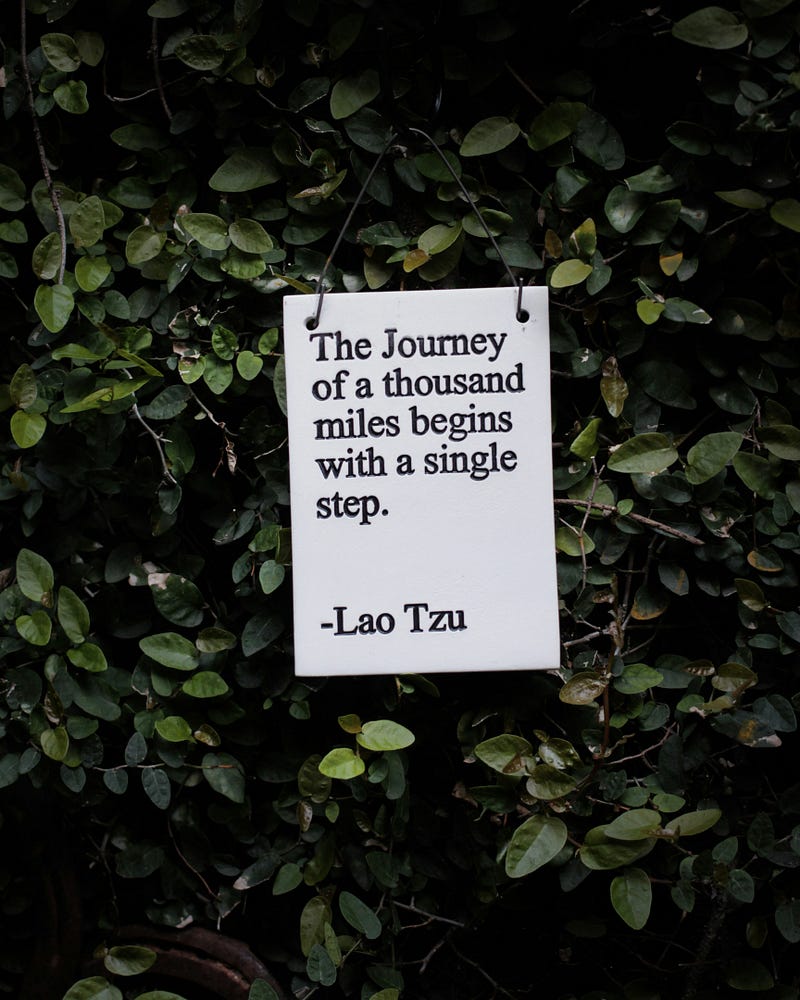
Someone asked me recently, “What legacy do you want to leave behind?”
Not what job I want. Not what title I’m gunning for.
But legacy – the real kind. The kind that echoes. The kind that leaves a mark.
That question didn’t feel polite. It felt like a punch to the chest. Because let’s be honest – most people are too busy surviving to even think about legacy. But I’ve been through enough, seen enough, fought enough, to know that the real work isn’t in the day-to-day grind. It’s in the lives you change while you’re grinding.
So here it is. Raw and real.
I’m not here to leave behind perfect spreadsheets or polished LinkedIn posts. I’m here to leave behind a trail of people who remember what it felt like to finally be seen. Really seen. Especially the ones who had been counted out.
I want my legacy to be the ones who stood up straighter after talking to me.
The ones who walked into that job interview after years of rejection – and nailed it.
The ones who were told they weren’t enough, weren’t experienced enough, weren’t “corporate” enough – and found out that was a damn lie.
I want to be remembered as the one who called out bullshit policies, stood firm in rooms where people whispered, and used every ounce of experience I had – military, career development, leadership, trauma – to light the way forward. Not just for me. But for everyone around me.
I want my legacy to be about impact. Not impressions.
Because I’ve walked through doors no one wanted to open for me.
I’ve been overqualified and underestimated in the same breath.
I’ve watched less-experienced people get promoted while I held the line and kept everything running.
And still, I didn’t shrink.
Because I wasn’t here to play politics.
I was here to serve. To advocate. To build something better.
Let me be clear: I didn’t build my legacy in perfect conditions. I built it while navigating burnout, chronic stress, leadership that didn’t lead, and systems that tried to silence me. I built it while dealing with trauma and training a service dog who saved my life in ways I can’t fully explain.
I built it while helping others find jobs when I was struggling to find my own sense of purpose. I coached people through their breakdowns while still managing mine in silence. I mentored with a cracked heart and a full schedule – because I knew someone else’s survival might start with my willingness to show up, just one more time.
That’s what legacy looks like.
Not glamour. Not followers. Consistency.
Showing up. Even when you’re tired. Even when no one’s clapping. Even when they’re whispering behind closed doors.
I don’t want to be remembered for being liked.
I want to be remembered for being real – for speaking up when it wasn’t convenient, for calling out injustice even when it cost me something, for pushing others to rise even when I was still crawling.
If someone says my name years from now and follows it with:
“Ryan didn’t just help me get a job. He helped me remember who the hell I was.”
Then I did what I came here to do.
That’s the legacy I’m leaving.
It’s made of grit, grace, fire, and purpose.
It’s covered in dog hair, sweat, sacrifice, and second chances.
And no matter what room I walk into – whether I’m welcomed or not – I’ll keep showing up like I belong. Because I do. And so do you.
I’m not here to play nice – I’m here to make change. I work with veterans, teens, career shifters, and anyone who’s ever been told they’re too late, too broken, or too much. I help people rewrite their story when the world hands them a script they never asked for.
I don’t save people. I remind them how to save themselves.
That’s my legacy – and I’m just getting started.
Follow along as I speak truth, challenge systems, and help folks build a life that actually fits.
Connect with Us
Follow us on Medium @YourTrueDirection.
Your journey is yours to shape – take the next step in Your True Direction.
Learn how the ‘Humility Trap’ affects veterans transitioning to civilian life. Discover strategies to overcome PTSD, career stagnation, and reclaim ambition.
by R. T. Garner
Veteran transitioning to civilian career overcoming humility trap.
The transition from military to civilian life presents unique challenges for veterans, especially when faced with PTSD or medical retirement. The ‘Humility Trap’ often leads to career stagnation and self-doubt. This article explores strategies to reclaim ambition, overcome obstacles, and thrive in civilian careers.
This is the narrative of how I transitioned from leading troops as a West Point graduate to working entry-level jobs, all while balancing the competing strains of survival, ambition, and family expectations. It’s about how the well-meaning suggestion to “humble myself” eventually became a barrier to realizing my full potential, and the long, difficult struggle to restore my sense of worth.
The Transition Struggle: From Leadership to Entry-Level Jobs
In 2010, I was medically released from the Army. It was like the world had turned upside down that day. Having committed years of military service, I excelled in positions requiring strategic thinking, leadership, and fast under pressure decision-making. Serving in these jobs and graduating from West Point had given me a great feeling of direction and identity. However, due to health problems, post-traumatic stress disorder (PTSD), and the sudden termination of my military career, I had to begin my search for civilian employment from the very beginning.
by Author
At first, I thought my experience would be a good fit for civilian positions. But the reality was somewhat different. I received rejection after rejection, frequently because potential employers were confused of how my military talents matched their demands or were concerned about my medical retirement status. Seeing many of my West Point classmates move smoothly into jobs that fit their experience made it hurt even more. They seemed to be moving forward while I felt more and more imprisoned. Though our credentials were identical, our results were quite different — a reality that was difficult to see and swallow.
My family, seeing my struggles, urged me to “humble myself.” They encouraged me to take any job, regardless of whether it matched my background, as a means of regaining stability. Following their advice was what I did because I wanted to help my family and get things back to normal. My first career was in retail, where I sold shoes and furnishings at Macy’s. Later, I accepted a position in data entry, which was an entry-level position. Although it was work, it was a major departure from the leadership responsibilities that I had previously had.
Understanding the Humility Trap: A Double-Edged Sword
I first made an effort to keep a positive outlook on these responsibilities. They were, I persuaded myself, stepping stones — a transient change to a different reality. I thought, “This is just a compromise I need to make until I can figure things out.” However, the narrative I had constructed started to fall apart as the weeks stretched into months and the months into years. This work was uninteresting and repetitive, which was a dramatic contrast to the strategic responsibilities that I had previously handled.It got harder and harder to fight the feeling that I wasn’t really leading people anymore, I was just moving things.
I had the impression that each and every day served as a gentle reminder that my previous accomplishments were no longer significant. Internalizing thoughts of inadequacy led to my not viewing myself as adaptable or resilient, which in turn led to my internalizing those feelings. The more I took roles that were significantly below my capabilities, the more I came to believe that I was unable to accomplish anything beyond what we were doing at the time. The voice in my head grew louder: Maybe this is all I’m good for now. This internal erosion wasn’t just about job titles — it was about the core of who I was and how I viewed myself.
A wave of doubt would overtake me every time I considered applying for a higher-level position: Why would they employ an individual like me? What exactly have I accomplished that is still relevant today? Not only was I experiencing self-doubt, but I was also experiencing a fundamental breakdown in how I evaluated my value and potential.
The Cost of Settling: Career Stagnation and Self-Doubt
The suggestion “not compare yourself to others” is frequently repeated, but it is rarely beneficial in practice. This is especially true in a situation such as mine, when comparisons were inescapable throughout the entire process. My friends, many of whom were also West Point grads, would post about big events like promotions, new jobs, and promotions. It helped me remember where I wanted to go in the future when I saw what they had accomplished. I was disturbed by their advancement, not by anything like resentment of it.
A veteran reflecting on career challenges caused by PTSD.
Each LinkedIn post, each announcement of a new position or promotion, felt like a silent but powerful comparison: We started from the same place, but look where they are now and look where I am. The difference was made even more obvious by the fact that many of them appeared to secure professions that were a perfect fit for their military talents while I was stuck in entry-level jobs. I had the impression that I had failed to pass through some unseen checkpoint that they had all passed through.
The comparisons weren’t about wanting to be better than anyone else; they were about wanting to prove to myself that I still had potential. I wasn’t trying to compete with my peers — I was trying to validate my own worth. But instead of feeling inspired, I often felt a sense of hopelessness. If they were able to make it work, why couldn’t I? What did I do wrong? My emotions of inadequacy were exacerbated by the comparisons, which further solidified my conviction that I was in some way less capable than I could have been in the past.
Balancing Ambition and Humility in Post-Military Careers
Managing the perceptions of my family was much more challenging than dealing with the comparisons with my contemporaries, which were already challenging. In the beginning, their recommendation to “humble yourself” was a useful tactic for surviving under the circumstances. On the other hand, as time progressed, it became quite evident that their perspectives on my aspirations were somewhat more nuanced and occasionally even disdainful. Despite the fact that they genuinely desired the best for me, they had a hard time comprehending the reason why I was so adamant about pursuing something that was above what I already had.
Feeling Unseen and Misunderstood
My family started to show more resistance when I discussed the possibility of going after a better degree of employment. Comments like “You just think you’re better than us” or “You think you’re smarter than everyone” not only sour my feelings but also seemed to ignore the source of my inner conflict. These remarks made me feel deeply misunderstood, as if my desire for more was somehow wrong.
My mother’s comment — “He’s just going to want more after this” — stung more than I expected. It wasn’t just a casual observation; it felt like a judgment on my character. The message was unmistakable: the desire for more was regarded as self-centered and even greedy. It caused me to question whether or not my goals were reasonable or whether or not I was just being ungrateful by pursuing them. Is this too much? This was a question that caused me to feel an overpowering sense of regret. Should I accept what I have as good? It was tiring to deal with the internal conflict, and it made it difficult for me to advocate for myself, both at home and in the competitive job market.
Overcoming PTSD and Its Impact on Career Growth
The way in which my diagnosis of post-traumatic stress disorder seemed to overwhelm everything else about me was another element of the family dynamic. Even though I had earned three master’s degrees and was actively working to advance my profession, it seemed as though all my family could see was the four letters: post-traumatic stress disorder (PTSD). It was more common for people to show concern for my mental health rather than confidence in my ability whenever I stated a desire for higher roles or more responsibility. This was the case whenever I mentioned my desire.
Questions like “Are you sure you can handle it?” Concerns about stress merely reinforced my perception that I lacked the strength to achieve more. The primary message that I received was that my limitations were dictated by post-traumatic stress disorder (PTSD), despite the fact that I acknowledged the sincerity of their concerns. When weighed against the risks supposedly linked to my mental health, my military service, academic aspirations, and attempts to get my work back seemed to take a back seat. This story was stifling. Not only did it have an effect on how my family perceived me, but it also had an effect on how I perceived myself. I started to absorb their uncertainty, so challenging my belief that I could be greater.
The Strain of Conflicting Expectations
A vicious loop of shame, frustration, and self-doubt was developed as a result of this relationship. I had the feeling that it was my responsibility to honor the wishes of my family and to settle into positions that appeared to be “safe.” To the contrary, I had an intense yearning to demonstrate, both to myself and to them, that I was still capable of leading, accomplishing, and thriving in spite of my circumstances. This battle was emotionally draining all the time. At every point in time when I considered pursuing a more beneficial chance, I was torn between the desire to accomplish my dreams and the commitment to address the needs of my family.
It wasn’t only that this tension was emotionally tiring; it also had an effect on my actions. Because I wasn’t sure if my desires were warranted, I refrained from applying for positions that were a good fit for my abilities. It was a continual tug-of- war: Was my desire to realize my potential selfish? Or was it right for me to go against the limits that other people had set for me? Because of the combination of the guilt I felt for disappointing my family and the aggravation I felt for disappointing myself, it was difficult for me to move on.
When Humility Turns Harmful: The Cost of Settling
Originally a survival tactic, settlement eventually turned into a pattern that stunted my development. Here’s how I came to see it had become a trap:
Career Stagnation: Years of working in low-level roles increased the gap between my potential and actual performance. Putting myself in a position to be considered for higher-level roles became increasingly difficult the longer I remained in these positions. As a result of my lack of use, my abilities grew less sharp, and my résumé looked to reflect that I had reached a plateau in my career.
Diminished Self-Perception:Taking on lesser responsibilities changed not only how I was perceived by employers but also how I viewed myself in general. As I continued to make compromises, I began to question my own value. Not only did I miss out on better careers, but I also missed out on a better version of myself. All of these things were happening simultaneously. Every time I thought about going for a higher-level job, I had to push through a huge amount of self-doubt.
Negative Perceptions from Employers: The pattern of my résumé being filled with low-level roles made it more difficult for me to break the pattern, which led to negative perceptions from potential employers. My desire was perceived as a negative rather than an asset by recruiters, who frequently asked why someone with my history was looking for positions above my recent experience. This perspective was not only discouraging; it also gave me the impression that I was being judged on my entire journey.
Strained Relationships: Maintaining intimate ties built was difficult given my family’s ongoing debate about my goals. Their insistence that I was being unrealistic made me feel as though I was being turned away for who I actually was. I tried to balance my need for their approval with my longing for more, but the emotional gap this created was difficult.
Reclaiming Ambition: Beyond “Settling”
It was difficult to break out of the pattern of settling; I had to fundamentally change my perspective on my own possibilities. I started to turn in this direction:
Changing the narrative: Rewording my military experience in ways that would appeal to civilian businesses became my main focus. I stressed as transferable abilities leadership, crisis management, and strategic planning. This change was about recognizing my own value and learning to boldly share it, not only about polishing my resume.
Looking for mentoring: I spoke with veterans who had effectively moved into higher-level civilian employment. Their tales and direction helped me to see how pertinent and meaningful my experiences were. They proved that it was feasible to transcend the stigma and constraints I had absorbed by showing me how to negotiate the employment market with a fresh sense of purpose.
Constant Learning: I went back to school to restore confidence as much as to get credentials. Getting three master’s degrees allowed me to question the story that PTSD defined as my limitations. To others as well as to myself, it was a declaration that I was still able to develop and achieve.
Creating New Relationships: I concentrated on growing my network to include those with military backgrounds. These connections helped me find positions fit for my qualifications, therefore restoring my sense of direction and advancement, regarding the initial value for the first time in years.
The Balance Between Humility and Ambition
The experience of settling taught me that while humility can be an important tool for adaptation, it can also become a barrier to growth if not balanced with ambition. It’s okay to accept a lower role as a temporary measure, but it’s equally important to recognize when it’s time to push for more. For veterans, especially those dealing with PTSD or medical retirement, the challenge is real. It’s compounded by societal perceptions, personal doubts, and the well-meaning but limiting advice of loved ones. But the key takeaway is this: our military experience, leadership training, and adaptability are not limitations; they are powerful assets.
Conclusion
From serving in the military to settling for entry-level positions, my path has been marked by a series of setbacks, dissatisfaction, and a never-ending struggle to strike a balance between my self-worth and the circumstances I find myself in. This is a story about perseverance, but it is also a story about the difficult lessons that can be learned about the harmony between humility and ambition. Although survival initially required accepting lesser tasks, I discovered that equally important is knowing when settling becomes a trap — one that reduces your potential rather than promotes development.
I now see that striving for roles that fit your expertise and ability is not unrealistic; it is not selfish to desire more. For a long time, I felt guilty for having goals beyond survival, as if ambition was something to be ashamed of. But I now realize that aiming for more doesn’t mean you’re ungrateful for what you have — it means you’re honoring your skills, your training, and your potential.
For other veterans, especially those who face the added challenges of PTSD or medical retirement, the journey can feel daunting and isolating. It’s easy to let others’ perceptions — whether from family, employers, or society at large — define what you think you’re capable of. But it’s vital to remember that military experience is more than a chapter in your past; it’s a foundation for a future filled with potential, even if the path isn’t clear right away.
If you find yourself in a similar place, know that it’s okay to accept a lower role as a temporary step, but don’t lose sight of your ultimate goals. Advocate for yourself, even when it’s hard. Push for roles that challenge you and reflect your true worth, even if others doubt your readiness. Seek out mentors, build relationships, and continue learning — because your skills, your experience, and your ambitions matter.
To employers and society as a whole: veterans bring unique skills, adaptability, and leadership to the civilian workforce. It’s essential to move beyond the stigma of PTSD and medical retirement and recognize the tremendous potential that veterans possess. We are more than our diagnoses, more than the roles we’ve settled into. With the right support, veterans can thrive in roles that not only match but exceed their military achievements.
I’m still on my own journey of reclaiming ambition and seeking roles that challenge me and match my skills. But I am no longer defined by the roles I once settled for. My strength comes from being able to bounce back from setbacks, adjust to new situations, and keep pushing myself to improve. I now know that my worth isn’t something that can be negotiated; it’s something that comes from what I’ve done in the past and what I can do in the future. The main lesson I want people to get from this story is that settling down should never be your end goal. See humility as a tool rather than a cage. Never let the constraints that others impose on you become the ones that you impose on yourself; instead, strive for the highest possible goals and fight for what you deserve. You have the ability to do things, you are valuable, and the tale of your life is still evolving.
About Your True Direction Your True Direction is dedicated to empowering individuals navigating life’s transitions. Through inspiring stories and actionable strategies, we aim to help you reclaim ambition, overcome challenges, and thrive in every stage of your journey.
Connect with Us
Follow us on Medium: @YourTrueDirection
Have a story to share or want to collaborate? Email Ryan at ryan@yourtruedirection.com.
Thank You for Reading! Your journey is yours to shape — take the next step in Your True Direction. If this article resonated with you, don’t forget to clap, share, and follow us for more inspiring content!
In 2009, my life plan took a different turn when I had to leave the Army after 13 years due to medical reasons. With no clear vision for the future, I was forced to search for a new path and reevaluate my aspirations and career. This unexpected change prompted me to redefine my identity and seek a new purpose.
I felt fear and uncertainty, grappling with PTSD and other challenges stemming from my experience in combat. I encountered unforeseen obstacles, diverging from my intended path of a long Army career and retirement. The unsettling aspect was not knowing where my life was headed.
Now I understand that I have made numerous mistakes that I could have prevented and wish I had. However, such is the nature of life. We all make mistakes, but what if I had the opportunity to avoid them? Would I be in a better place today? Would I have achieved more success? Would I feel more satisfied? The potential list of these hypothetical situations could be unending and span several pages.
So, you may be wondering what mistakes I made. Here are a few key issues that hindered my progress:
1. The conclusion of my military service and the difficulty of securing equivalent employment left me feeling shattered.
2. The fear of failure made me hesitant to attempt new endeavors.
3. I accepted the limitations that others imposed on me.
4. I allowed others’ perceptions of me to dictate my self-esteem.
5. I should have established appropriate goals before and after leaving the Army.
6. I needed help to find the correct path, and asking for it is ok.
However, another important consideration is what I gained from my experience and what I wish I had known beforehand. Looking back, the most valuable lesson one can learn is to listen to one’s own desires in life. Ignore expectations, advice, and “should haves.” Disregard others’ opinions and live according to one’s own preferences.
This process could have been more straightforward and required time to comprehend because change is difficult. I didn’t realize that discovering my genuine purpose, identity, and happiness would be challenging. It is indeed a difficult journey. It is a struggle to adopt new ways of thinking and to let go of the life, love, or hope I once desired. Change is always challenging. However, one important thing you can do for yourself is to uncover what makes you happy and grow according to your values. It involves identifying what is most important to you, igniting your passion, and finding the motivation to love yourself more, ultimately leading you to discover your true purpose and live life according to your terms.
For me, discovering my genuine path entails embracing the person I aspire to become rather than conforming to others’ expectations. Ultimately, life is about finding the discernment that brings happiness to oneself, you! However, you can still navigate it by yourself. If I had the chance to start over, I would have appreciated having someone to help me craft a plan and guide me through much of that process.
Reflecting on the past, I believe that with the appropriate “plan,” I could have achieved greater success in discovering my true path. I aspire to fulfill this role and assist others in setting achievable goals, recognizing their self-worth, and understanding that personal setbacks are not always their fault.
Over the years, I have come to understand the following principles:
1. You are not flawed
2. It’s okay to experience failure
3. You can dispel misconceptions
4. The significance of self-value
5. The importance of setting goals
6. Live your life purposefully
My role now involves assisting people who have encountered challenges to develop a renewed sense of self-belief, achieve their aspirations, and find their true path. Ultimately, this empowers them to experience purpose, pride, and dignity, leading to a stronger belief in themselves. A quote that has stuck with me is, “I want to inspire people. I want someone to look at me and say because of you, I didn’t give up.” I aim to ensure that others do not become a part of the statistic of 22. The essential message is to never cease in the fight!